Zenica's Steel Sector Is Shrinking Its Workforce and Running Out of the People It Needs
The numbers tell two stories at once. ArcelorMittal Zenica has cut direct employment from a Yugoslav-era peak of 14,000 to roughly 2,200 to 2,400. Headlines describe industrial decline. Aggregate statistics show a shrinking manufacturing payroll. Yet specific technical roles at the same facility now take 8 to 11 months to fill. The completion of the Electric Arc Furnace (EAF) transition has replaced one kind of worker with another that barely exists in Bosnia and Herzegovina's labour pool.
This is a market where capital investment has outrun the supply of human capital. ArcelorMittal's €80 million EAF conversion, its ongoing Industry 4.0 automation programme, and federal environmental compliance mandates have collectively rewritten the skills architecture of the Zenica facility. The roles being eliminated are manual and legacy-dependent. The roles being created require EAF process metallurgy, continuous emissions monitoring, and predictive maintenance algorithms. These are not interchangeable populations.
What follows is an analysis of the forces reshaping Zenica's steel sector, the specific talent categories where hiring has stalled, what those roles pay relative to competing markets, and what organisations operating in or hiring for this sector need to understand before they commit to a search in one of the most concentrated industrial labour markets in Southeast Europe.
ArcelorMittal Zenica in 2026: A Facility in Transition, Not in Decline
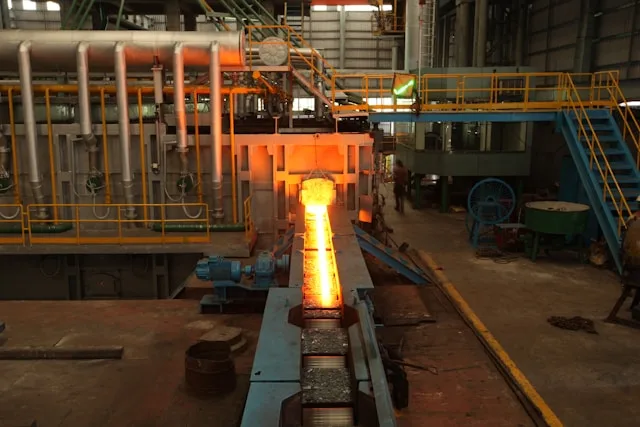
ArcelorMittal Zenica operates as the sole integrated steel producer in Bosnia and Herzegovina. The EAF facility, commissioned in 2020 with an annual capacity of approximately 850,000 tonnes, represents the company's primary production asset. The transition from blast furnace to EAF production is complete. Utilisation rates stabilised through 2025 following the energy price volatility of 2022 to 2023, according to Southeast Europe Metals Industry Association sector bulletins.
The distinction matters for anyone assessing this market. ArcelorMittal Zenica is not contracting in the conventional sense. It is capital-intensive rather than labour-intensive, and the roles it needs have shifted categories entirely. The company's digitisation strategy signals a further 8 to 12 percent reduction in manual operational roles by 2026, while simultaneously creating demand for 15 to 20 new technical specialist positions in automation, predictive maintenance, and digital twin implementation.
The Single-Employer Concentration Risk
Zenica's industrial economy exhibits extreme concentration. ArcelorMittal accounts for an estimated 25 to 30 percent of municipal GDP and 40 percent of industrial output. It represents over 60 percent of the municipality's manufacturing employment. This is not a cluster economy in the Sheffield or Linz sense. The supplier network consists primarily of logistics providers and maintenance contractors rather than co-located specialised steel service centres.
For hiring leaders, this concentration means something specific. When ArcelorMittal creates a new technical role, it is competing against itself. The internal talent pool is the external talent pool. The municipality of approximately 110,000 people does not contain a second major employer from which to draw experienced metallurgical engineers. Končar Steel Structures employs 180 to 220 technical staff. Elektrovat, the local electrical engineering contractor, employs 80 to 100 specialised technicians. Beyond these, the bench is thin.
The CBAM Pressure on Export Competitiveness
Bosnia and Herzegovina's non-EU status exposes the Zenica facility to the EU Carbon Border Adjustment Mechanism (CBAM) beginning in 2026. The Energy Community Secretariat's CBAM impact assessment projects an additional €45 to €60 per tonne in export costs unless local carbon pricing mechanisms are established. This is not a distant regulatory concern. It is a current cost pressure that constrains the facility's investment flexibility and, by extension, its ability to offer compensation packages competitive with EU-based employers.
The facility simultaneously faces electricity prices 30 to 40 percent above EU average industrial tariffs, according to the State Electricity Regulatory Commission. For a production method built on electricity consumption, this is a foundational competitiveness constraint that shapes every hiring and retention decision downstream.
The Bifurcated Labour Market: Surplus and Shortage in the Same Building
The original synthesis that emerges from this data is not about shortage alone. It is about a labour market that has split into two populations moving in opposite directions within the same facility, the same city, and the same sector.
ArcelorMittal's EAF transition and automation investments reduced total headcount by approximately 15 to 20 percent over five years. Legacy blast furnace workers, refractory maintenance technicians, and manual process operators face systemic unemployment. The public narrative treats this as industrial decline. Aggregate employment statistics reinforce that reading.
But the roles being created by the same investment programme are acutely scarce. EAF process metallurgists, environmental compliance managers, and automation integration specialists do not exist in sufficient numbers in Bosnia and Herzegovina. They cannot be retrained from the legacy workforce in meaningful timeframes. The University of Zenica's Faculty of Metallurgy and Materials Science produces 80 to 120 graduates annually, but these programmes have not yet fully adapted curricula to EAF-specific process optimisation or Industry 4.0 integration skills.
The result is a labour market where the aggregate picture shows softness while the specific roles that determine the facility's future show crisis-level scarcity. Any hiring leader evaluating this market on headline employment data alone will fundamentally misread the conditions on the ground.
Where Searches Stall: Three Roles and the Time They Take to Fill
EAF Process Metallurgists
Senior EAF process engineer roles in this market typically exceed 8 to 11 months to fill, with positions frequently re-advertised across three recruitment cycles, according to ManpowerGroup Balkan's 2024 industry report. The scarcity is not generic engineering shortage. It is a specialisation gap. EAF process optimisation requires expertise in scrap metallurgy, chemical energy management, and DC/AC furnace operations. These skills are distinct from traditional blast furnace and basic oxygen furnace expertise. A traditional hiring approach that posts a vacancy and waits for applications reaches almost none of the qualified population.
Approximately 75 to 80 percent of qualified professionals in this category are currently employed and not actively seeking new roles, compared to 40 to 45 percent passivity in general engineering markets, based on LinkedIn Talent Insights data for Bosnia and Herzegovina's manufacturing sector. Average tenure exceeds seven years. These professionals move through direct approaches or internal promotions. They do not respond to job postings.
Environmental Compliance Managers
The Federation of Bosnia and Herzegovina Environmental Protection Agency reports that 60 percent of industrial facilities in the metals sector operate with vacant environmental manager positions or outsourced compliance arrangements. The problem is compound. A qualified candidate must hold combined metallurgical process knowledge and EU environmental regulatory expertise, specifically in flue gas treatment, continuous emissions monitoring systems, and EU Best Available Techniques compliance. The intersection of these two domains produces a candidate pool so small that salary negotiation dynamics operate entirely in the candidate's favour.
The Zenica facility faces ongoing regulatory pressure regarding particulate matter and sulphur dioxide emissions. Its Integrated Pollution Prevention and Control permit requirements under the Federation Environmental Protection Law impose investment obligations estimated at €15 to €25 million annually. Without environmental compliance leadership, these obligations cannot be met. The vacancy is not a convenience gap. It is an operational risk.
Automation and Robotics Technicians
According to regional industry publication _Metalurgija Info_ , a major local fabricator identified through cross-referencing employment registry changes as Končar Steel Structures offered a 35 to 40 percent salary premium above standard electrical engineering wages to recruit a PLC programmer from ArcelorMittal's maintenance division in Q2 2024. This followed a six-month unsuccessful external search for the same profile.
The pattern is typical. When internal poaching between the municipality's two or three technical employers becomes the primary sourcing channel, the market has exhausted its external supply. ArcelorMittal's planned Industry 4.0 investments in predictive maintenance AI and automated rolling mill controls will deepen demand for exactly this profile. The pipeline does not exist locally, and the hidden talent pool in adjacent markets requires direct identification.
What These Roles Pay, and Why It Is Not Enough
Compensation in Zenica's steel sector operates at a premium to local norms but at a deep discount to every competing geography. A senior metallurgical engineer with EAF specialisation commands 4,500 to 6,500 BAM monthly (€2,300 to €3,300). This represents a 180 to 220 percent premium above Bosnia and Herzegovina's national average wage of approximately 1,600 BAM, according to the Agency for Statistics of Bosnia and Herzegovina (BHAS) Labour Force Survey.
An environmental compliance manager earns 4,000 to 5,800 BAM monthly (€2,050 to €2,950), with performance bonuses tied to permit maintenance and emission reduction targets. A maintenance engineering manager earns 3,800 to 5,500 BAM monthly (€1,950 to €2,800).
At the executive level, a plant director or general manager at the ArcelorMittal Zenica equivalent earns 12,000 to 18,000 BAM monthly (€6,150 to €9,200), plus international assignment packages including housing allowances and EBITDA-linked performance incentives. A chief technology officer or technical director earns 10,000 to 15,000 BAM monthly (€5,100 to €7,700). A head of environmental affairs earns 8,500 to 12,000 BAM monthly (€4,350 to €6,150), reflecting the heightened regulatory risk and personal liability exposure attached to the role.
The Geographic Competitor Gap
These figures become contextually clear only when measured against the markets that are actively drawing talent away from Zenica. Zagreb offers 40 to 60 percent higher nominal salaries for equivalent engineering roles, at €3,500 to €5,000 monthly for senior engineers, and provides EU labour market access with Schengen mobility, according to Eurostat wage data. Belgrade offers 20 to 30 percent salary premiums with greater availability of multinational industrial employers, including Tata Steel Engineering and Danieli. Ljubljana competes for top environmental and automation talent with 80 to 100 percent salary premiums and advanced Industry 4.0 project exposure.
The migration data confirms the effect. Zenica functions as a training ground that feeds an emigration pipeline. Professionals with five to seven years of experience depart for EU markets. Senior metallurgical engineers command €6,000 to €9,000 monthly in Germany and Austria. BHAS emigration statistics by profession and German Federal Employment Agency skilled worker immigration data both document this trajectory.
For hiring executives assessing whether to fill a role in Zenica, the compensation question is not what the role pays locally. It is what the role pays relative to the markets where the candidate could go instead. The cost of a failed senior hire in a market this thin is not simply financial. It is operational, because no replacement exists within the local pool.
The Environmental Compliance Paradox
The second analytical tension in this market deserves direct attention. ArcelorMittal disclosed approximately €50 to €70 million invested in environmental controls between 2020 and 2025. This investment theoretically positions the facility as a cleaner regional supplier. Federal regulations have imposed EU-aligned permit conditions. Capital has been allocated.
Yet air quality monitoring data from Zenica's automatic measurement stations continue to register PM10 and PM2.5 exceedances above WHO guidelines during winter heating and industrial seasons. Regulatory compliance on paper has not translated to measurable air quality improvements sufficient to reduce community opposition to operational expansion.
This has a direct talent implication. Environmental compliance leadership is the mechanism through which capital investment translates into actual emission reductions. The 60 percent vacancy rate for environmental manager positions across the metals sector means the investment is partially stranded. Money was spent on bag filter upgrades and sinter plant modifications. The people required to operate, optimise, and report on those systems were not secured at the same pace.
Capital moved faster than human capital could follow. The facility invested €50 to €70 million in environmental technology and could not hire the five to ten specialists needed to make that investment fully operational. This is the pattern that defines Zenica's talent crisis. It is not a volume problem. It is a precision problem.
What This Market Requires From a Search Strategy
A conventional recruitment approach fails in Zenica for reasons that compound. The absolute number of qualified candidates is small. Those candidates are overwhelmingly passive. They are employed at the only facility in the country where their skills are used, or they have already emigrated to higher-paying EU markets. Posting a vacancy on Posao.ba or any regional job portal reaches, at best, the 20 to 25 percent of the market that is actively looking. The other 75 to 80 percent must be found through direct identification and approach.
The search must also be international from the outset. A senior EAF process metallurgist search that begins and ends in Zenica has already failed. The qualified population is distributed across ArcelorMittal's European facilities, competitors in Turkey and Romania, and the Bosnian diaspora in Germany, Austria, and Croatia. Reaching them requires systematic talent mapping of where EAF expertise actually sits across the continent, followed by a credible approach that addresses the relocation and career trajectory questions these candidates will raise before they consider a move.
The compensation gap with EU markets means the offer must be constructed differently. A €3,300 monthly salary cannot compete with €7,000 in Linz on pure numbers. The value proposition must include project ownership, technical complexity unavailable at larger facilities where roles are narrower, and a quality-of-life argument that accounts for Zenica's cost of living relative to Western European industrial cities. Constructing this proposition requires market benchmarking that goes beyond local salary surveys.
For organisations hiring into Zenica's steel sector or similar concentrated industrial markets across Southeast Europe, the method matters more than the message. KiTalent's approach to executive search in industrial and manufacturing sectors is designed for exactly these conditions: small, passive candidate pools where direct identification and international reach determine whether a search succeeds or stalls. With a pay-per-interview model that eliminates upfront retainer risk, and a 96 percent one-year retention rate that reflects the quality of candidate-role matching, the approach addresses both the sourcing challenge and the retention risk that defines this market.
For hiring leaders facing EAF metallurgy, environmental compliance, or automation searches in markets where the candidate pool is measured in dozens rather than hundreds, start a conversation with our executive search team about how we identify and approach the specific professionals your search requires.
Frequently Asked Questions
What is the average salary for a senior metallurgical engineer in Zenica?
A senior metallurgical engineer with EAF specialisation in Zenica earns 4,500 to 6,500 BAM monthly (€2,300 to €3,300), representing a 180 to 220 percent premium above Bosnia and Herzegovina's national average wage. At the executive level, a plant director or technical director earns 10,000 to 18,000 BAM monthly (€5,100 to €9,200) including performance incentives. These figures sit materially below competing markets in Zagreb, Belgrade, and Ljubljana, which is the primary driver of talent emigration from the Zenica steel sector.
Why is it so difficult to hire EAF process engineers in Bosnia and Herzegovina?
EAF process engineering is a distinct specialisation from traditional blast furnace expertise, and Bosnia and Herzegovina has only one operational EAF facility. The University of Zenica's metallurgy programme produces 80 to 120 graduates annually, but curricula have not fully adapted to EAF-specific process optimisation. Approximately 75 to 80 percent of qualified professionals are passive candidates not responding to job postings. Typical time-to-fill exceeds 8 to 11 months. Searches that rely on advertised vacancies reach only a fraction of the available talent, which is why direct executive search methodology produces materially better results in this market.
How does the EU Carbon Border Adjustment Mechanism affect steel jobs in Zenica?
CBAM applies to Bosnia and Herzegovina's steel exports to the EU beginning in 2026, adding an estimated €45 to €60 per tonne in costs unless local carbon pricing is established. This constrains the Zenica facility's investment flexibility and its ability to offer competitive compensation packages. It also increases demand for environmental compliance specialists who can manage carbon reporting and emissions reduction programmes, deepening the existing shortage in that role category.
What cities compete with Zenica for metallurgical engineering talent?
Zagreb offers 40 to 60 percent higher salaries with EU labour market access. Belgrade offers 20 to 30 percent premiums and greater multinational employer diversity. Ljubljana competes with 80 to 100 percent salary premiums and advanced Industry 4.0 project exposure. Germany and Austria draw experienced professionals at €6,000 to €9,000 monthly. Zenica functions as a training ground that feeds an international emigration pipeline, making retention of mid-career talent the sector's most persistent challenge.
How can companies hire passive metallurgical engineers who are not applying to jobs?
In Zenica's steel sector, 75 to 80 percent of qualified professionals in critical roles are employed and not actively seeking new positions. Standard job advertising reaches a minority of the available pool. Effective hiring requires direct candidate identification through talent mapping, international sourcing across ArcelorMittal's European network and competitor facilities, and a structured approach that addresses compensation gaps, relocation logistics, and career trajectory concerns. KiTalent delivers interview-ready executive candidates within 7 to 10 days using AI-enhanced talent pipeline development designed for exactly these conditions.
What is ArcelorMittal Zenica's current workforce size?
ArcelorMittal Zenica employs approximately 2,200 to 2,400 direct workers, according to company registry filings and BHAS statistical data. This represents a dramatic reduction from the Yugoslav-era peak of 14,000, driven by the transition from blast furnace to Electric Arc Furnace production and ongoing automation investments. The facility's digitisation strategy projects a further 8 to 12 percent reduction in manual roles by 2026, while creating 15 to 20 new technical specialist positions that require fundamentally different skills.
Related Links
- Zenica
- Bosnia and Herzegovina
- Zenica's Metal Fabrication Sector Is Modernising and Shrinking at the Same Time: What That Means for Industrial Hiring Leaders
- Sarajevo's Tourism Boom Is Running on a Shrinking Workforce: What Hiring Leaders Must Understand
- Široki Brijeg Wood Processing: The Talent Bottleneck Behind a €142 Million Industry's Fragile Growth
- Quebec City's Insurance Sector Cut Hundreds of Jobs and Still Cannot Hire the People It Needs

Produced by KiTalent Research. Based on primary market sources and KiTalent's market-intelligence process.