Why Ajman is a deceptively complex hiring market
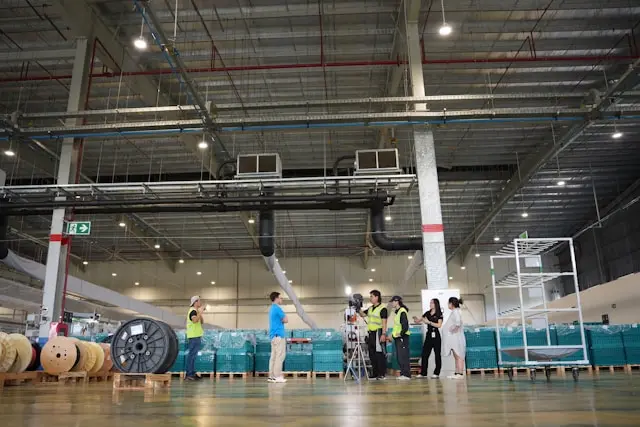
From the outside, Ajman can appear straightforward. A compact Northern Emirate. A manufacturing base. A logistics corridor feeding Dubai. But anyone who has tried to hire a senior operations director, a free zone managing director, or a port logistics chief here knows the reality is far more demanding than the emirate's modest profile suggests.
Standard recruitment methods fail in Ajman for reasons that have nothing to do with the city's size. They fail because the executive talent pool is almost entirely expatriate, highly mobile, and constantly being courted by larger emirates with bigger budgets. They fail because the leadership roles this economy needs sit at the intersection of manufacturing expertise, GCC regulatory knowledge, and emerging technology adoption. And they fail because the professional community is small enough that a poorly handled search travels fast.
Ajman's private sector workforce is 98% expatriate. This is not unusual for the UAE, but in Ajman it creates a specific problem for executive hiring. There is no deep bench of locally rooted senior professionals who have spent a decade building careers in the emirate. Leadership talent arrives, delivers on a mandate, and frequently moves when Dubai or Abu Dhabi offers a higher package or a more prominent title. The result is a market where the hidden 80% of passive talent you need to reach is not just passive. It is geographically dispersed across the wider Gulf, South Asia, and Europe, requiring search capability that extends well beyond the emirate's borders.
Ajman's commercial rents run 20% below Dubai's DMCC. Its industrial zone licences are among the cheapest in the Gulf. This cost advantage is the emirate's primary draw for businesses, but it creates a compensation tension at the executive level. Senior leaders with the skills to run smart-factory retrofits or manage multimodal rail-port logistics can command packages in Dubai or Abu Dhabi that Ajman-based employers struggle to match without creative structuring. Housing allowance subsidies of AED 3,000 per month for senior technical staff help, but they do not close the gap alone. Hiring here requires precise compensation benchmarking calibrated to the Northern Emirates rather than assumptions borrowed from Dubai's market.
Ajman's government has committed to an ambitious pivot. The Manufacturing 4.0 incentive programme offers 15% utility subsidies for smart-factory retrofits. The Ajman Digital platform integrates AI-driven traffic management and blockchain land registry. Ajman Media City is attracting gaming studios and fintech back-office operations. But the leaders who can drive this transition are not the same people who built the emirate's traditional manufacturing base. The demand is for executives who combine operational credibility in plastics, packaging, or food processing with fluency in IoT deployment, ERP modernisation, and ESG compliance. That profile is rare. It is not sitting on job boards. Finding it requires direct headhunting built on individually crafted outreach, not database queries.
This is why a Go-To Partner approach matters in Ajman. The emirate's hiring challenges are not solved by faster job postings. They are solved by pre-existing intelligence about who holds what role, at which competitor, and what it would take to move them.