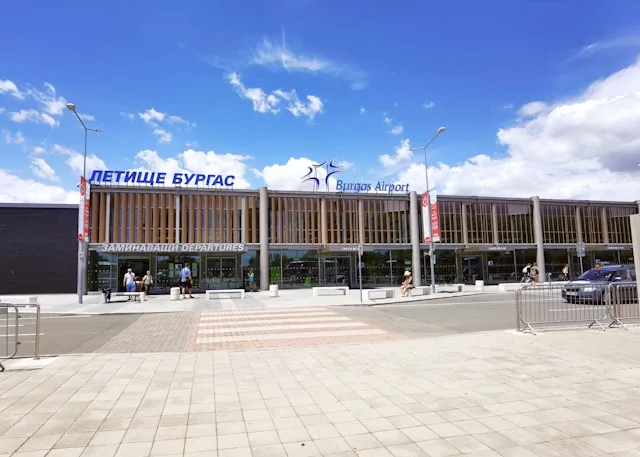
Why Burgas is a deceptively difficult place to hire senior leaders
Post a vacancy for a senior logistics director or a CTO in Burgas and you will receive applications. Most will come from candidates already visible in the market: professionals between roles, those dissatisfied enough to browse job boards, or individuals whose experience sits in the city's legacy tourism sector. The executives capable of leading a €300 million refinery retrofit, scaling a maritime informatics company, or running a German-standard automotive components plant will not be among them. They are employed, well-compensated, and solving problems their current employers cannot afford to lose them from.
At 3.8% unemployment, Burgas is tighter than Bulgaria's national average of 4.8%. That headline number masks the real constraint: the pool of senior leaders who combine technical depth with international operating experience is extraordinarily shallow. This is a city of 250,000 people executing an economic transformation that would challenge a metropolis ten times its size.
The wage gap between Burgas's growth sectors and its legacy economy creates a gravitational distortion in the executive market. ICT professionals earn €2,800 to €3,200 per month. Energy sector managers command €2,400. Tourism and hospitality workers earn €900 to €1,100. This three-tier structure means companies in the high-value sectors are competing for the same small cohort of commercially minded, internationally experienced managers. Meanwhile, candidates from the tourism sector lack the technical foundation to bridge the gap. Compensation calibration is not optional here. It is the difference between a successful hire and a failed search.
Burgas's professional community is compact and deeply interconnected. The ICT Cluster Burgas counts 90 member companies. The West Industrial Zone houses a concentrated group of foreign manufacturers. Port of Burgas EAD and its logistics ecosystem employ overlapping networks of specialists. In a market this tight, a clumsy approach to a passive candidate does not just fail. It damages the client's reputation. Word travels within days. The executives you want to attract hear about botched processes, withdrawn offers, and disrespectful outreach long before your recruiter picks up the phone. Employer brand protection is not a luxury in Burgas. It is a precondition for search success.
Net out-migration of the 18-to-25 age cohort to Sofia and EU capitals continues to thin the leadership pipeline. Remote work options and rising ICT salaries have slowed the exodus, but the effect is cumulative. Every year Burgas loses early-career professionals, the future pool of senior leaders contracts. Companies hiring today are not just filling a role. They are competing for a shrinking asset. This makes proactive talent pipeline development a strategic necessity: the firm that has already built relationships with Burgas's best will hire them, while the firm that starts searching after the vacancy opens will find only who is left.
KiTalent's Go-To Partner model was built for exactly this kind of market: small, interconnected, technically demanding, and unforgiving of generic recruitment methods. Through continuous talent mapping across the sectors that define Burgas's economy, we maintain live intelligence on who holds what role, where compensation is drifting, and which leaders might be open to the right conversation at the right time. That preparation is what allows us to deliver interview-ready candidates in 7 to 10 days, not 8 to 12 weeks.