Gothenburg, Sweden Executive Search

Executive Search in Gothenburg

KiTalent brings sector-specific intelligence and direct headhunting capability to senior leadership searches across Gothenburg.

7-10

days to qualified shortlists in many searches

80%

of relevant passive talent reached through direct headhunting

42%

faster time-to-hire than traditional search benchmarks

96%

one-year retention from KiTalent's broader methodology

These are KiTalent track-record figures referenced across our core about, services, and methodology pages.

Why Gothenburg is one of Europe's hardest executive markets to crack

Post a senior leadership role on a job board in Gothenburg and you will hear from active candidates. You will not hear from the battery engineers, automotive R&D directors, or maritime technology leaders who define this city's economy. The visible candidate pool in Gothenburg is a fraction of the real talent base, and the forces that make it so are not generic. They are specific to this city's industrial structure, physical geography, and competitive dynamics.

Gothenburg's working-age population sits at roughly 420,000. Within that, the executive and senior-specialist population serving automotive, life sciences, and maritime technology is small and tightly networked. Volvo Cars, Volvo Group, SKF, Autoliv, Polestar, Getinge, and AstraZeneca (in adjacent Mölndal) draw from the same finite pool. A plant director at Torslanda knows the head of R&D at the NOVO Energy gigafactory. A supply chain VP at SKF sits on an advisory board with a logistics lead at the Port of Gothenburg. In a market this interconnected, discretion is not optional. It is the foundation of any credible search. Poorly handled outreach or a leaked candidate list does not just damage one search. It damages the client's reputation across the entire industrial community. This is why employer brand protection matters more here than in larger, more anonymous markets.

The city reports 12,000 unfilled technical positions across automotive and ICT alone. This is not a cyclical hiring spike. It reflects a systemic mismatch between the skills the green transition demands and the talent the local education system produces. Battery cell engineers with dry-electrode coating experience are being recruited from South Korea and Germany. Green hydrogen specialists capable of integrating electrolyzer systems for maritime applications barely exist as a talent category in Sweden. Clinical data scientists who can bridge Sahlgrenska University Hospital's patient data with pharma R&D are courted by every life science firm in the Gothenburg-Mölndal corridor. When supply is this constrained, conventional recruitment is not slow. It is ineffective. The candidates who can fill these roles are already employed, already well-compensated, and not responding to LinkedIn InMails. Reaching them requires direct headhunting built on individually crafted outreach and pre-existing relationships.

Median home prices in central Gothenburg districts like Majorna and Linné exceed SEK 65,000 per square metre. This forces a growing share of mid-career and senior professionals into commuting from Kungälv, Alingsås, and other regional towns. The practical consequence for executive search is that relocation packages and compensation calibration are more complex than they first appear. A candidate's willingness to accept a role depends not just on salary and title but on whether the total proposition accounts for Gothenburg's cost of living relative to Stockholm, Malmö, or international alternatives. Firms that enter the market without accurate compensation benchmarking lose candidates at the offer stage. That is an expensive failure when the shortlist took months to build. These three forces, a concentrated and interconnected talent base, deep skills shortages in the sectors that matter most, and housing-driven constraints on candidate mobility, define why Gothenburg requires a Go-To Partner approach rather than a transactional search engagement. The market rewards firms that have already mapped it before a mandate begins.


What is driving executive demand in Gothenburg

Several structural forces are converging to shape executive demand across Gothenburg.

Automotive and e-mobility

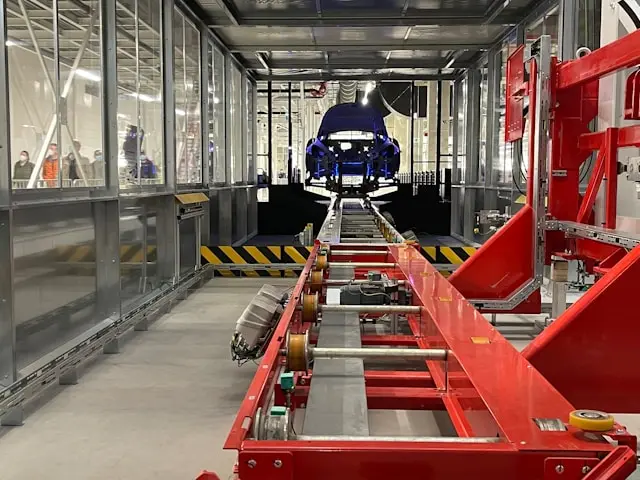
Gothenburg is Northern Europe's densest integrated EV supply-chain cluster. Volvo Cars' Torslanda plant now runs 90% fossil-free production and serves as the global export hub for the EX90 and ES90. The NOVO Energy battery gigafactory, a joint venture between Volvo Cars and Northvolt, began cell production in late 2025 and employs 1,800 direct staff. Volvo Group's Hisingen headquarters drives global R&D for electric heavy trucks and hydrogen fuel-cell long-haul vehicles. Polestar's design headquarters sits in central Gothenburg. Autoliv and SKF anchor the tier-1 and tier-2 supplier network. SEK 18 billion in industrial capital expenditure was committed in 2025, primarily in battery component manufacturing. This cluster generates constant demand for plant directors, battery process engineers, supply chain resilience managers, and EV programme leaders. Our automotive sector practice works across this value chain.

Life sciences and health technology

Sahlgrenska Science Park on Medicinareberget houses over 120 medtech startups and scale-ups focused on surgical technology and digital therapeutics. Getinge maintains its global headquarters in the city. The Genomics Medicine Sweden node at the University of Gothenburg processes 15% of national clinical sequencing data. The SEK 2.4 billion Krook Block conversion, completed in early 2026, added 35,000 square metres of lab space in Gårda. The life science complex directly employs approximately 8,000 within city limits, with demand surging for regulatory affairs specialists, bioinformatics engineers, and commercial leaders who can take precision medicine products to global markets. KiTalent's healthcare and life sciences consultants understand the specific leadership profiles these organisations need.

Maritime technology and the blue economy

The Port of Gothenburg operates Scandinavia's largest container terminal, handling 40% of Swedish container trade. The Tranzero Initiative, a consortium including Stena Line, Volvo Group, Scania, and the Port Authority, achieved full electrification of short-sea ferry routes to Frederikshavn and Kiel by early 2026. Shore-power infrastructure at Masthuggskajen now supplies 250 MW capacity. Gothenburg has positioned itself as the operations and maintenance hub for Kattegat and North Sea offshore wind zones, with specialised vessel clusters at Skandiahamnen. Leaders in this space need deep technical knowledge combined with regulatory fluency across Nordic and EU maritime frameworks. Our maritime, shipbuilding and offshore practice serves this market directly.

ICT, AI, and enterprise software

Lindholmen Science Park hosts over 250 firms working in AI, connectivity, and automotive software. Ericsson's R&D unit develops 5G and 6G applications for industrial automation. Zenseact, Volvo Cars' autonomous driving software arm, is the park's largest single tenant. AI Innovation of Sweden, the national centre for applied AI in industry, runs its Edge Lab for manufacturing quality control from Lindholmen. Chalmers Ventures spun out 34 deep-tech companies in 2025, many in battery materials and green hydrogen catalysts. The talent pressure here is acute: software architects, AI engineering leads, and product directors with industrial-application experience are in direct competition with Stockholm's tech sector and international remote offers. Our AI and technology practice brings the sector-specific depth needed to engage these candidates credibly.

Cross-border complexity

Gothenburg's major employers operate supply chains and reporting structures that span Sweden, Germany, South Korea, the UK, and the United States. Battery cell engineers are recruited internationally. Maritime regulations cross Nordic and EU jurisdictions. Volvo Group and Volvo Cars run leadership teams distributed across multiple continents. This means many Gothenburg mandates are not purely local searches. They require cross-border candidate identification, multi-jurisdiction compensation analysis, and coordination across time zones. KiTalent's international executive search capability, coordinated from our European headquarters in Turin, is built for exactly this type of mandate.

Sector strengths that define Gothenburg executive search

Gothenburg's executive search market is strongest where its economic specialisation is deepest.

Why companies partner with KiTalent for executive search in Gothenburg

Companies rarely need only reach in Gothenburg. They need interpretation, calibration, and a search architecture that reflects the real structure of the market.

We operate across Sweden

Our team coordinates Gothenburg mandates from our European headquarters in Turin, with direct access to the talent intelligence, compensation dynamics, and sector developments that drive search outcomes.

We reach the candidates that matter

The strongest executives in Gothenburg are passive. Our direct headhunting approach engages the hidden 80% of passive talent through discreet outreach rooted in real market knowledge.

We do not start from scratch

Our parallel mapping methodology means we already hold live intelligence on restructuring, transition windows, compensation patterns, and candidate attraction opportunities when a brief arrives.

Our model de-risks the investment

In Gothenburg, the cost of a wrong executive hire extends far beyond the recruitment fee. Our interview-fee model lets clients see real market output and qualified candidates before the bulk of the investment is committed.

How we run executive searches in Gothenburg

Gothenburg's combination of industrial density, talent scarcity, and interconnected professional networks demands a methodology that is both fast and discreet. KiTalent's approach, coordinated from our European headquarters in Turin, is designed for precisely these conditions.

1. Parallel mapping before the brief is live

KiTalent does not start research when a client signs a mandate. The firm continuously tracks career movements, organisational changes, and compensation shifts across Gothenburg's automotive, life sciences, maritime, and technology sectors. When the NOVO Energy gigafactory began hiring 1,800 staff, that created ripple effects across the city's engineering talent base. KiTalent's parallel mapping process had already identified which leaders at adjacent firms were most likely to be approached and which were most likely to be open to a new proposition. This pre-existing intelligence is what allows the firm to deliver interview-ready shortlists in seven to ten days rather than the industry-standard eight to twelve weeks.

2. Direct headhunting into the hidden 80%

Eighty percent of the executives who could fill a given Gothenburg mandate are not actively looking. A VP of Supply Chain at Volvo Group is not browsing job boards. A chief medical officer at a Sahlgrenska Science Park scale-up is not responding to mass InMails. Reaching these candidates requires individually crafted, confidential outreach from a consultant who understands their sector, speaks their technical language, and can articulate why a specific opportunity is worth their attention. This is direct headhunting in its most demanding form, and it is the only approach that produces consistently strong shortlists in a market this constrained.

3. Market intelligence as a search output

Every KiTalent engagement in Gothenburg produces more than a candidate shortlist. Clients receive a comprehensive market map that includes compensation benchmarking data specific to their sector and seniority level, a clear picture of where relevant talent sits across the city's employers, and an honest assessment of how their proposition compares to competing offers. This intelligence has standalone strategic value. It informs role design, compensation calibration, and organisational planning well beyond the immediate hire. For C-level searches in particular, this market context is what separates a successful placement from a costly misfire.

Essential reading for Gothenburg hiring decisions

These resources provide deeper market intelligence and explain how KiTalent turns insight into a faster, more transparent search process.

Frequently asked questions about executive search in Gothenburg

These are the questions most closely tied to how executive search really works in Gothenburg.

Why do companies use executive recruiters in Gothenburg?

Gothenburg has 12,000 unfilled technical positions and a working-age population of 420,000. The executives who could fill the most critical roles are already employed at Volvo Cars, Volvo Group, Getinge, SKF, or one of the city's 120-plus medtech startups. They are not actively looking. Job postings and inbound applications reach a fraction of the relevant talent base. Executive recruiters with direct headhunting capability and pre-existing market intelligence can reach the passive majority that conventional methods miss. In a market this concentrated, the search firm's sector credibility and discretion directly determine the quality of the shortlist.

What makes Gothenburg different from Stockholm for executive hiring?

Stockholm is a broader, more diversified talent market with deep financial services, consumer tech, and public sector leadership pools. Gothenburg's executive market is defined by heavy industrial production: automotive electrification, battery manufacturing, maritime technology, and applied life sciences. The talent pool is smaller, more specialised, and more interconnected. Compensation structures differ. Automotive and maritime roles in Gothenburg carry production-linked incentives and global mobility components that Stockholm's predominantly service-economy roles do not. A search approach designed for Stockholm will underperform in Gothenburg because the candidate motivations, competitive dynamics, and sector knowledge requirements are fundamentally different.

How does KiTalent approach executive search in Gothenburg?

KiTalent continuously maps talent across Gothenburg's core sectors, tracking career movements, compensation shifts, and organisational changes before any client mandate is received. When a brief is activated, the firm already has a live picture of who holds what role, at which company, and how they might respond to a new opportunity. Search is conducted through direct headhunting: individually crafted, confidential outreach from sector-native consultants. Every candidate undergoes a three-tier assessment covering technical competency, cultural fit, and motivation. Clients receive weekly pipeline reports and full market intelligence as a standard output.

How quickly can KiTalent present candidates in Gothenburg?

Interview-ready candidates are typically delivered within seven to ten days of mandate activation. This speed comes from parallel mapping: the continuous pre-mandate intelligence work that means the firm is not starting from zero. In Gothenburg, where the same senior professionals are being approached by multiple employers simultaneously, this speed is the difference between presenting a strong shortlist and presenting a list of candidates who have already accepted other offers.

How do Gothenburg's housing costs affect executive recruitment?

Central Gothenburg property prices exceed SEK 65,000 per square metre, pushing a growing share of senior professionals into commuting from Kungälv, Alingsås, and other regional towns. For companies recruiting nationally or internationally, this means relocation packages and total compensation propositions must account for real living costs, not headline salary figures. A candidate relocating from Germany or South Korea needs to understand the full financial picture. KiTalent's market benchmarking service calibrates compensation to Gothenburg's specific sector and cost-of-living dynamics, preventing offer-stage failures that waste months of search effort.

Start a conversation about your Gothenburg search

Whether you are hiring a battery plant director for Hisingen, a chief commercial officer for a Sahlgrenska Science Park medtech scale-up, a maritime decarbonisation programme leader, or an autonomous driving software director for Lindholmen, this is the right starting point.

What we bring to Gothenburg executive mandates:

Executive search and direct headhunting · Talent mapping and market intelligence · Compensation benchmarking and mandate calibration · Connection to KiTalent's European headquarters in Turin and international executive search network.

Tell us about your Gothenburg hiring challenge

Whether you are running a live mandate or want to pressure-test a brief before going to market, this is the right place to start the conversation.

Explore Our Executive Search Guides

Produced by KiTalent Research. Based on local market intelligence and executive-search data. Reviewed by KiTalent Research Team.