Why Hradec Králové is one of Central Europe's most deceptive hiring markets
A city of 93,400 people with 2.6% unemployment does not produce executive candidates through job postings. Hradec Králové's talent market is small, highly specialised, and almost entirely employed. The visible candidate pool is negligible. The executives who matter are inside B. Braun, Magna, Teva, or the growing HealthTech startup cluster. They are not looking. They are being looked for.
Standard recruitment methods fail here for reasons that go beyond the tight labour market. The city's economy is built on three converging clusters that share overlapping talent needs, and the professional community is small enough that a poorly handled approach travels through the entire market within days.
Hradec Králové's three core sectors do not recruit from separate pools. A validation engineer at B. Braun is also a target for Teva's biologics expansion. An industrial data scientist optimising CNC processes at Magna is equally valuable to a HealthTech startup building AI-driven dialysis monitoring. With 60-plus SMEs in robotics integration competing alongside anchor employers, every senior hire triggers a chain reaction. Sourcing a plant manager for a battery component line means engaging with the same 30 to 40 professionals that three other firms are already courting.
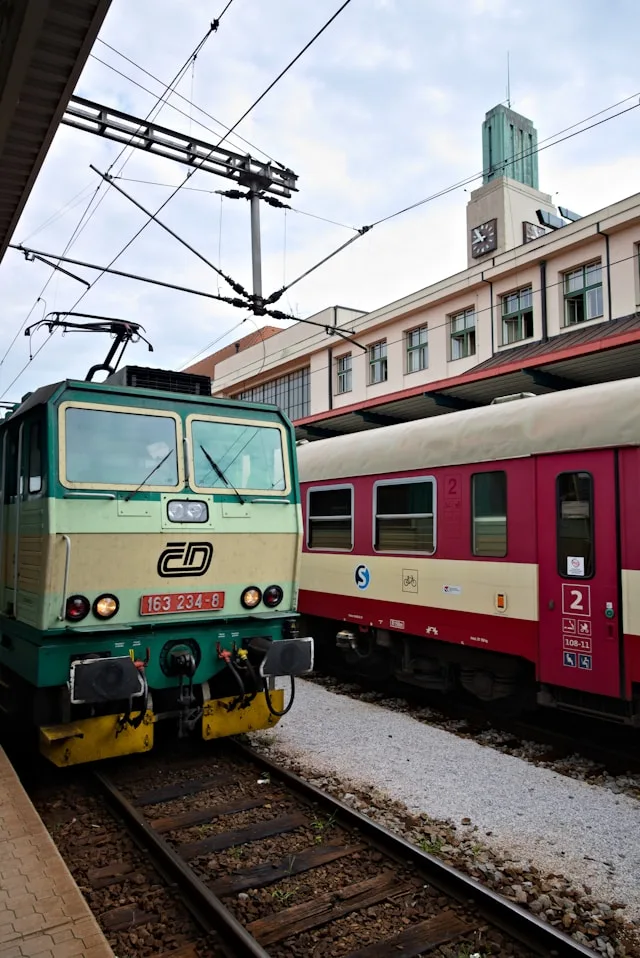
The 55-minute express rail connection to Prague Main Station has created a two-way talent flow that complicates every search. Fifteen percent of the city's IT workers already serve Prague-based firms from satellite offices. Prague commuters have pushed residential prices up 12% in a single year, eroding wage competitiveness for mid-level roles. At the executive level, the dynamic is subtler: candidates with the right profile often have standing offers from Prague firms willing to pay capital-city premiums. Any search in Hradec Králové must account for this gravitational pull and build a proposition that competes on more than compensation alone.
The D11 motorway completion in late 2025 cut transit time to Wrocław by 45 minutes and triggered immediate warehousing investment. Amazon expanded by 35,000 square metres. DHL opened a new regional distribution centre. Two cold-chain facilities came online to serve the pharma cluster. Each of these created demand for logistics leadership, but the local pool of experienced distribution executives is shallow. The same pattern is repeating with the Plotiště Logistics Zone, where 25 hectares of new development land is attracting investors faster than the city can produce the senior talent to run their operations.
These dynamics make Hradec Králové a market where pre-existing intelligence is the only reliable path to a quality shortlist. Firms that wait until a vacancy opens to begin sourcing will find themselves competing for the same visible candidates that every other employer has already approached. The Go-To Partner model exists precisely for markets like this: concentrated, interconnected, and operating above capacity. The hidden 80% of executive talent is not a theoretical concept here. It is the only population worth recruiting from.