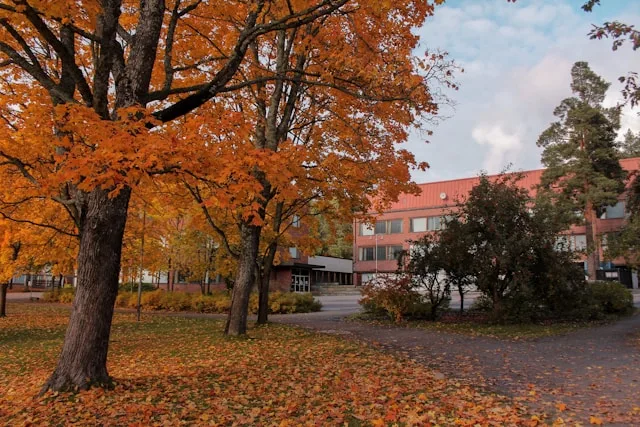
Jyväskylä, Finland Executive Search

Executive Search in Jyväskylä

KiTalent brings sector-specific intelligence and direct headhunting capability to senior leadership searches across Jyväskylä.

7-10

days to qualified shortlists in many searches

80%

of relevant passive talent reached through direct headhunting

42%

faster time-to-hire than traditional search benchmarks

96%

one-year retention from KiTalent's broader methodology

These are KiTalent track-record figures referenced across our core about, services, and methodology pages.

Why Jyväskylä is one of Finland's most deceptive hiring markets

A city with 7.8% unemployment and 15,000 university students should, in theory, produce a steady supply of qualified candidates for leadership roles. It does not. The executives who can bridge Jyväskylä's industrial heritage with its emerging technology clusters are among the hardest to identify and the hardest to move. Standard recruitment methods consistently underperform here, and the reasons are specific to this city's economy.

Jyväskylä produces roughly 400 software graduates annually through JAMK's Institute of Information Technology alone, and JYU contributes strong cohorts in AI, nanoscience, and behavioural economics. Yet the city has over 200 open positions for industrial AI specialists at any given time. The gap exists because the executives and senior engineers this market needs must combine manufacturing-domain knowledge with digital capability. That intersection is narrow. Battery process engineers with hydrometallurgy experience command salaries of €55,000 to €75,000 and are being courted simultaneously by GTK, by recycling startups in the Palokka corridor, and by larger battery plants in Vaasa and Kotka. Job postings do not reach these people. They are already employed. They are already solving high-value problems. Reaching them requires direct headhunting built on individually crafted outreach and a credible understanding of their work.

The conventional narrative is that Jyväskylä loses its best STEM graduates to the capital region. This is partly true, but the dynamic is more nuanced than a simple brain drain. Hybrid-work policies now allow senior professionals to maintain Helsinki-client consulting relationships while living in Jyväskylä. The real challenge is not that talent leaves permanently. It is that the professionals who have built their careers in the capital region do not perceive Jyväskylä as a destination for their next move. Changing that perception requires a search process that can articulate what makes a Jyväskylä-based role distinctive: proximity to GTK's pilot facilities, the EdTech commercialisation pipeline, or the chance to lead digital transformation inside a manufacturing SME with €650M in collective cluster turnover. This is positioning work, not sourcing work.

Jyväskylä's senior professional community is tightly interconnected. The Innova tech hub houses over 200 companies and 2,000 employees. The health campus at Kukkumäki, the battery-research corridor in Palokka, and the downtown professional services district all overlap socially and professionally. A clumsy candidate approach or a poorly managed search process does not just fail. It circulates. In a market this concentrated, employer brand protection is not a nice-to-have. It is a precondition for being able to search effectively six months from now. These dynamics explain why companies in Jyväskylä increasingly treat executive search as a strategic function rather than a procurement exercise. The firms that succeed in hiring here are the ones that invest in continuous market intelligence and approach candidates through a partner with an established, credible presence. This is the Go-To Partner model: sustained engagement with the market, not episodic interventions.


What is driving executive demand in Jyväskylä

Several structural forces are converging to shape executive demand across Jyväskylä.

Smart manufacturing and industrial digitalisation

form the city's economic backbone. Metso Outotec's R&D centre employs approximately 800 people and anchors a cluster of subcontractors and integrators that collectively generates €650M in annual turnover. The current shift is from hardware exports to "Machinery-as-a-Service" software layers. This transition demands leaders who can manage the cultural and commercial complexity of moving a traditional engineering organisation toward recurring-revenue models. Firms like Siili Solutions' Jyväskylä branch are deploying large language models for technical documentation in heavy industry, and the AutomationLAB consortium is scaling predictive-maintenance AI across manufacturing SMEs. The industrial automation and robotics talent pool here is distinctive: it blends OT knowledge with IT fluency in a way few other Finnish cities can match.

Battery value-chain R&D and critical raw materials

represent Jyväskylä's most distinctive growth vector. GTK's national headquarters employs over 400 scientists and operates Europe's most advanced mineral-processing pilot plant, expanded in late 2025. This institutional anchor has attracted 15 or more startups focused on critical raw-materials recycling. Cycad, specialising in lithium recovery, and Nordic Mineral Intelligence, focused on exploration technology, have raised a combined €22M in 2025 and 2026. The Palokka–Haapaniemi industrial corridor now hosts recycling-tech pilot facilities serving battery plants across Finland. Senior hires in this cluster need to combine deep chemistry knowledge with supply-chain management capability and an understanding of conflict-mineral traceability regulations. This is a talent profile that sits at the intersection of energy sector expertise and advanced manufacturing leadership.

EdTech and learning technologies

draw on JYU's Finnish Institute for Educational Research and Agora Center to produce commercially viable platforms. Valamis, a corporate learning platform on a unicorn-track growth trajectory, maintains significant operations in the city. 3DBear in AR/VR learning and Kide Science in early STEM education are both scaling into Nordic and Asian markets. Finland's 2025 continuous-learning legislative reforms have expanded B2B SaaS demand for vocational training platforms. The leadership roles emerging here require a hybrid of education-sector knowledge, product management experience, and international go-to-market capability. KiTalent's AI and technology practice works closely with firms navigating exactly this kind of cross-sector talent challenge.

HealthTech and wellness innovation

cluster around the Kukkumäki Health Campus adjacent to Central Finland Central Hospital. Peili Vision in VR rehabilitation, Medikro in respiratory diagnostics, and Nursie in care logistics software represent the range of the cluster. With 25% of Central Finland's population projected to be over 65 by 2026, demand for remote-monitoring solutions and digital therapeutics is accelerating. Yet the cluster faces an acute constraint: healthcare technicians and biomedical equipment specialists are in severe shortage, with active immigration recruitment underway. Senior roles in healthcare and life sciences here require leaders who understand both the clinical validation pathway and the commercial scaling challenge.

Logistics and central distribution

benefit from Jyväskylä's nodal position on Finland's highway and rail network. Kesko's central distribution centre at Halssila Logistics Park employs over 1,200 people. The Äijälänranta smart logistics zone, with phase one completing in 2026, integrates warehouse automation with district heating infrastructure. These operations need leaders who can manage the convergence of physical logistics with digital optimisation. International executive search capability matters here because many supply-chain leadership candidates have built careers across multiple Nordic or European markets.

Sector strengths that define Jyväskylä executive search

Jyväskylä's executive search market is strongest where its economic specialisation is deepest.

Why companies partner with KiTalent for executive search in Jyväskylä

Companies rarely need only reach in Jyväskylä. They need interpretation, calibration, and a search architecture that reflects the real structure of the market.

We operate across Finland

Our team runs Jyväskylä mandates through KiTalent's four regional hubs, combining local market intelligence with cross-border execution across Europe, the Americas, the Middle East, and Asia Pacific.

We reach the candidates that matter

The strongest executives in Jyväskylä are passive. Our direct headhunting approach engages the hidden 80% of passive talent through discreet outreach rooted in real market knowledge.

We do not start from scratch

Our parallel mapping methodology means we already hold live intelligence on restructuring, transition windows, compensation patterns, and candidate attraction opportunities when a brief arrives.

Our model de-risks the investment

In Jyväskylä, the cost of a wrong executive hire extends far beyond the recruitment fee. Our Proof-First Search model lets clients see real market output and qualified candidates before the bulk of the investment is committed.

How we run executive searches in Jyväskylä

The methodology KiTalent applies in Jyväskylä is shaped by three realities: the candidate population for any given senior role is finite and partially known, the professional community is closely connected, and the strongest candidates are typically not considering a move. Searches are coordinated from our European headquarters in Turin, with direct engagement managed by consultants who understand the Nordic executive market and the specific dynamics of Finland's regional economies.

1. Parallel mapping before the brief is live

KiTalent continuously tracks career movements, organisational changes, and compensation evolution across its key sectors. In Jyväskylä, this means maintaining a live view of who holds what role at Metso Outotec's R&D centre, within GTK's leadership structure, across the Innova hub's 200-plus companies, and inside the EdTech scale-ups. When a client defines a need, the research phase is not starting cold. The methodology is designed to compress the gap between mandate and shortlist to 7 to 10 days precisely because the intelligence already exists.

2. Direct headhunting into the hidden 80%

In a city where 200 or more industrial AI positions sit open at any time while the qualified population is finite, the distinction between active and passive candidates is everything. KiTalent's approach is built on individually crafted outreach to professionals who are performing well, compensated fairly, and not browsing job boards. Each approach is tailored to the specific candidate's career trajectory and the specific proposition the client offers. In Jyväskylä's tight community, a generic LinkedIn InMail does not produce results. A credible, sector-informed conversation does. This is the core of direct headhunting as KiTalent practises it.

3. Market intelligence as a search output

Every Jyväskylä mandate produces a comprehensive market map as a deliverable: who holds comparable roles, what compensation they command, how they responded to the opportunity, and what the competitive field looks like. This intelligence has standalone strategic value. A client considering whether to locate a battery R&D leadership role in Jyväskylä, Vaasa, or Tampere can use the market data to make that decision with clarity. The market benchmarking output is not an afterthought. It is part of the service.

Essential reading for Jyväskylä hiring decisions

These resources provide deeper market intelligence and explain how KiTalent turns insight into a faster, more transparent search process.

Frequently asked questions about executive search in Jyväskylä

These are the questions most closely tied to how executive search really works in Jyväskylä.

Why do companies use executive recruiters in Jyväskylä?

Jyväskylä's senior talent market is small, specialised, and tightly interconnected. For roles in battery R&D, industrial AI, or EdTech product leadership, the qualified candidate population within commuting distance may number in the dozens rather than hundreds. Job postings and database searches produce weak response because the strongest professionals are already employed and not actively looking. An executive search firm with pre-existing market intelligence and the ability to approach passive candidates directly and credibly is the only reliable path to a complete shortlist. The alternative is a slow, visible search that signals desperation to the very community you are trying to hire from.

What makes Jyväskylä different from Helsinki or Tampere for executive hiring?

Helsinki offers volume. Tampere offers a larger industrial base. Jyväskylä offers something neither can match: the convergence of GTK's mineral-processing headquarters, JYU's research commercialisation pipeline, and a manufacturing SME cluster in active digital transformation. The talent challenge is correspondingly distinct. Candidates here need cross-domain expertise that bridges legacy industry with emerging technology. The professional community is smaller and more interconnected, meaning every search interaction carries reputational consequences. And the Helsinki gravity effect means that convincing a strong candidate to choose Jyväskylä requires a proposition built on substance, not just salary.

How does KiTalent approach executive search in Jyväskylä?

Searches are coordinated from KiTalent's European headquarters in Turin, with mandates supported by continuous talent mapping across Finland's key industrial and technology clusters. The firm maintains a live view of leadership movements within Jyväskylä's core sectors: smart manufacturing, battery value-chain, EdTech, and healthtech. Each search begins with market intelligence that already exists, which is why KiTalent delivers interview-ready shortlists in 7 to 10 days rather than the 8 to 12 weeks typical of traditional firms. Candidate engagement is individually tailored, reflecting the specific proposition and the specific career trajectory of each professional approached.

How quickly can KiTalent present candidates in Jyväskylä?

KiTalent's standard is 7 to 10 days from mandate confirmation to a qualified shortlist. In Jyväskylä, this speed is possible because the firm maps leadership talent continuously rather than starting research from scratch. For highly specialised roles, such as battery process engineers with hydrometallurgy experience, the timeline may extend slightly if the search includes cross-border candidates from Sweden, Germany, or other Nordic markets. The pay-per-interview model means the client evaluates real candidates and comprehensive market data before making the primary financial commitment.

How does the language requirement affect executive search in Jyväskylä?

Finnish language capability is a defining constraint in this market. English-speaking technology firms and international startups can hire from a broader European pool, but any role involving healthcare operations, public-sector engagement, or team leadership in traditional manufacturing requires fluent Finnish. This immediately narrows the candidate universe and makes it essential to determine, during mandate design rather than mid-search, whether the role genuinely requires bilingual capability. KiTalent addresses this during the market benchmarking phase, ensuring the client enters the market with a realistic view of what is achievable given the language requirement.

Start a conversation about your Jyväskylä search

Whether you are hiring a battery supply-chain director for the Palokka corridor, an AI implementation lead for a manufacturing transformation, an EdTech product director scaling into Asian markets, or a healthtech commercial leader at Kukkumäki, the starting point is the same: a conversation about what the market actually looks like.

What we bring to Jyväskylä executive mandates:

Executive search and direct headhunting · Talent mapping and market intelligence · Compensation benchmarking and mandate calibration · Connection to KiTalent's European headquarters in Turin and international executive search network.

Tell us about your Jyväskylä hiring challenge

Whether you are running a live mandate or want to pressure-test a brief before going to market, this is the right place to start the conversation.

Explore Our Executive Search Guides

Produced by KiTalent Research. Based on local market intelligence and executive-search data. Reviewed by KiTalent Research Team.