Why Košice is one of Central Europe's hardest executive markets to crack
Post a senior role in Košice on a job board and the response will disappoint. Not because the talent is absent, but because the professionals capable of leading a green steel transition, an automotive software R&D centre, or a cross-border logistics operation are already locked into roles they find intellectually and financially rewarding. At 3.8% unemployment in the city proper, the visible candidate pool tells you almost nothing about the real supply of leadership talent.
This is a market defined by three forces that conventional recruitment methods cannot handle.
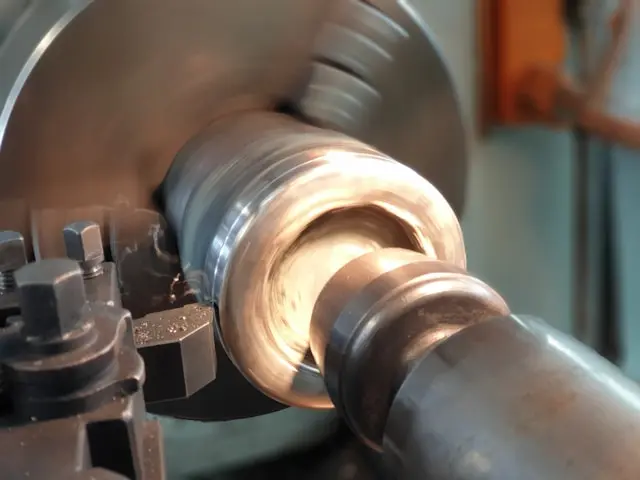
The CVC Capital Partners-led acquisition of Košice's steelworks has triggered a €1.2 billion decarbonisation capex cycle running through 2027. Hybrid electric arc furnace technology, hydrogen electrolyser pilots at Circular Park Košice, and CBAM compliance planning all require senior leaders who combine heavy-industry experience with green technology fluency. These profiles are scarce across all of Europe. In Košice, where the steelworks still employs 9,800 people directly, nearly every qualified candidate is already inside the transformation or advising it. Reaching them requires direct headhunting built on individually crafted, confidential outreach.
Košice IT Valley's 135 member companies employ 18,400 ICT professionals, yet the city has 4,000+ open positions it cannot fill without overheating wage inflation. Average ICT salaries reached €2,850 gross per month in 2026, narrowing the gap with Bratislava to just 15%. Deutsche Telekom IT Solutions, GlobalLogic, Visteon, and a rising cohort of local scale-ups like Simplicity and Kontentino are competing for the same finite population of embedded systems architects, MLOps engineers, and cybersecurity leads. When every employer is fishing in the same pond, the hidden 80% of passive talent becomes the only meaningful source of senior hires.
Košice sits 90 kilometres from the Ukrainian border and serves as the EU's primary rail gateway for reconstruction logistics via the Čierna nad Tisou crossing. It neighbours Hungary, with Kechnec Industrial Park hosting Magna Steyr and Volvo Trucks R&D just 15 kilometres west. Senior roles here routinely require German and Hungarian language capability, familiarity with EU CBAM regulation, and the ability to manage supply chains spanning three or four countries. This is not a market where a Bratislava-centric recruiter with a LinkedIn Recruiter licence will deliver. It requires a partner with international executive search infrastructure and genuine cross-border intelligence.
These dynamics explain why the firms succeeding in Košice treat executive search as a continuous intelligence function, not a reactive transaction. KiTalent's Go-To Partner model was built for exactly this kind of market.