Serving hub
The Netherlands is served from the real European hub that coordinates the search across Benelux and wider Europe.

Netherlands Executive Search
The Dutch executive market sits at the intersection of Europe's semiconductor supply chain, its largest port and logistics corridor, and a dense financial services cluster. From the high-tech systems ecosystem around Eindhoven to the energy transition programmes reshaping Rotterdam and the financial and digital hubs of Amsterdam, senior leadership talent in the Netherlands is scarce, mobile, and difficult to reach through conventional channels.
days to qualified shortlists in many searches
of relevant passive talent reached through direct headhunting
faster time-to-hire than traditional search benchmarks
one-year retention from KiTalent's broader methodology
These are KiTalent track-record figures referenced across our core about, services, and methodology pages.
The Netherlands is one of Europe's most open economies and one of its tightest executive labour markets. GDP growth has moderated to the 1.0–1.4 per cent range for 2025–26, yet unemployment hovers around 3.5 per cent and vacancy rates remain elevated. The executives who can deliver in this environment are already employed. Most are invisible to job boards. And the professional community, particularly in specialist clusters, is small enough that a poorly run process is remembered.
Unlike countries with a dominant capital city, Dutch executive talent distributes across the Randstad belt and beyond. Amsterdam anchors finance, digital and data infrastructure. Rotterdam concentrates logistics, energy and chemicals leadership. The Hague houses government, legal and international institutions. Eindhoven runs an entirely separate high-tech manufacturing economy. A search strategy designed for a single metro will miss critical pools. Firms that treat the Netherlands as one market routinely fail to map the right geographies for the right roles.
The OECD's 2025 survey identified reduced labour-market matching efficiency as a binding constraint on Dutch growth. Collectively negotiated wage increases exceeded 6 per cent in 2024, yet shortages in ICT, engineering, power systems and green-skills disciplines persist. At senior level, this means that qualified COOs, CTOs and heads of energy transition are fielding multiple approaches simultaneously. Reaching the hidden 80 per cent of passive candidates who are not actively looking requires discretion, sector credibility, and a research process that starts before the mandate.
Nitrogen deposition rules, environmental permitting constraints and grid-capacity bottlenecks affect the timeline and feasibility of industrial expansion projects. Executives hired to lead these programmes need regulatory track records that span Dutch and EU frameworks. The Netherlands' role as a re-export hub also means that leadership teams must manage exposure to German industrial demand cycles, global tariff shifts, and supply-chain fragmentation. Search briefs in this market are rarely domestic-only.
KiTalent operates from its European headquarters in Turin, providing continuous intelligence on Dutch executive pools through the Go-To Partner model. That means parallel mapping runs before mandates formalise, and shortlists reflect months of pre-existing research rather than a reactive sprint. Understanding how this economy's clusters interact, and where its leaders actually sit, is the foundation of every Netherlands search we run. More on who we are and how we work.
Real Hub Coverage
We cover the Netherlands from Turin, not through a decorative Dutch office footprint. That gives us one real operating hub while keeping mapped visibility across Amsterdam, Rotterdam, The Hague, Eindhoven, Utrecht, and the Dutch executive corridors tied to Benelux and wider European talent movement.
The Netherlands rewards that model because high-tech systems, port logistics, energy, and financial services all draw on overlapping but distinct senior populations. A real hub with cross-border execution is more honest and more useful than pretending to maintain a nationwide office lattice.
Route Map
Dutch searches sit at the intersection of high-tech systems, logistics, finance, and wider European movement, so the route matters.
The Netherlands is served from the real European hub that coordinates the search across Benelux and wider Europe.
Choose the sector route that best matches how the Dutch executive pool is structured.
Use the role route when the search is shaped more by leadership function than by industry label.
Use the commercial cluster to frame Proof-First, fees, and process before the mandate broadens.

The Netherlands is not one talent pool but a constellation of highly specialised clusters, each with its own competitive dynamics, compensation norms and candidate behaviours. Treating it as a single market produces generic shortlists. Treating each cluster on its own terms produces leaders who stay.
The Brainport region centred on Eindhoven is Europe's deepest concentration of semiconductor, photonics and precision-manufacturing expertise. ASML, NXP and hundreds of tier-one suppliers compete for the same pool of senior engineers, R&D directors and…
Rotterdam and the Moerdijk industrial corridor are the physical centre of Dutch refining, chemicals and the emerging hydrogen and CCUS economy. Projects such as Porthos and the IJmuiden Ver offshore wind tenders are creating entirely new executive roles…
Amsterdam hosts the headquarters of ING, ABN AMRO, and a concentrated cluster of pension funds and asset managers. Regulatory evolution, digital transformation and ESG integration drive demand for chief risk officers, heads of investments and compliance…
The Port of Rotterdam and the Schiphol air-cargo cluster make the Netherlands Europe's primary distribution gateway. Terminal operators, freight forwarders and logistics-tech firms in Rotterdam and across the Randstad require COOs and supply-chain…
Amsterdam and Utrecht form the core of Dutch digital services, hosting data-centre operations, cloud engineering teams and a growing AI start-up ecosystem. Chief Data Officers and VP Engineering roles are…
Clinical research organisations, pharmaceutical manufacturers and medtech firms operate across Breda, Leiden and the wider Brabant corridor. Medicines exports grew sharply in 2024, and the pipeline of regulatory, commercial and R&D leadership hires…
Executive mobility across Netherlands's cities is shaped by compensation expectations, relocation appetite, family considerations, and international exposure.
A search that maps where the right leaders actually operate, and understands the conditions under which they would consider a move, is fundamentally more effective than one that treats Netherlands as a flat national market.
Netherlands's executive search market is strongest where its economic specialisation is deepest.
ASML's continued dominance in extreme ultraviolet lithography makes the Brainport region around Eindhoven a critical node in the global chip supply chain. The wider ecosystem of precision metalworking, photonics, and industrial automation suppliers employs thousands of engineers and demands senior R&D, operations and supply-chain leaders who…
The Port of Rotterdam handled approximately 13.8 million TEU containers in 2024, anchoring a logistics and industrial corridor that stretches from the coast to the Rhine basin. Rotterdam is also the centre of gravity for refining, chemicals production, and the emerging hydrogen, CCUS and offshore wind infrastructure that will reshape Dutch industry…
ING, Rabobank, ABN AMRO and a dense cluster of pension funds, asset managers and fintech challengers concentrate in Amsterdam and extend into Utrecht. The Dutch pension system is one of Europe's largest, and regulatory evolution under EU frameworks creates ongoing demand for compliance, risk and investment…
Banking & Wealth Management · Investments & Asset Management
Amsterdam remains one of the FLAP-D markets for hyperscaler and carrier-neutral data-centre capacity. Despite sustainability and planning pressures, the deployment pipeline persists. Chief Data Officers, heads of cloud operations and cyber-security directors are among the most contested executive profiles in the Randstad.
Dutch medicines exports grew 15–20 per cent year on year in 2024, supported by clinical trial infrastructure and strong regulatory ecosystems. Firms across Leiden, Amsterdam and the Breda–Brabant corridor recruit commercial directors, heads of regulatory affairs and R&D leaders with EU and FDA experience.…
The Netherlands' intermediary trade model, with services exports exceeding €300 billion in 2024, means that many senior roles carry international mandates by default. Heads of global procurement, supply-chain directors managing nearshoring strategies, and general managers overseeing Rhine-corridor distribution networks require search processes that span…
Companies rarely need only reach in Netherlands. They need interpretation, calibration, and a search architecture that reflects the real structure of the market.
Our team runs Netherlands mandates through KiTalent's four regional hubs, combining local market intelligence with cross-border execution across Europe, the Americas, the Middle East, and Asia Pacific.
The strongest executives in Netherlands are passive. Our direct headhunting approach engages the hidden 80% of passive talent through discreet outreach rooted in real market knowledge.
Our parallel mapping methodology means we already hold live intelligence on restructuring, transition windows, compensation patterns, and candidate attraction opportunities when a brief arrives.
In Netherlands, the cost of a wrong executive hire extends far beyond the recruitment fee. Our Proof-First Search model lets clients see real market output and qualified candidates before the bulk of the investment is committed.
The Dutch market punishes reactive recruitment. Notice periods are long, professional networks are tight, and the best candidates are approached by multiple firms. KiTalent's process is built for exactly this type of environment. It starts earlier, moves faster, and produces shortlists drawn from candidates who were already mapped before the mandate was signed.
KiTalent's methodology begins with parallel mapping. For sectors and geographies where we anticipate client demand, we maintain continuously updated profiles of senior leaders, their current tenure, compensation range and potential mobility. When a Netherlands brief arrives, the research phase is already partially complete. This is what makes 7–10 day shortlists possible in a market where other firms spend weeks building a first longlist.
In a country where unemployment sits below 4 per cent, the executives who will transform a client's business are not on the market. Our direct headhunting approach identifies and approaches these passive candidates through confidential, one-to-one outreach. Every approach is calibrated to the candidate's sector context, career trajectory and personal priorities. In the Netherlands' compact professional community, the quality of the approach defines whether the candidate engages or disengages permanently.
Compensation data in the Netherlands shifts faster than annual surveys can capture. Collectively negotiated wage increases exceeded 6 per cent in 2024, and executive packages in high-demand clusters like Brainport or Amsterdam fintech have moved further. KiTalent's market benchmarking provides real-time compensation intelligence, ensuring that every offer reflects the current market rather than an outdated median. This is the difference between a signed contract and a lost candidate.
A rotating view of the city-level market shifts shaping executive hiring across Netherlands.
Amsterdam is where European fintech leaders, global travel platforms, and university-backed biotech ventures compete for the same finite pool of senior talent. With roughly 3,500…
Breda is the Benelux corridor's logistics command centre, a maturing photonics and precision manufacturing satellite of Brainport Eindhoven, and a life sciences hub anchored by…
Eindhoven is Europe's most concentrated deep-tech economy: the command centre of the global semiconductor equipment industry, a photonics powerhouse, and the heartland of Dutch…
Groningen is the northern Netherlands' capital of hydrogen innovation, healthy ageing research, and high-tech agrifood. With an €18.4 billion GDP now fully decoupled from natural…
These resources provide deeper market intelligence and explain how KiTalent turns insight into a faster, more transparent search process.
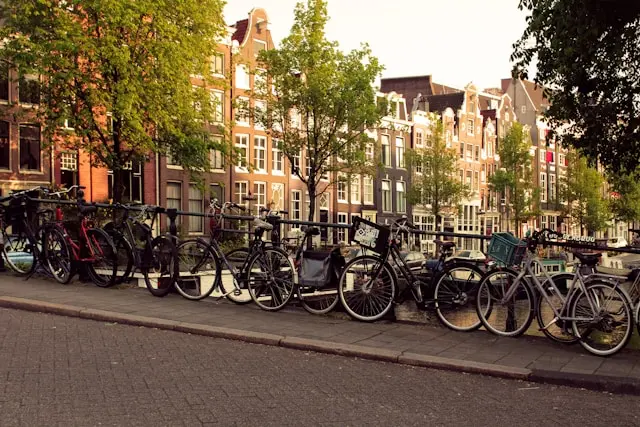
Amsterdam's hotel rooms are more expensive than they have ever been. The average daily rate hit €189 in 2024, a 34% increase on 2019 levels. Overnight visitors reached 18.2...

Utrecht's ICT and creative digital sector now accounts for roughly €4.2 billion in regional GDP, generated by approximately 14,800 companies employing 62,000 professionals. On...

The Hague hosts 3.3 international conferences every week. Sixty eight per cent of them are classified as legal, diplomatic, or security related. This is not a commercial events...

The Port of Rotterdam's industrial cluster is in the middle of the largest capital deployment in its modern history. Between 2024 and 2026, more than €3.5 billion is flowing...
Use these pages to move between city clusters, sector pages, and supporting articles.
These are the questions most closely tied to how executive search really works in Netherlands.
The Dutch labour market is one of Europe's tightest, with unemployment below 4 per cent and structural shortages in STEM, ICT and green-skills disciplines. Most qualified senior leaders are already employed and not visible through conventional channels. Executive recruiters with direct-search capability can reach the hidden 80 per cent of passive candidates who will not respond to advertisements but will consider a credible, confidential approach. The cost of a failed hire in the Dutch system, amplified by long notice periods and 13th-month structures, makes professional search a risk-mitigation investment.
Germany's executive market is deeper and more hierarchical, with longer average tenures and regional chambers of commerce playing a stronger intermediary role. Belgium's bilingual divide creates a structural segmentation that the Netherlands does not share. The Dutch market is smaller, more transparent within clusters, and more internationally oriented. A mishandled approach in Brainport or the Amsterdam financial community travels fast. Process quality, discretion and sector credibility matter more here than in larger markets where reputational signals dissipate across a bigger pool.
Every Netherlands mandate begins with intelligence already gathered through parallel mapping. Sector-native consultants identify candidates through direct, confidential outreach. A three-tier assessment tests strategic capability, sector fit and cultural alignment. The process is coordinated from our European headquarters in Turin by consultants with dedicated Dutch market coverage. Clients receive weekly progress reports and full pipeline visibility throughout.
Initial shortlists are typically delivered within 7–10 days. This speed is possible because parallel mapping provides a running start. In the Dutch market, where notice periods can extend to six months for senior executives, early engagement with candidates is critical. The faster a shortlist is delivered, the sooner confidential conversations begin and the sooner a preferred candidate can negotiate their exit timeline.
Yes. We maintain active coverage across all major Dutch executive clusters: Amsterdam for finance and digital, Rotterdam for logistics and energy, Eindhoven for high-tech and semiconductors, The Hague for government-adjacent and legal roles, Utrecht for healthcare and professional services, Groningen for energy transition, and Breda for life sciences and Brabant-corridor mandates. Each city page provides deeper intelligence on local executive-market dynamics.
Whether you need a CTO for Eindhoven's semiconductor corridor, a Head of Energy Transition for Rotterdam's industrial cluster, a Chief Risk Officer for Amsterdam's financial district, or a Commercial Director for the life-sciences ecosystem in Brabant, this is where the conversation begins.
What we bring to Netherlands executive mandates:
Executive search and direct headhunting · Talent mapping and market intelligence · Compensation benchmarking and mandate calibration · Connection to KiTalent's European headquarters in Turin and our international executive search network.
Whether you are running a live mandate or want to pressure-test a brief before going to market, this is the right place to start the conversation.
Produced by KiTalent Research. Based on local market intelligence and executive-search data. Reviewed by Chiara Giacoletti.