Why Oradea is a deceptively difficult executive market
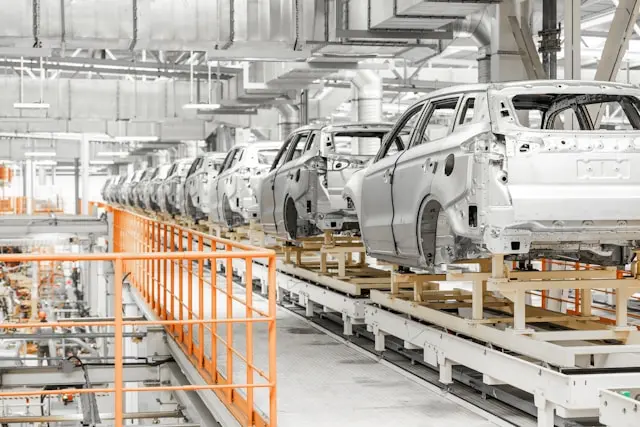
From the outside, Oradea looks like a straightforward nearshoring success story. GDP per capita in Bihor County has reached approximately €19,500. Continental, Bosch, De'Longhi, and Yardi have all committed long-term. New EV battery supply chain entrants are arriving to serve the CATL and BMW plants sixty kilometres west in Debrecen. The numbers look healthy. But posting a senior vacancy in this market and waiting for inbound applications will produce almost nothing useful.
Unemployment sits at 2.1% and is projected to fall to 1.9% in 2026. This is not a labour market with slack. It is a market where every capable executive is already employed, already compensated at near-Cluj levels, and already being courted by at least one competing employer. The hidden 80% of passive talent that defines most executive markets is closer to 95% here. The visible candidate pool is functionally empty.
Oradea's metropolitan population of roughly 280,000 creates a professional community where senior leaders in automotive, IT, and manufacturing all know each other. A clumsy approach to a plant director at Continental will reach the HR director at Bosch by the end of the week. Process quality is not a luxury in this environment. It is a prerequisite. Every candidate interaction carries reputational consequences for the hiring company, because the professional network is small enough that word travels instantly.
The A3 Motorway completion in mid-2026 and the modernised CFR rail line to Budapest have turned Oradea into an operational satellite of Hungary's western industrial corridor. German and South Korean component suppliers are leasing space in Eurobusiness Park II specifically to serve Debrecen's megaplants. This means Oradea's executive talent pool is no longer competing only within Romania. Hungarian-speaking project managers and operations directors are being recruited across the border in both directions. A search that only maps the Romanian side of this corridor misses half the relevant candidates.
Senior software engineers in Oradea now command €3,500 to €4,200 net per month. That is 90% of Cluj-Napoca parity. For plant directors and R&D centre heads, total compensation packages including relocation support and international schooling allowances have reached Western European mid-market levels. The city's historical cost advantage is narrowing fast. Companies that enter salary negotiations without current, verified compensation data risk either overpaying or losing their preferred candidate to a better-calibrated offer.
These dynamics require a Go-To Partner approach to executive search: one built on pre-existing market intelligence, discreet direct engagement, and compensation benchmarking that reflects what is actually happening in this corridor, not what happened eighteen months ago.