Prijedor's Wood Sector in 2026: 18% Unemployment and No One to Hire
Prijedor sits in the middle of 83,000 hectares of forest. Timber covers 62% of the municipality's territory. The Kozara complex alone provides one of Bosnia and Herzegovina's...

Prijedor, Bosnia Herzegovina Executive Search
KiTalent brings sector-specific intelligence and direct headhunting capability to senior leadership searches across Prijedor.
days to qualified shortlists in many searches
of relevant passive talent reached through direct headhunting
faster time-to-hire than traditional search benchmarks
one-year retention from KiTalent's broader methodology
These are KiTalent track-record figures referenced across our core about, services, and methodology pages.
A city of 51,000 with a GDP per capita of €7,800 should not, on paper, be a difficult place to recruit. The numbers suggest surplus labour. Unemployment sits at 11.2%. But those figures obscure the real problem. The roles that matter most here, the ones that determine whether ArcelorMittal's green mining pivot succeeds or whether the IT Park scales beyond 14 tenants, require leaders who barely exist in the local market and who are being courted simultaneously by employers in Banja Luka, Zagreb, and Vienna. Posting a job advertisement and waiting for applications will produce volume. It will not produce the ESG Compliance Director or Chief Digital Officer that Prijedor's employers actually need.
ArcelorMittal employs roughly 1,200 people directly and supports over 3,000 indirect jobs. That is not a large employer. It is the gravitational centre of the municipality's economy. When the Ljubija Complex recruits a senior mining engineer or an automation specialist, it pulls from the same finite pool that Rudnik Boksita, the Sinosteel service hub, and every wood-processing firm also depends on. Compensation benchmarks in mining (€1,400 to €1,800 net for engineers) set the ceiling that other sectors must match or explain away. Any executive search in Prijedor must account for this single-employer distortion. It affects candidate availability, counteroffer risk, and the entire negotiation dynamic.
The working-age population shrank by 1.8% annually between 2020 and 2025. That is not a future risk. It is an ongoing contraction that has already removed the mid-career professionals who would normally be stepping into director and VP roles over the next three to five years. Remote work for EU firms retains some talent in the city, but it simultaneously makes those individuals harder to recruit locally. They earn EU-adjacent salaries and have no incentive to accept a local contract unless the role itself is compelling. This is the dynamic described in our analysis of the hidden 80% of passive talent: the strongest candidates are employed, satisfied, and invisible to conventional sourcing.
Bosnia and Herzegovina has no unified economic development agency. Investors and employers in Prijedor must operate across Republika Srpska entity law, municipal permits, and state-level trade agreements simultaneously. An incoming senior leader who understands mining operations but not this regulatory architecture will lose months getting oriented. The cost of a failed executive hire is already severe in any market. In a city where a single mismanaged FDI relationship or a botched EUDR compliance programme can ripple across the entire industrial zone, it is existential. This is why Prijedor mandates require assessment that goes far beyond technical competency matching. These three forces, employer concentration, demographic decline, and institutional complexity, make Prijedor a market where the Go-To Partner approach is not a luxury. It is the only model that works. Search here demands pre-existing market intelligence, direct access to passive candidates, and a consultant who understands both the industrial logic and the local professional ecosystem before the brief arrives.
Prijedor is not one talent pool. It is four distinct professional ecosystems that overlap in surprising ways: the mining engineer who becomes an automation consultant, the forestry operations manager who pivots to EUDR compliance, the IT developer who serves the mining sector's IoT needs. Understanding where these ecosystems connect is what separates effective search from generic recruitment.
Iron ore extraction, pellet production, tailings management, and the ESG retrofit powering Prijedor's green mining transition.
Metal fabrication, mining equipment maintenance, PLC automation, and the integration of Chinese technology partnerships into local operations.
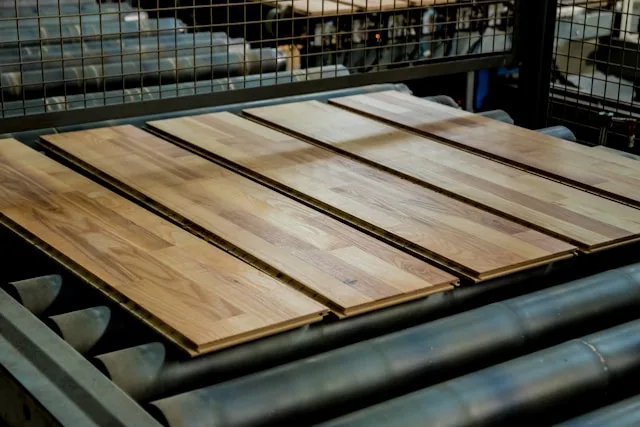
Engineered wood products, FSC/EUDR compliance, cogeneration, and the consolidation of sawmill operations across the municipality.
Dairy processing, berry cultivation and export, cold-chain management, and FMCG distribution across Croatian and EU markets.
German-language SAP support, CAD/CAM engineering, IoT for agriculture and mining, and the scaling of the Prijedor IT Park ecosystem.
Prijedor's executive search market is strongest where its economic specialisation is deepest.
ArcelorMittal Prijedor's Ljubija Complex produces 2.1 million tonnes of high-grade iron ore pellets annually, with 70% flowing to EU markets in Austria and Germany. The €45 million decarbonization retrofit, featuring dry-stack tailings technology and electrified heavy haulage, is not a one-off capital project. It is the beginning of a multi-year transformation toward DR-grade pellet…
Twelve medium-sized sawmills and three engineered-wood plants, including Sanić and Drvni Centar Prijedor, are transitioning from raw log export to FSC-certified CLT panels and precision-cut furniture components. A new €12 million biomass cogeneration plant is cutting energy costs by 30% across the industrial zone. The commercial pressure, however, comes from the EU Deforestation Regulation.
Meggle BiH in dairy processing, Vitaminka in confectionery and distribution, and the expanding berry export sector anchored by Sana-Agro form Prijedor's third economic pillar. High-tunnel raspberry and blackberry cultivation grew 18% in 2025, driven by direct sourcing contracts with Lidl and Aldi. The €8.5 million Intermodal Logistics Center, co-financed by the EU and EBRD, added 5,000…
The Prijedor IT Park, converted from a former textile factory, hosts 14 SMEs specialising in German-language SAP support, CAD/CAM engineering for mining equipment, and IoT sensor development for agriculture. Office costs at €450 to €550 per square metre undercut Zagreb significantly. The University of Banja Luka's Prijedor branch launched a Data Analytics and Cybersecurity programme in 2025…
Prijedor's export orientation (EU steel markets, Croatian and Austrian timber buyers, German retail chains) means almost every senior role carries international executive search dimensions. Leaders must manage relationships across entity boundaries, state-level trade frameworks, and EU regulatory requirements simultaneously. The city's emerging Chinese…
Companies rarely need only reach in Prijedor. They need interpretation, calibration, and a search architecture that reflects the real structure of the market.
Our team coordinates Prijedor mandates from our European headquarters in Turin, with direct access to the talent intelligence, compensation dynamics, and sector developments that drive search outcomes.
The strongest executives in Prijedor are passive. Our direct headhunting approach engages the hidden 80% of passive talent through discreet outreach rooted in real market knowledge.
Our parallel mapping methodology means we already hold live intelligence on restructuring, transition windows, compensation patterns, and candidate attraction opportunities when a brief arrives.
In Prijedor, the cost of a wrong executive hire extends far beyond the recruitment fee. Our interview-fee model lets clients see real market output and qualified candidates before the bulk of the investment is committed.
Prijedor's market conditions, a concentrated employer base, a shrinking working-age population, and deeply interconnected professional networks, demand a search methodology built on pre-existing intelligence rather than reactive sourcing. KiTalent operates from our European headquarters in Turin, with consultants who understand Balkan industrial markets, Republika Srpska's regulatory environment, and the specific compensation dynamics of a resource-dependent secondary city. This is not a search capability we assemble on demand. It exists continuously.
Our methodology is built on continuous, pre-mandate talent intelligence. In Prijedor, this means we track career movements across ArcelorMittal's leadership team, the wood-processing cluster, the IT Park's growing tenant base, and the agri-food corridor's management ranks. We know which mining engineers completed ArcelorMittal's internal ESG certification. We know which IT managers are being courted by firms in Zagreb. When a client activates a brief, we are presenting candidates within 7 to 10 days because the mapping already exists.
In a market of Prijedor's size, the hidden 80% of passive candidates is not an abstraction. It is the practical reality that the 15 to 20 individuals qualified for any given senior role are all employed, generally well-compensated, and not visible through any public channel. Our direct headhunting approach uses individually crafted, confidential outreach. Each conversation is tailored to the candidate's specific career trajectory and motivations. In a city where a clumsy recruitment approach becomes common knowledge within a week, this precision is not optional.
Every Prijedor mandate produces a deliverable beyond the candidate shortlist. Clients receive a structured view of the local talent market: who holds comparable roles, what compensation levels prevail, how candidates responded, and where the gaps lie. This market intelligence is particularly valuable for employers entering the Prijedor market for the first time, whether establishing a service hub like Sinosteel or scaling a presence in the IT Park. It converts a single search into a strategic asset that informs future hiring decisions.
Related city stories from the same regional talent cluster.
Banja Luka is the economic centre of Republika Srpska and the second-largest business hub in Bosnia and Herzegovina: a city where automotive supply chain manufacturing, a…
Bijeljina is the economic gateway between Republika Srpska and Serbia, built on the Semberija plain's agribusiness strength and a fast-growing cross-border logistics corridor.…
Doboj is northern Bosnia and Herzegovina's intermodal logistics nerve centre and a mid-sized industrial anchor where metallurgy, automotive components, and agri-tech converge on…
East Sarajevo is a city of deliberate contradiction: politically separate from Sarajevo Canton, economically intertwined with it, and increasingly defined by automotive component…
These resources provide deeper market intelligence and explain how KiTalent turns insight into a faster, more transparent search process.
Prijedor sits in the middle of 83,000 hectares of forest. Timber covers 62% of the municipality's territory. The Kozara complex alone provides one of Bosnia and Herzegovina's...

Prijedor municipality sits on one of the Balkans' oldest iron ore deposits, home to an ArcelorMittal operation producing roughly 2.1 million tonnes of concentrate annually. It...

Prijedor municipality sits in the Sana River valley, surrounded by 52,000 hectares of agricultural land and the foothills of Kozara. The raw materials are there. The domestic...
Use these pages to navigate between parent markets, sector pages, and supporting articles.
These are the questions most closely tied to how executive search really works in Prijedor.
Prijedor's senior talent pool is exceptionally concentrated. A handful of major employers, led by ArcelorMittal, compete for the same limited group of experienced leaders across mining, manufacturing, IT, and agri-food. The profiles in highest demand, ESG compliance directors, chief digital officers, and supply-chain managers with EU regulatory expertise, are almost exclusively employed and not visible through job boards or inbound applications. Professional executive search is the only reliable method for identifying and engaging these candidates discreetly, with the market intelligence and compensation calibration needed to convert an initial conversation into an accepted offer.
Banja Luka and Sarajevo have deeper talent pools, more diversified economies, and larger professional services ecosystems. Prijedor's market is defined by a single dominant employer, sharper wage divergence between sectors, and a professional community small enough that every search approach is visible. These conditions mean that confidentiality, speed, and pre-existing candidate relationships matter far more here than in a capital city. The margin for error is narrower, and the reputational consequences of a poorly managed process are more immediate.
KiTalent maintains continuous talent mapping across Prijedor's core sectors. When a mandate activates, we already have intelligence on who holds which roles, what compensation levels apply, and which individuals are open to a well-structured conversation. Our consultants operate from Turin with deep familiarity in Balkan industrial markets. Every candidate undergoes a three-tier assessment covering technical competency, cultural alignment, and career motivation. This process delivers the 96% one-year retention rate that clients in resource-dependent markets need.
Our standard is 7 to 10 days from brief confirmation to a qualified shortlist. This speed is possible because of parallel mapping: the continuous intelligence gathering that happens before any mandate begins. In Prijedor, where the relevant candidate population for any senior role may number 15 to 20 individuals, the difference between a firm that starts research on day one and a firm that has already mapped the market is the difference between a four-month search and a four-week search.
The municipality's working-age population contracted by 1.8% annually over the past five years. This is not a background trend. It is a force that actively depletes the mid-career pipeline for leadership roles. Remote work for EU firms retains some professionals in Prijedor but simultaneously prices them out of local compensation frameworks. Effective search in this environment requires extending the sourcing perimeter to the Bosnian diaspora in Austria and Germany, to professionals in Banja Luka and Zagreb willing to relocate, and to returning nationals. It also requires a compelling employer proposition. Salary alone will not attract someone back to a secondary Balkan city. The role itself must be exceptional.
Whether you are hiring an ESG Compliance Director for a mining operation, a Chief Digital Officer to lead manufacturing digitalisation, a Plant Manager for an engineered-wood facility, or an IT Operations Lead to scale a nearshoring business, this is where the conversation starts.
What we bring to Prijedor executive mandates:
Executive search and direct headhunting · Talent mapping and market intelligence · Compensation benchmarking and mandate calibration · Connection to KiTalent's European headquarters in Turin and international executive search network.
Whether you are running a live mandate or want to pressure-test a brief before going to market, this is the right place to start the conversation.
Produced by KiTalent Research. Based on local market intelligence and executive-search data. Reviewed by KiTalent Research Team.