Why Tetovo is one of the Balkans' most deceptive hiring markets
Post a leadership vacancy in Tetovo through conventional channels and the response will feel adequate. Applications will arrive from Skopje, from Kosovo, from the diaspora. The problem is not volume. It is that the candidates capable of running a modernised textile operation, scaling a cold-chain logistics network, or building a nearshore development centre in the Tetovo Tech Park are not responding to job advertisements. They are already employed, already well-compensated relative to the local market, and already being courted by the same small circle of employers competing for a thin layer of executive capability.
Tetovo's demographic drain is not a background statistic. It is the central fact shaping every senior hire. Each year, roughly 2.5% of the working-age population leaves for Germany, Austria, or Switzerland. The people leaving are disproportionately the ones with technical qualifications, language skills, and the kind of professional ambition that makes someone a future general manager. What remains is a labour market with unemployment above 21% at the base and acute scarcity at the top. The gap between unskilled oversupply and executive-level shortage is wider here than in almost any comparable city in the Western Balkans.
In a city of 86,000, professional networks are tight. The general manager of Albini Teuta knows the operations director at Zdravje Radovo. The head of the Tetovo Tech Park incubator has studied alongside the regional manager at NLB bank. When a company begins a leadership search clumsily, word travels within days. A poorly handled approach to a competitor's finance director can damage a relationship that took years to build. This is why process quality and employer brand protection matter more here than in larger, more anonymous markets.
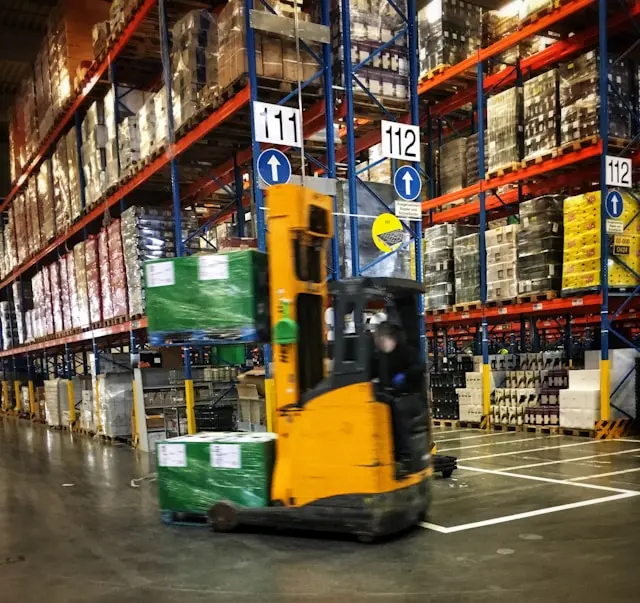
Tetovo's economy is inseparable from Kosovo. The Polog Logistics Center handles 400+ trucks daily to Pristina and Gjakova. Agri-food exports to Kosovo's retail networks grew 18% last year. German automotive SMEs in the TIDZ ship precision components through the Jazince-Blace border crossing on 48-hour delivery cycles. Any leadership hire in manufacturing, logistics, or trade must understand EU customs compliance, bilateral trade protocols, and the practical realities of operating across two regulatory systems simultaneously. This cross-border dimension eliminates most candidates who look strong on paper but have only operated within a single national framework.
These dynamics are precisely why a Go-To Partner approach works in Tetovo. The city rewards firms that have already mapped its talent pools before a mandate begins, that understand its compensation realities, and that can approach passive candidates with the discretion a small professional community demands.