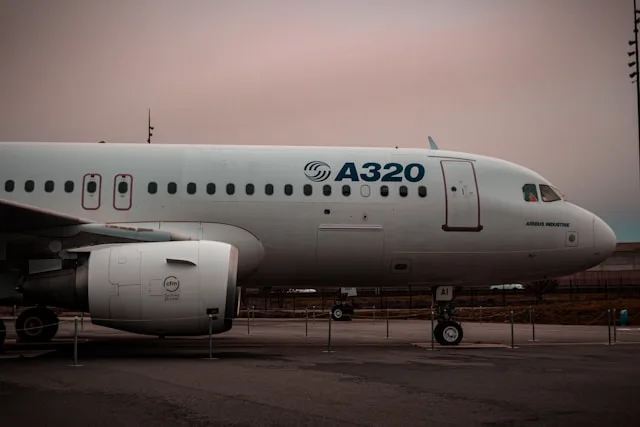
Why Toulouse is one of Europe's most deceptive executive markets
A city with 525,000 private-sector jobs and 6.4% unemployment looks, on paper, like a market with ample talent. It is not. Toulouse's executive talent pool is one of the most tightly contested in France, shaped by forces that make conventional recruitment methods unreliable.
Airbus employs 38,500 people in the Toulouse metropolitan area. Thales Alenia Space adds 4,200. Safran contributes 3,800. These three employers, plus CNES and their supply chains, create an aerospace talent ecosystem where almost everyone of senior standing knows almost everyone else. When a leadership vacancy opens at a Tier 2 supplier or a New Space scale-up, the realistic candidate universe is small. It is also extremely visible. A poorly managed approach to a candidate at Safran Electrical & Power will be discussed at ISAE-SUPAERO alumni events within the week. Employer brand protection is not a luxury here. It is a precondition for any search that touches the aerospace value chain.
Pôle Emploi data shows that 18% of aerospace vacancies in the Toulouse basin remain unfilled after 90 days. The primary constraint is not technical skill. It is the intersection of technical depth and bilingual French-English fluency required for roles embedded in international programme structures. A cryogenic fuel-systems lead at Airbus's ZEROe programme reports into a multinational matrix. A clinical operations director at the Oncopole manages Phase III trials with global CRO partners. These roles sit at a linguistic and cultural crossroads that job board postings simply cannot fill. Reaching the right candidates requires direct headhunting into organisations where they are performing well and not looking to leave.
Toulouse's diversification into hydrogen aviation, quantum computing, and precision oncology is real. But it has created a secondary problem: new sectors are competing for executives drawn from the same ISAE-SUPAERO, ENAC, and INP pipeline. A composite materials specialist sought by Beyond Aero for hydrogen airframe development is the same profile that Exotrail needs for satellite structural design. An AI/ML engineer certified to aerospace standards is equally attractive to Thales Digital Factory and to Artemis in medical imaging. The talent pool is diversifying more slowly than the economy it serves. This is precisely the kind of market where the hidden 80% of passive talent determines whether a search produces a strong outcome or a compromised one.
These dynamics make Toulouse a market that rewards pre-existing intelligence, discretion, and speed. They are the reason KiTalent's Go-To Partner approach exists: to build cumulative knowledge of a market before any single mandate requires it.