Why Fier is a test of search capability, not search volume
Post a senior role on a job board in Fier and the response will tell you very little about the city's actual talent market. The professionals who can lead an enhanced oil recovery programme, scale an agro-industrial export operation, or commission a solar park are not browsing listings. They are employed, productive, and visible only to firms that already know where they sit. This is a market where conventional recruitment methods produce noise, not signal.
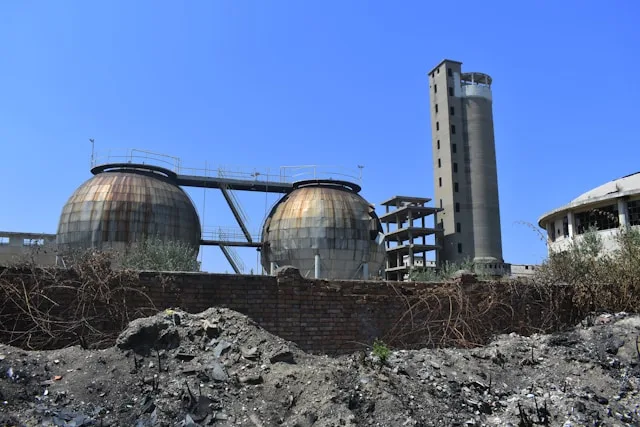
Fier's economy has orbited Geo-Jade Petroleum and the Patos-Marinza oilfield for decades. That concentration has created a deep but narrow pool of technical and operational leaders. Petroleum engineers specialising in EOR and polymer flooding command €2,800 to €4,500 per month net, and most are already locked into Geo-Jade's efficiency programmes or the secondary market of junior operators and Albpetrol joint ventures that emerged from the 2025 marginal-well divestments. HSE managers with EU environmental directive compliance experience are even scarcer: the transposition of IED and SEVESO III standards has made their skills non-negotiable, yet the pipeline of qualified candidates is thin. The hidden 80% of passive talent is not a theoretical concept here. It describes the reality of almost every senior search.
Approximately 12% of university-educated 25-to-35-year-olds left Fier for Italy and Germany in 2024 alone. That statistic from INSTAT does not just describe a demographic trend. It describes the systematic hollowing-out of the mid-management bench that feeds future leadership roles. When a solar PV project developer or an agri-supply chain manager is needed today, the candidate who should have been developing in Fier for the past five years is often in Milan or Munich. This makes every senior hire more consequential because the internal succession pipeline behind them is unreliable.
Greater Fier's influence zone covers roughly 150,000 people. The senior professional community is a fraction of that. In a market this interconnected, every search interaction is a branding event. A poorly managed approach, an indiscreet conversation, or a withdrawn offer circulates within days. This is why process quality and employer brand protection matter as much as candidate identification. The firms that treat Fier as a volume recruitment exercise damage their standing before they have made a single hire.
These dynamics demand a different model. Not a transactional recruiter responding to a vacancy, but a strategic talent partner that maintains continuous intelligence on who holds what role, at which company, and under what conditions they might consider moving.