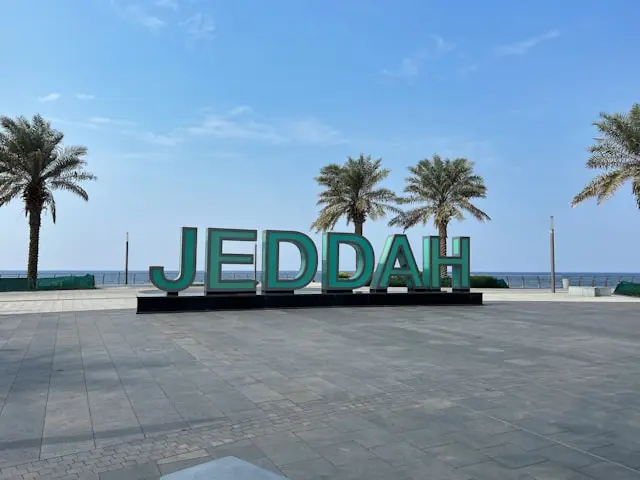
Jeddah, Saudi Arabia Executive Search

Executive Search in Jeddah

KiTalent brings sector-specific intelligence and direct headhunting capability to senior leadership searches across Jeddah.

7-10

days to qualified shortlists in many searches

80%

of relevant passive talent reached through direct headhunting

42%

faster time-to-hire than traditional search benchmarks

96%

one-year retention from KiTalent's broader methodology

These are KiTalent track-record figures referenced across our core about, services, and methodology pages.

Why Jeddah is one of the Gulf's most demanding executive markets

Posting a senior role on a job board in Jeddah produces one kind of candidate: the visible, available kind. That is not the kind that solves the problems this city actually faces.

Jeddah's executive market operates under a set of pressures that make conventional recruitment methods unreliable. The city is growing fast, investment is concentrated in capital-intensive sectors, and the regulatory environment is reshaping who can fill which roles. Firms that treat this as a standard Gulf hiring exercise consistently underestimate the difficulty.

Saudi Arabia's expanded Nitaqat quotas for 2025 and 2026 cover tourism, healthcare, engineering, and a growing list of commercial professions. For employers in Jeddah, this means executive hiring is not just a question of finding the best person. It is a question of finding the best person who also satisfies localization requirements, or structuring a leadership team that meets quota thresholds while maintaining operational capability. Every senior search now carries a regulatory dimension that did not exist five years ago. The firms that ignore this during search design pay for it in compliance costs, delayed onboarding, or rejected work permits.

Jeddah's private sector is anchored by a small number of large family conglomerates, port and airport operators, PIF-backed development vehicles, and private hospital groups. Abdul Latif Jameel, Fakeeh Care Group, Saudia, Jeddah Airports Company, and the terminal operators at Jeddah Islamic Port are not just employers. They are the market. Senior professionals rotate between these organisations, and everyone in a given sector knows everyone else. A clumsy approach to a candidate who is currently at a competitor will travel through the city's professional networks within days. Protecting the employer's brand during a search is not optional here. It is a prerequisite.

Hajj and Umrah seasons create predictable but intense surges in hospitality, aviation, logistics, and healthcare demand. Hotels need general managers in place months before peak season. Airlines need commercial directors before route-planning windows close. Hospitals scale clinical leadership ahead of pilgrim arrivals. The hiring calendar in Jeddah is not flat. It is compressed, cyclical, and unforgiving to firms that start a search too late. These three dynamics define why a Go-To Partner approach matters more in Jeddah than in most Gulf cities. The market rewards firms that have pre-existing intelligence, established candidate relationships, and the ability to move fast without cutting corners on assessment or compliance.


What is driving executive demand in Jeddah

Several structural forces are converging to shape executive demand across Jeddah.

Logistics and maritime operations

Jeddah Islamic Port is the Kingdom's principal Red Sea container gateway, and it is being transformed. DP World's USD 800 million South Container Terminal upgrade, Mawani's SAR 689 million logistics corridor linking the port to Al-Khumrah Park, and new bonded warehousing capacity are all creating leadership roles that did not exist two years ago. Terminal operations directors, cold-chain engineers, supply-chain transformation leads, and customs compliance specialists are in short supply. The ongoing Red Sea maritime security disruptions add a layer of complexity: shipping lines are re-routing, insurance premiums have risen, and port operators need leaders who can manage volatility alongside growth. KiTalent's maritime, shipbuilding and offshore practice understands these dynamics from the operator's perspective.

Aviation and passenger services

King Abdulaziz International Airport recorded record passenger volumes through 2024 and 2025, driven by international connectivity expansion and pilgrimage traffic. GACA's national target of 140 million passengers across Saudi airports is pulling investment into ground handling, route network planning, and airport commercial development. Saudia, headquartered in Jeddah, and Jeddah Airports Company both require senior commercial and operations leadership with Gulf aviation experience. These roles sit at the intersection of travel and hospitality and infrastructure operations: candidates must understand both airline economics and the regulatory environment of Saudi civil aviation.

Construction, real estate, and heritage tourism

PIF's Al Balad Development Company is regenerating Jeddah's historic district into a mixed-use cultural, hospitality, and retail destination. The Corniche waterfront and Tahlia commercial corridor are attracting hotel brands, luxury retail operators, and mixed-use developers. Project directors, hotel general managers, and commercial real estate heads for these developments require a combination of Gulf market experience and international brand standards. Our real estate and construction and luxury and retail search teams work across both sides of this equation.

Healthcare and life sciences

Private hospital expansion is accelerating. Fakeeh Care Group reported SAR 1.51 billion in H1 2025 revenue, up 13% year-on-year. King Abdulaziz University Hospital anchors clinical R&D and medical education. The demand pattern is consistent: hospital administrators, clinical department heads, health-tech CIOs, and medical affairs directors. Saudization quotas in healthcare add a compliance filter to every search. KiTalent's healthcare and life sciences consultants understand both the clinical credibility requirements and the regulatory constraints.

Trade, wholesale, and pilgrimage services

Jeddah's retail and wholesale clusters are deeply connected to the Hajj and Umrah economy. From large-format malls along Tahlia Street to specialised pilgrim-service operators, the commercial sector requires leaders who can manage seasonal demand swings and multi-language customer bases. E-commerce enablers and logistics-tech startups serving this segment are adding a digital layer to what has traditionally been a physical retail market.

Sector strengths that define Jeddah executive search

Jeddah's executive search market is strongest where its economic specialisation is deepest.

Why companies partner with KiTalent for executive search in Jeddah

Companies rarely need only reach in Jeddah. They need interpretation, calibration, and a search architecture that reflects the real structure of the market.

We operate across Saudi Arabia

Our team coordinates Jeddah mandates from our European headquarters in Turin, with direct access to the talent intelligence, compensation dynamics, and sector developments that drive search outcomes.

We reach the candidates that matter

The strongest executives in Jeddah are passive. Our direct headhunting approach engages the hidden 80% of passive talent through discreet outreach rooted in real market knowledge.

We do not start from scratch

Our parallel mapping methodology means we already hold live intelligence on restructuring, transition windows, compensation patterns, and candidate attraction opportunities when a brief arrives.

Our model de-risks the investment

In Jeddah, the cost of a wrong executive hire extends far beyond the recruitment fee. Our interview-fee model lets clients see real market output and qualified candidates before the bulk of the investment is committed.

How we run executive searches in Jeddah

KiTalent serves Jeddah from our Middle East hub in Nicosia, with consultants who understand Gulf regulatory environments, Arabic-language candidate engagement, and the cross-border corridors that connect Jeddah to talent pools across the MENA region, Europe, and Asia. The methodology that produces a qualified shortlist in 7 to 10 days is not a product of shortcuts. It is a product of work that starts before the mandate does.

1. Parallel mapping before the brief is live

Our methodology is built on continuous pre-mandate intelligence. We track career movements, compensation shifts, and organisational changes across Jeddah's key sectors on an ongoing basis. When a client defines a need, we are not starting from zero. We are activating a network of pre-identified, pre-assessed professionals. This is particularly valuable in a market where the same 50 senior logistics or healthcare leaders are being approached by multiple firms simultaneously.

2. Direct headhunting into the hidden 80%

The executives who will make the greatest difference to your organisation are not browsing job boards. They are running terminals at Jeddah Islamic Port, leading hospital expansions for Fakeeh Care, or managing route networks for Saudia. Reaching them requires direct headhunting built on individually crafted outreach, genuine sector knowledge, and the credibility to hold a conversation about career trajectory that a generalist recruiter cannot replicate.

3. Market intelligence as a search output

Every Jeddah mandate produces more than a shortlist. Clients receive a comprehensive market map: who holds which roles at which organisations, how compensation is structured, where talent gaps exist, and how the competitive field is positioning itself. This intelligence informs not just the immediate hire but the client's broader workforce strategy. For C-level searches, this market picture is often as valuable as the candidates themselves.

Essential reading for Jeddah hiring decisions

These resources provide deeper market intelligence and explain how KiTalent turns insight into a faster, more transparent search process.

Frequently asked questions about executive search in Jeddah

These are the questions most closely tied to how executive search really works in Jeddah.

Why do companies use executive recruiters in Jeddah?

Jeddah's senior talent pool is concentrated among a small number of major employers: port operators, airlines, PIF-backed developments, hospital groups, and family conglomerates. The professionals capable of leading these organisations are not on the open market. They must be identified through sector-specific intelligence and approached with discretion. Executive recruiters with pre-existing relationships in these sectors can reach candidates that internal HR teams and job postings cannot. Add Saudization compliance filtering to every search, and the case for specialist support becomes clear.

What makes Jeddah different from Riyadh for executive hiring?

Riyadh is the capital, the regulatory centre, and the destination for most multinational regional headquarters. Jeddah is an operational city: its economy is built around moving goods through ports, passengers through airports, and pilgrims through hospitality infrastructure. Executive profiles here skew toward logistics operations, aviation, healthcare delivery, and seasonal tourism management. The professional community is smaller and more interconnected than Riyadh's, which makes confidentiality and process quality more consequential in every search.

How does KiTalent approach executive search in Jeddah?

We begin with parallel mapping: continuous tracking of career movements, compensation data, and organisational changes across Jeddah's core sectors. When a client engages us, we activate pre-existing intelligence rather than starting research from scratch. Candidate assessment combines technical evaluation, career-trajectory analysis, and Saudization eligibility screening. Every search is coordinated from our Nicosia hub, with consultants who understand Gulf labour regulation, Arabic-language candidate engagement, and the cross-border corridors connecting Jeddah to talent pools in the wider MENA region.

How quickly can KiTalent present candidates in Jeddah?

Our standard delivery is a qualified shortlist of interview-ready candidates within 7 to 10 days of mandate confirmation. This speed comes from parallel mapping and pre-built sector networks, not from reduced assessment rigour. In Jeddah's seasonal economy, where a hospitality or aviation hire must be in place before a fixed operational deadline, this timeline is often the difference between a successful placement and a missed season.

How does Saudization affect executive search in Jeddah?

Expanded Nitaqat quotas for 2025 and 2026 cover healthcare, tourism, engineering, and commercial roles. For employers, this means every senior hire must be assessed against localization requirements at the search-design stage. Some roles must be filled by Saudi nationals. Others require a leadership team composition that achieves an overall quota threshold. KiTalent builds Saudization compliance into the candidate mapping process from the outset, identifying both Saudi and eligible expatriate candidates and advising clients on team-structure scenarios that satisfy regulatory requirements without compromising capability.

Start a conversation about your Jeddah search

Whether you are hiring a terminal operations director for Jeddah Islamic Port, a hospital CEO for a private healthcare group, a hotel general manager ahead of pilgrimage season, or a country head for a multinational entering the Saudi market, this is where the conversation starts.

What we bring to Jeddah executive mandates:

Executive search and direct headhunting · Talent mapping and market intelligence · Compensation benchmarking and mandate calibration · Connection to KiTalent's Middle East hub in Nicosia and international executive search network.

Tell us about your Jeddah hiring challenge

Whether you are running a live mandate or want to pressure-test a brief before going to market, this is the right place to start the conversation.

Explore Our Executive Search Guides

Produced by KiTalent Research. Based on local market intelligence and executive-search data. Reviewed by Katia Belous.