
Yanbu's Port Expansion Is Outpacing the Workforce Required to Run It
Saudi Arabia is spending SAR 2.1 billion to add 12 million tonnes of annual petrochemical export capacity at King Fahd Industrial Port in Yanbu. The new berths are designed to...

Yanbu, Saudi Arabia Executive Search
KiTalent brings sector-specific intelligence and direct headhunting capability to senior leadership searches across Yanbu.
days to qualified shortlists in many searches
of relevant passive talent reached through direct headhunting
faster time-to-hire than traditional search benchmarks
one-year retention from KiTalent's broader methodology
These are KiTalent track-record figures referenced across our core about, services, and methodology pages.
Post a senior leadership role on a job board in Yanbu. The response will confirm what every hiring committee here already knows: the executives this city needs are not looking for work. They are running hydrogen plants, chemical complexes, and port automation programmes elsewhere in the Gulf, in Europe, or in East Asia. They will not appear in an inbound pipeline. Reaching them requires a different method entirely.
Yanbu's executive market is shaped by forces that make it unlike Riyadh, Jeddah, or even neighbouring Jubail.
NEOM sits 200 kilometres to the north. The Line and its associated megaprojects pull from the same pool of chemical engineers, process safety leaders, and modular fabrication supervisors that Yanbu's industrial city and SEZ require. The Royal Commission for Jubail and Yanbu introduced retention bonuses and housing subsidies in 2025 precisely because wage inflation from NEOM poaching was destabilising technical teams. At the executive tier, the competition is even sharper. A VP of Marine Decarbonization or Chief Hydrogen Officer is a profile so rare that every major project on the Red Sea corridor is pursuing the same dozen candidates. Conventional recruitment cannot solve a supply problem this concentrated. Only direct headhunting into the hidden 80% of executives not actively seeking new roles produces a viable shortlist.
The Yanbu SEZ operates as an independent customs territory with its own licensing framework. Yet downstream energy operations fall under Ministry of Energy regulations, and Saudization mandates from the Human Capability Development Program apply across both jurisdictions. A "Single Window" digital interface launched in January 2026 to ease friction, but the compliance environment remains layered. Executives hired into Yanbu need fluency in SEZ incentive structures, Saudi Zakat and Tax Authority requirements, and sector-specific IKTVA local content mandates demanding 70% by 2028. This is not a market where a generalist recruiter can credibly assess whether a candidate is prepared for the regulatory reality.
Industrial sector Saudization in Yanbu averages 68%. At the executive tier, Saudization drops to roughly 35%. The HCDP targets 50% Saudi leadership in technical divisions by 2027. This creates a dual mandate for every senior hire: the role itself must be filled with someone who can operate at scale from day one, and simultaneously that leader must build local capability pipelines. Executives who have thrived in mature Western markets but never operated under localisation mandates will struggle. Executives from other Gulf states may understand the concept but lack Yanbu's specific industrial context. Identifying leaders who combine operational credibility with genuine commitment to capability transfer requires assessment far deeper than a CV review. It requires the kind of strategic partnership that builds cumulative knowledge of a client's leadership culture over years, not weeks.
Yanbu is not one talent pool. It is a series of overlapping but distinct professional communities, each with its own compensation norms, career trajectories, and competitive dynamics. Effective search requires understanding which community a role belongs to and where its candidates are concentrated.
Refinery operations, crude-to-chemicals integration, green hydrogen production, carbon capture engineering, and renewable energy finance leadership. Oil, Energy and Renewables Practice
Specialty polymers, carbon fibre precursors, electrolyzer stack manufacturing, and advanced materials for automotive and aerospace supply chains. Industrial Manufacturing Practice
Offshore rig refurbishment, dry-dock operations, subsea cable manufacturing, LNG bunkering, and marine decarbonization strategy. Maritime, Shipbuilding and Offshore Practice
Carbon fibre and advanced composites production feeding aerospace supply chains, with PlasChem Park tenants serving global OEMs. Aerospace, Defence and Space Practice
Port automation systems, 5G-Advanced industrial networks, digital twin modelling, predictive maintenance AI, and supply-chain intelligence platforms. AI and Technology Practice
Yanbu's executive search market is strongest where its economic specialisation is deepest.
remain the city's employment anchor, with approximately 42,000 direct jobs across Saudi Aramco, SABIC, and joint ventures with Sumitomo Chemical and ExxonMobil. The completion of YASREF's Crude-to-Chemicals retrofit increased chemical yield by 12%, shifting the talent profile from traditional refinery operations toward integrated chemical process leadership. PlasChem Park Phase 2 is now fully…
Energy | Oil, Gas, Power and Renewables · Industrial & Manufacturing
represent Yanbu's fastest-growing leadership demand vector. The Yanbu Green Hydrogen Campus, developed by Air Products, ACWA Power, and the NEOM Green Hydrogen Company, reached 2 GW electrolyzer capacity by end-2025. The focus in 2026 has shifted to ammonia cracking and export logistics, with $8.5 billion in committed capital flowing into hydrogen logistics and carbon capture utilisation pilots.
have surged as Red Sea shipping disruption accelerated demand for vessel repair and offshore rig refurbishment. Yanbu's dry-dock utilisation reached 94% in 2025, up from 68% in 2023. International Maritime Industries' Yanbu Yard, McDermott Arabia, and Larsen & Toubro's modular fabrication unit are the dominant employers.
are being reshaped by the SEZ and the Smart Yanbu Port automation layer. The Commercial Port's TEU handling capacity expanded to 8.5 million from 4.5 million in 2022. DHL Global Forwarding's Red Sea Hub, the Maersk-Saudi Logistics joint venture, and cold-chain operators serving the Hajj and Umrah corridor are driving demand for port automation engineers, cold-chain operations managers, and SEZ…
Industrial & Manufacturing · Robotics & Industrial Automation
The city's industrial base is built on international joint ventures. YASREF is Saudi Aramco-Sinopec. YANSAB operates within SABIC's global network.
Companies rarely need only reach in Yanbu. They need interpretation, calibration, and a search architecture that reflects the real structure of the market.
Our team coordinates Yanbu mandates from our European headquarters in Turin, with direct access to the talent intelligence, compensation dynamics, and sector developments that drive search outcomes.
The strongest executives in Yanbu are passive. Our direct headhunting approach engages the hidden 80% of passive talent through discreet outreach rooted in real market knowledge.
Our parallel mapping methodology means we already hold live intelligence on restructuring, transition windows, compensation patterns, and candidate attraction opportunities when a brief arrives.
In Yanbu, the cost of a wrong executive hire extends far beyond the recruitment fee. Our interview-fee model lets clients see real market output and qualified candidates before the bulk of the investment is committed.
Yanbu's market conditions demand a search methodology that is already in motion before the brief arrives. The combination of a narrow candidate population, fierce competition from neighbouring megaprojects, and technically complex role requirements means a firm that starts from zero on mandate day will deliver a shortlist weeks too late. KiTalent operates from its Middle East hub in Nicosia with direct regional coverage, supplemented by cross-border coordination with our European and Asia Pacific teams for mandates that require sourcing from Houston, Rotterdam, Seoul, or beyond.
KiTalent continuously tracks career movements, compensation shifts, and organisational changes across the Gulf's downstream energy, hydrogen, maritime, and logistics sectors. This means that when a Yanbu client defines a need for a Chief Hydrogen Officer or an SEZ Regulatory Affairs Director, the firm has already identified the relevant candidate population and built preliminary relationships. This is the engine behind a 7-to-10-day shortlist delivery. It is not speed achieved by cutting corners on assessment. It is the result of intelligence that existed before the mandate began. Our methodology page explains how parallel mapping works in detail.
The executives Yanbu needs are not responding to job postings. A Hydrogen Plant Manager earning SAR 900,000 at a competing facility is well-compensated and well-positioned. Moving that person requires individually crafted, discreet outreach that articulates a proposition they cannot find elsewhere. KiTalent's direct headhunting approach is built for precisely this: engaging the passive talent population through sector-native consultants who can hold credible technical conversations and present the opportunity with the specificity it deserves.
Every Yanbu engagement produces more than a shortlist. Clients receive comprehensive market mapping documentation showing who holds comparable roles at competing facilities, how compensation packages are structured across the RCJY zone and the SEZ, what retention dynamics look like given NEOM competition, and where the genuine gaps in the candidate market exist. This intelligence, delivered through our market benchmarking service, becomes a strategic asset that informs not just the current hire but future talent planning across the client's Yanbu operations.
Related city stories from the same regional talent cluster.
Dammam is the commercial engine of Saudi Arabia's Eastern Province: a city defined by energy services, port-driven logistics, and industrial manufacturing on a scale that shapes…
Jeddah is Saudi Arabia's Red Sea commercial gateway: a city where port logistics, pilgrimage-driven hospitality, aviation infrastructure, and PIF-backed urban regeneration…
Jubail is the industrial engine of Saudi Arabia's Eastern Province: a city where advanced petrochemicals, blue hydrogen exports, and circular carbon economy mandates converge at a…
Khobar has outgrown its legacy as a branch-office town for the oil-services sector. Non-oil private-sector activity now accounts for 58% of the city's formal GDP, driven by blue…
These resources provide deeper market intelligence and explain how KiTalent turns insight into a faster, more transparent search process.
Saudi Arabia is spending SAR 2.1 billion to add 12 million tonnes of annual petrochemical export capacity at King Fahd Industrial Port in Yanbu. The new berths are designed to...

Yanbu Industrial City employs between 45,000 and 52,000 personnel across EPC contracting, steel fabrication, and oilfield services. Approximately $4.2 billion in new contracts...
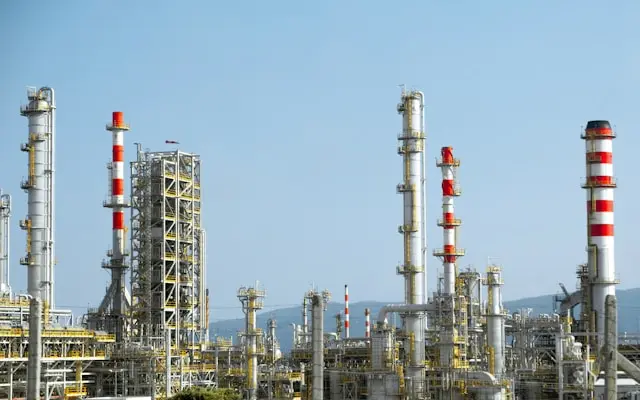
Yanbu Industrial City processes over 400,000 barrels of heavy crude per day through one of the most technically complex refining configurations in the Middle East. The YASREF...
Use these pages to navigate between parent markets, sector pages, and supporting articles.
These are the questions most closely tied to how executive search really works in Yanbu.
Yanbu's senior talent market is defined by extreme specialisation and fierce competition. The city's leadership needs span green hydrogen, downstream petrochemicals, maritime fabrication, and automated port logistics. These are roles where the qualified candidate population is small, globally distributed, and overwhelmingly passive. Job boards and inbound applications reach only a fraction of the relevant market. Companies use executive recruiters in Yanbu because conventional hiring methods consistently fail to surface the calibre of leader these operations require. The cost of a vacant leadership seat at a facility operating at the scale of YASREF or the Hydrogen Campus is measured in production delays and missed export targets.
Riyadh is a diversified capital city with deep local professional networks across financial services, government, and technology. Jeddah is a commercial and logistics hub with a large resident executive population. Yanbu is an industrial city of 288,000 where the economy centres on heavy industry, energy transition, and port logistics. The local executive talent base is thin. Most senior hires require international relocation. The competitive threat from NEOM creates wage inflation unique to this corridor. And the dual regulatory environment of the RCJY Industrial City and the SEZ adds compliance complexity that neither Riyadh nor Jeddah mandates involve.
KiTalent treats Yanbu as a global sourcing challenge with local operational specificity. Searches are coordinated from the firm's Middle East hub with cross-border reach into Europe, East Asia, and North America. The firm's parallel mapping means that relevant candidate populations in downstream energy, hydrogen, and maritime sectors are tracked continuously, not researched from scratch on mandate day. Every candidate undergoes a three-tier assessment covering technical competency, cultural alignment with Yanbu's operating environment, and genuine motivation to relocate to and remain in an industrial city on the Red Sea coast.
Interview-ready shortlists are delivered within 7 to 10 days. This speed is possible because KiTalent maintains live talent maps across the sectors that drive Yanbu's economy. When a mandate is confirmed, the firm activates pre-existing intelligence and relationships rather than beginning cold outreach. For clients with urgent operational timelines, interim leadership placements can be activated in parallel with permanent search.
Saudization targets are reshaping leadership hiring across Yanbu's industrial base. The executive tier currently sits at approximately 35% Saudi nationals, with the HCDP targeting 50% by 2027. This means every senior hire must be evaluated not only on their ability to perform the role but on their capacity to develop Saudi talent within their teams. For expatriate candidates, demonstrated experience with localisation programmes is now a threshold requirement rather than a preference. For Saudi candidates, the challenge is identifying leaders with both the technical depth required by world-scale facilities and the seniority to operate at executive level. This dual assessment requires search consultants who understand localisation mandates from the inside, not as an abstract policy checkbox.
Whether you are hiring a Chief Hydrogen Officer for a green ammonia export facility, a Plant Director for a downstream chemical complex, or a Port Automation Director to scale Smart Yanbu's digital infrastructure, this is the right starting point.
What we bring to Yanbu executive mandates:
Executive search and direct headhunting · Talent mapping and market intelligence · Compensation benchmarking and mandate calibration · Connection to KiTalent's Middle East hub in Nicosia and international executive search network.
Whether you are running a live mandate or want to pressure-test a brief before going to market, this is the right place to start the conversation.
Produced by KiTalent Research. Based on local market intelligence and executive-search data. Reviewed by Katia Belous.