
Executive Search 회사 선택 방법: 엘리트 서치 파트너를 나머지와 구별하는 것
방법론, 산업 전문성, 수수료 구조 및 나쁜 서치 파트너를 나타내는 위험 신호를 포함하는 전략적 프레임워크로 Executive Search 회사를 평가하는 방법을 배우세요.

채용 에이전시와 Executive Search 사이의 선택은 지위의 문제가 아닙니다. 과제의 리스크, 복잡성 및 가시성에 맞는 적합한 모델을 선택하는 것입니다.
균형 잡힌 시각을 원하신다면, KiTalent은 내부 TA, 에이전시 방식 또는 Executive Search 서비스 중 어떤 것이 귀하의 요건에 가장 적합한지 평가를 도울 수 있습니다.
전략적 mandate, 빡빡한 시장, 그리고 지원하지 않는 후보자를 위한 구조입니다. 대한민국 시장의 mandate에 적용됩니다.
Built for high-stakes leadership mandates
Executive Search와 채용 에이전시 중 선택할 때, 두 모델 모두 우수한 인재 채용이 가능합니다. 핵심은 적합성입니다. 채용 에이전시는 직위가 공개되어 있고 요건이 명확하며 속도가 최우선인 경우 적합한 답이 되는 경우가 많습니다. Executive Search는 채용이 비즈니스에 핵심적이거나, 기밀이 요구되거나, 정치적으로 민감하거나, 공개 시장 활동만으로는 적합한 후보를 찾기 어려운 경우 통상적으로 더 적합한 옵션입니다.
중간 및 고위급 직책을 맡은 회사는 광범위한 채용 범위가 필요한 역할과 임원 검색을 정당화하는 역할을 구분해야 하는 경우가 많습니다. 채용 서비스는 시장이 활발하고 긴급성이 높으며 후보자 가용성이 눈에 보일 때 잘 작동할 수 있지만, 위임 사항이 기밀이거나 전문적이거나 수동적인 리더십 인재에 의존할 때 임원 검색은 더욱 효과적입니다. 인센티브가 깊이와 적용 범위를 결정하는 유지 검색과 우발 검색에도 동일한 구별이 중요합니다.
시장이 Executive Search를 별도 카테고리로 구분하는 데에는 이유가 있습니다. Executive Search는 통상적으로 서치 파트너가 이력서 제시 이상의 역할을 수행해야 하는 시니어 리더십 채용 과제에 활용됩니다. Executive Search 기업은 채용 요건을 구체화하고, 타겟 시장을 정의하며, 후보자에게 능동적으로 접근하고, 리더십 적합성을 평가하며, 이해관계자 간 정렬을 관리하고, 프로세스 전반에 걸쳐 기밀을 유지합니다.
반면 채용 에이전시는 통상적으로 더 광범위한 직위와 채용 규모를 다룹니다. 많은 에이전시가 성과 보수 기반으로 운영되며, 기존 네트워크, 데이터베이스, 광고, 추천 및 활성 시장 소싱을 통해 빠르게 후보자 유입을 확보하도록 설계되어 있습니다. 이것이 해당 모델의 효과가 떨어진다는 의미는 아닙니다. 다른 유형의 채용 과제에 최적화되어 있다는 뜻입니다.
프로세스 차이는 직급보다 더 중요한 경우가 많습니다. 잘 운영되는 Executive Search에서는 캘리브레이션부터 시작합니다. 이 리더가 실제로 해결해야 할 과제는 무엇인지, 어떤 이해관계자가 핵심인지, 12~24개월 후 성공의 기준은 무엇인지, 어떤 타겟 기업이나 인접 섹터를 포함해야 하는지를 정의합니다. AESC 기준은 요구사항 평가, 서치 전략, 타겟 시장 논리, 문화 및 다양성 고려사항을 강조하며 이러한 자문적 접근 방식을 뒷받침합니다.
채용 에이전시 프로세스는 통상적으로 거래 효율성이 더 높습니다. 채용 요건이 정의되면 시장을 빠르게 탐색하고, 기술, 관련성 및 가용성에 따라 최종 후보자를 소개합니다. 많은 기업에게 이것이 정확히 올바른 방법입니다. 직위의 기밀성이 높지 않고 후보자 시장이 이미 활성 상태라면, 에이전시는 퍼널 상단에서 더 빠르게 움직여 내부 인재 확보 팀의 부담을 줄일 수 있습니다.
실질적으로 Executive Search는 시장을 형성한 후 진입합니다. 채용 에이전시는 통상적으로 기존 시장에 대응하며 접근을 가속화합니다. 이것이 Executive Search와 채용의 비교가 명성이 아닌 방법론에 초점을 맞춰야 하는 이유입니다.
Executive Search 기업과 채용 에이전시 비교에서 가장 명확한 차이 중 하나는 후보자 접근성입니다. 채용 에이전시는 우수한 후보자가 이미 대화에 열린 상태이거나, 시장에서 눈에 띄거나, 표준 채널을 통해 참여 의향이 있는 경우 가장 효과적입니다. 이 때문에 많은 중간 관리직, 전문가 및 반복 채용 과제에서 해당 모델이 매우 효과적입니다.
Executive Search는 최고의 후보자가 적극적으로 지원하지 않는 상황을 위해 설계되었습니다. 시니어 리더, 성공적인 운영자 및 니치 기능 전문가는 식별하고 자격을 검증한 후 직접 접근해야 하는 경우가 많습니다. 이것이 [비공개 후보자 접촉](/headhunting)이 핵심이 되는 지점입니다. 인바운드 관심을 기다리는 대신, 서치 파트너는 Talent Mapping을 수행하며, 신뢰성과 정밀성을 갖춘 적합한 채용 과제가 제시될 때까지 시장에 나서지 않을 수도 있는 인재와 접촉합니다.
이는 에이전시가 잠재 인재에 접근할 수 없다는 뜻이 아닙니다. 많은 에이전시가 이를 수행하며, 일부는 매우 뛰어난 성과를 보입니다. 차이는 통상적으로 깊이, 경제적 구조 및 집중도의 문제입니다. Executive Search 기업은 채용 과제의 성격상 Talent Mapping, 타겟 아웃리치 및 후보자 설득에 더 많은 시간을 투자하도록 설계되어 있습니다. 고위험 채용에서 이 차이는 결정적입니다.
기밀 유지는 두 모델 간 격차가 결정적으로 벌어지는 지점입니다. 기업이 현직 CEO를 교체하거나, 자금 조달 전 CFO를 채용하거나, 승계 계획을 수립하거나, 사모펀드 투자 포트폴리오 기업에서 리더십을 변경하는 경우, 공개적 노출은 내부 및 외부 리스크를 초래할 수 있습니다. 이러한 경우 Executive Search는 단순한 프리미엄 대안이 아니라, 더 안전한 운영 모델인 경우가 많습니다.
평가의 깊이는 또 다른 주요 차이점입니다. 리더십 직위에서 후보자의 기술적 업무 수행 능력은 거의 문제가 되지 않습니다. 더 어려운 질문은 복잡한 환경에서 리더십을 발휘할 수 있는지, 이사회 및 투자자에게 영향력을 행사할 수 있는지, 현상을 답습하지 않으면서 조직문화에 적합한지, 그리고 특정 사업 맥락에서 실행할 수 있는지 여부입니다. 우수한 Executive Search 기업은 이력서 매칭에 그치지 않고, 리더십 역량, 동기, 맥락 적합성, 이해관계자 신뢰도 및 장기적 가치 창출을 평가합니다.
> Which model fits your mandate? If the role is confidential, business-critical or hard to reach, KiTalent can help you assess whether executive search or a broader recruitment model is the better fit.
이는 시니어 채용 실패의 비용이 에이전시 송장에 나타나지 않는 방식으로 막대하기 때문에 중요합니다. 리더십 수준의 잘못된 채용은 전략을 지연시키고, 팀을 동요시키며, 투자자 신뢰를 약화시키고, 보상 및 승계, 조직 구조 전반에 걸쳐 비용이 큰 재작업을 초래할 수 있습니다. 채용 과제가 이해관계자에게 민감할수록 프로세스 자체가 리스크 관리의 일부가 됩니다.
The commercial model usually follows the mandate. Recruitment agencies often work on contingency, meaning fees are paid only when a hire is made. Executive search is typically retained and exclusive, with staged fees that reflect deeper advisory work, proactive market engagement and greater ownership of the outcome. If you want a more detailed retained vs contingency search breakdown, it is worth comparing the models before choosing on price alone.
Market norms often cited place contingency fees in the mid-teens to mid-twenties as a percentage of first-year compensation, while retained search is often higher and paid across milestones. Those figures are directional, not universal. The more useful commercial question is not "which fee is lower?" but "which model is proportionate to the cost of getting this hire wrong?" For leadership mandates tied to growth, governance or transformation, the fee is usually the smaller risk.
Timelines also need context. Recruitment agencies are often faster to produce an initial shortlist because the model is optimized for speed and active-market response. Executive search may take longer to launch because the brief, target market and approach strategy are more deliberately built. But faster CV delivery is not the same as faster decision quality. SHRM benchmark context is a useful reminder that hiring speed should be judged against role criticality, not in isolation. A serious executive recruitment agency comparison should therefore weigh speed to shortlist against speed to conviction.
A recruitment agency is often the best choice when the role is important but not strategically fragile. Typical examples include mid-level management, specialist functional hires, recurring role profiles, team build-outs, and mandates where the candidate market is already active and accessible. If the company can run an open process without confidentiality concerns, an agency model is often commercially efficient.
It is also the stronger fit where urgency is high and the brief is relatively stable. Internal talent acquisition teams may already know the market, compensation range and assessment criteria. In those cases, an agency can add reach and delivery capacity without requiring a full advisory search process. This is especially relevant during expansion, shared-services growth, or volume hiring around a clear operating plan.
Importantly, this does not mean agencies cannot fill senior roles. They can, particularly when the employer brand is strong, the mandate is public, and the candidate pool is visible. The point is not that one model is "good" and the other "bad." It is that the recruitment agency model works best when the market is sufficiently open that speed and network access outweigh the need for discretion, market mapping and deep stakeholder management.
Executive search is usually the better option when the mandate is tied to strategy, governance or investor value creation. That includes CEO, CFO, board and VP-level hires; confidential replacements; succession-critical roles; transformation leaders; cross-border searches; and situations where the right candidates are highly successful and therefore unlikely to enter a normal application process.
This is particularly relevant for private-equity operators and boards. A PE-backed company upgrading leadership ahead of growth, integration or exit often needs more than candidate introductions. It needs calibration around the investment thesis, sector adjacency, operating cadence, leadership assessment and discreet handling of internal sensitivities. That is where executive search earns its place as an advisory process rather than a sourcing service.
In many organisations, the smartest answer is hybrid. Use executive search for the pivotal leadership role, and a recruitment agency for the broader team that follows. During expansion, M&A integration, market entry or operating-model change, that blend can give companies both precision at the top and pace across the wider organisation.
If you are weighing executive search vs recruitment, ask five questions. How critical is the role to strategy and results? How visible are the right candidates in the open market? Can the mandate be run publicly, or must it stay confidential? How much assessment depth is really required? And how complex is the search across geography, sector, stakeholders or timing? The more those answers point to risk and complexity, the more executive search becomes the prudent choice.
These sector hubs are good examples of markets where direct headhunting and retained execution outperform generalist agency coverage.
Market, sector, and leadership-hiring analyses that connect directly to Executive Search vs Recruitment Agency.
방법론, 산업 전문성, 수수료 구조 및 나쁜 서치 파트너를 나타내는 위험 신호를 포함하는 전략적 프레임워크로 Executive Search 회사를 평가하는 방법을 배우세요.

KiTalent가 블라인드 이력서를 보내지 않는 이유와, 그 대신 Proof-First Search를 통해 어떤 실질적인 증명을 제공하는지 알아보십시오.

임원급 인재의 80%가 왜 적극적으로 새로운 기회를 찾지 않는지, 그리고 조직을 변화시킬 수 있는 이 수동적 리더들에게 접근하는 검증된 전략을 알아보세요.
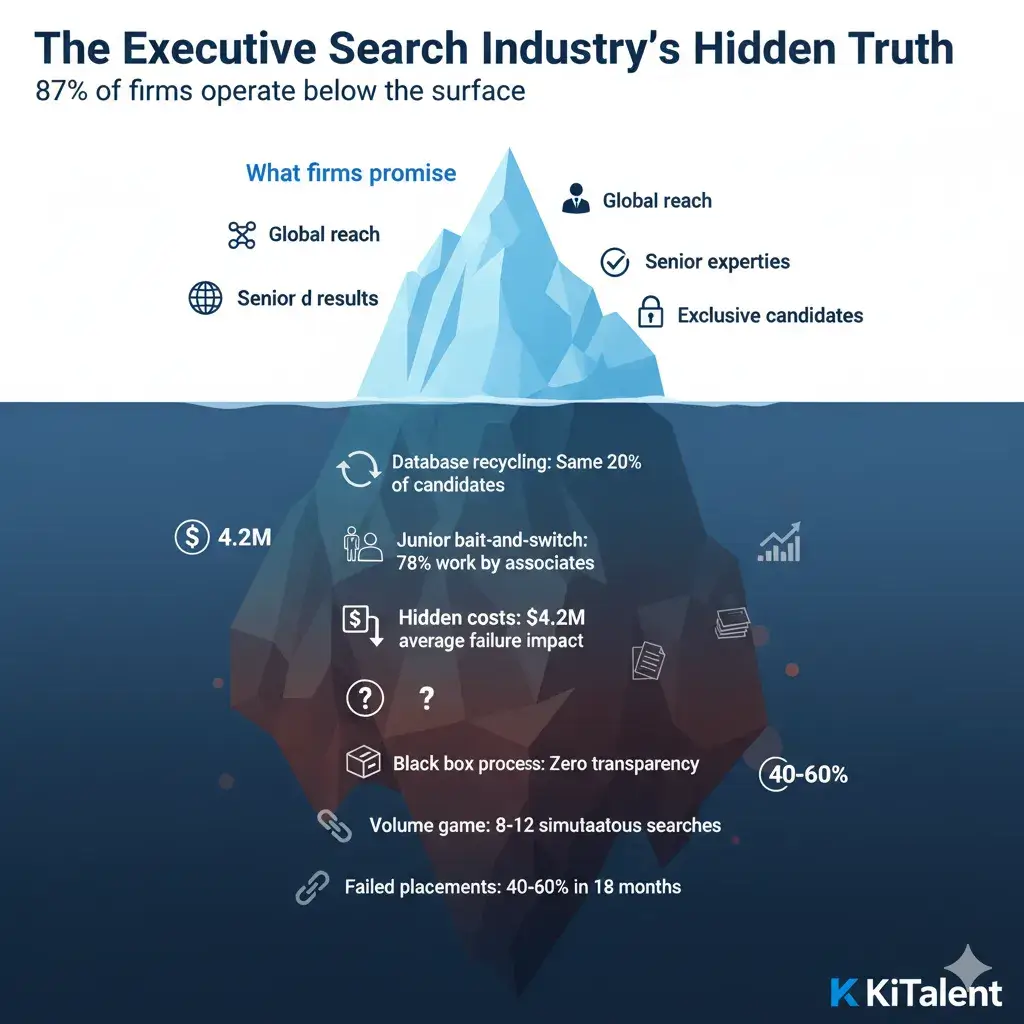
Executive Search 회사의 87%가 실패하는 이유를 알아보세요. 업계의 숨겨진 함정을 파악하기 위한 핵심 인사이트와 전략을 배우세요.

Produced by KiTalent Research. Based on primary market sources and KiTalent's market-intelligence process.
This page combines KiTalent market intelligence, direct-search methodology, and primary market sources where available.
Next step
Use the route that matches what you need next: a confidential search conversation, a written brief review, a market map, or a faster feasibility check before launch.