
Executive Search会社の選び方:エリートなサーチパートナーを他と区別するもの
方法論、業界専門知識、手数料構造、そして不適切なサーチパートナーを示すレッドフラッグを含む戦略的フレームワークでExecutive Search会社の評価方法を学びましょう。

取締役会メンバー、C-suite リーダー、人事責任者、プライベート・エクイティ運営者にとって、採用モデルの選択は単なるブランディングの問題ではありません。それは、ポジションの重要度、候補者の可視性、機密性、アセスメントの深度、実行リスクに基づく案件設計そのものの意思決定です。
戦略的な案件、逼迫した市場、そして応募してこない候補者のために。 Japan での案件に対応します。
Built for high-stakes leadership mandates
Executive Search と人材紹介会社のいずれにおいても、優れた採用を実現できる可能性があります。本質的な問題は、どちらが自社の状況に適合するかです。ポジションが公開可能で、要件が明確で、スピードが最優先される場合には、人材紹介会社が適切な選択となることが多いでしょう。一方、採用が経営上の重要課題であったり、機密性が求められたり、政治的に繊細であったり、公開市場だけでは適任者を見つけにくい場合には、Executive Search がより有力な選択肢となります。
中級から上級レベルのポジションに就く企業は、多くの場合、幅広い採用範囲を必要とする役割と、エグゼクティブサーチを正当化する役割を区別する必要があります。人材採用サービスは、市場が活発で緊急性が高く、候補者の空き状況が明らかな場合にうまく機能しますが、エグゼクティブサーチは、任務が機密であったり、専門的であったり、消極的なリーダーの人材に依存している場合に、より効果的になります。同じ区別は、保持検索と緊急検索 にも重要であり、インセンティブが深さと範囲を形成します。
市場が Executive Search を独立したカテゴリーとして扱っているのには明確な理由があります。Executive Search は通常、サーチパートナーに履歴書の提示を超えた役割が期待されるシニアリーダーシップ案件で活用されます。サーチファームは要件定義の支援、ターゲット市場の特定、候補者へのプロアクティブなアプローチ、リーダーシップ適合性の評価、ステークホルダー間の合意形成、そしてプロセス全体を通じた機密保持を担います。
対照的に、人材紹介会社は一般的にはより幅広い職種と採用ボリュームに対応します。多くの紹介会社は成功報酬型で、既存ネットワーク、データベース、広告、紹介、市場でのアクティブソーシングを通じて、迅速に候補者を供給する体制が構築されています。これは人材紹介モデルの効果が劣るという意味ではなく、異なる採用課題に最適化されているということです。
プロセスの違いは、シニアリティの分類以上に重要であることが少なくありません。適切に運営された Executive Search では、まずキャリブレーション(要件の精査)から着手します。このリーダーが実際に解決すべき課題は何か、どのステークホルダーが重要か、12~24か月後に何をもって成功と見なすか、どの企業や隣接セクターをターゲットに含めるべきかを明確にします。AESCの基準は、ニーズアセスメント、サーチ戦略、ターゲット市場の論理、文化的・多様性への配慮を重視するこのアドバイザリー型アプローチを裏付けています。
人材紹介会社のプロセスは、一般的にトランザクション面での効率に優れます。要件が定まると、市場を迅速にサーチし、スキル・適合性・入社可能時期に基づいて候補者をショートリスト化して紹介します。多くの企業にとって、これがまさに適切な手法です。ポジションの機密性が高くなく、候補者市場がすでに活発であれば、人材紹介会社はファネルの上流でより速く動くことができ、社内人材獲得チームの負担を軽減できます。
端的に言えば、Executive Search は市場を形成してから参入するのに対し、人材紹介会社は既存の市場に対応してアクセスを加速させます。だからこそ、Executive Search と人材紹介の比較は、格や名声ではなく方法論に焦点を当てるべきなのです。
サーチファームと人材紹介会社の比較において最も明確な違いの一つが、候補者へのアクセスです。人材紹介会社は、有力な候補者がすでに転職意欲を持ち、市場で可視的であるか、通常のチャネルを通じた接触に応じる意思がある場合に、最も力を発揮します。このため、多くのミドルマネジメント、専門職、リピート採用の案件で非常に効果的です。
Executive Search は、最も適した候補者が積極的に応募していない状況を想定して設計されています。シニアリーダー、実績あるオペレーター、ニッチな専門人材は、特定・精査し、直接アプローチする必要があることが多いのです。ここで[ヘッドハンティング](/headhunting)が中核的な役割を果たします。サーチパートナーは受動的に候補者を待つのではなく、市場をマッピングし、適切な案件が信頼性と精度をもって提示されるまで転職を検討していなかった人材にアプローチします。
これは、人材紹介会社がパッシブ人材にアクセスできないという意味ではありません。多くの紹介会社がこれを実行しており、中には非常に優れた成果を上げているところもあります。違いは通常、深度、経済合理性、フォーカスの問題です。サーチファームは、案件の性質上、マーケットマッピング、ターゲット型アウトリーチ、候補者の説得に多くの時間を投じる体制になっています。経営幹部レベルの重要な採用において、この違いは決定的です。
機密性は、二つのモデルの差が決定的になる領域です。現職 CEO の交代、資金調達に先立つ CFO の採用、サクセッションプランの策定、あるいは PE 投資先企業での経営陣刷新においては、情報が公になること自体が社内外のリスクを生みます。このような場面では、Executive Search は単なるプレミアムな選択肢ではなく、より安全な運用モデルであることが多いのです。
アセスメントの深度も大きな違いです。リーダーシップポジションにおいて、候補者が技術的な業務を遂行できるかどうかは、ほぼ論点にはなりません。より難しい問いは、複雑な環境でリーダーシップを発揮できるか、取締役会や投資家に対して影響力を持てるか、現状追認に陥らず組織文化に適合できるか、そして特定の事業環境で成果を出せるかどうかです。優れた Executive Search ファームは、レジュメの一致度だけでなく、リーダーシップ力、モチベーション、コンテキスト適合性、ステークホルダーからの信頼性、長期的な価値創造力を検証します。
> Which model fits your mandate? If the role is confidential, business-critical or hard to reach, KiTalent can help you assess whether executive search or a broader recruitment model is the better fit.
この点が重要なのは、シニア採用の失敗は人材紹介会社の請求書には表れない形でコストが膨大になるからです。リーダーシップレベルでのミスマッチは、戦略の遅延、チームの動揺、投資家の信頼低下を引き起こし、報酬・後継者計画・組織構造にわたる高額な手戻りを余儀なくされます。ステークホルダーへの影響が大きい案件であるほど、プロセスそのものがリスクマネジメントの一部となります。
The commercial model usually follows the mandate. Recruitment agencies often work on contingency, meaning fees are paid only when a hire is made. Executive search is typically retained and exclusive, with staged fees that reflect deeper advisory work, proactive market engagement and greater ownership of the outcome. If you want a more detailed retained vs contingency search breakdown, it is worth comparing the models before choosing on price alone.
Market norms often cited place contingency fees in the mid-teens to mid-twenties as a percentage of first-year compensation, while retained search is often higher and paid across milestones. Those figures are directional, not universal. The more useful commercial question is not "which fee is lower?" but "which model is proportionate to the cost of getting this hire wrong?" For leadership mandates tied to growth, governance or transformation, the fee is usually the smaller risk.
Timelines also need context. Recruitment agencies are often faster to produce an initial shortlist because the model is optimized for speed and active-market response. Executive search may take longer to launch because the brief, target market and approach strategy are more deliberately built. But faster CV delivery is not the same as faster decision quality. SHRM benchmark context is a useful reminder that hiring speed should be judged against role criticality, not in isolation. A serious executive recruitment agency comparison should therefore weigh speed to shortlist against speed to conviction.
A recruitment agency is often the best choice when the role is important but not strategically fragile. Typical examples include mid-level management, specialist functional hires, recurring role profiles, team build-outs, and mandates where the candidate market is already active and accessible. If the company can run an open process without confidentiality concerns, an agency model is often commercially efficient.
It is also the stronger fit where urgency is high and the brief is relatively stable. Internal talent acquisition teams may already know the market, compensation range and assessment criteria. In those cases, an agency can add reach and delivery capacity without requiring a full advisory search process. This is especially relevant during expansion, shared-services growth, or volume hiring around a clear operating plan.
Importantly, this does not mean agencies cannot fill senior roles. They can, particularly when the employer brand is strong, the mandate is public, and the candidate pool is visible. The point is not that one model is "good" and the other "bad." It is that the recruitment agency model works best when the market is sufficiently open that speed and network access outweigh the need for discretion, market mapping and deep stakeholder management.
Executive search is usually the better option when the mandate is tied to strategy, governance or investor value creation. That includes CEO, CFO, board and VP-level hires; confidential replacements; succession-critical roles; transformation leaders; cross-border searches; and situations where the right candidates are highly successful and therefore unlikely to enter a normal application process.
This is particularly relevant for private-equity operators and boards. A PE-backed company upgrading leadership ahead of growth, integration or exit often needs more than candidate introductions. It needs calibration around the investment thesis, sector adjacency, operating cadence, leadership assessment and discreet handling of internal sensitivities. That is where executive search earns its place as an advisory process rather than a sourcing service.
In many organisations, the smartest answer is hybrid. Use executive search for the pivotal leadership role, and a recruitment agency for the broader team that follows. During expansion, M&A integration, market entry or operating-model change, that blend can give companies both precision at the top and pace across the wider organisation.
If you are weighing executive search vs recruitment, ask five questions. How critical is the role to strategy and results? How visible are the right candidates in the open market? Can the mandate be run publicly, or must it stay confidential? How much assessment depth is really required? And how complex is the search across geography, sector, stakeholders or timing? The more those answers point to risk and complexity, the more executive search becomes the prudent choice.
These sector hubs are good examples of markets where direct headhunting and retained execution outperform generalist agency coverage.
Market, sector, and leadership-hiring analyses that connect directly to Executive Search vs Recruitment Agency.
方法論、業界専門知識、手数料構造、そして不適切なサーチパートナーを示すレッドフラッグを含む戦略的フレームワークでExecutive Search会社の評価方法を学びましょう。

エグゼクティブ人材の80%がなぜ新しい機会を積極的に探していないのか、そしてあなたの組織を変革できるこのパッシブリーダーにアクセスするための実証済み戦略を学びましょう。
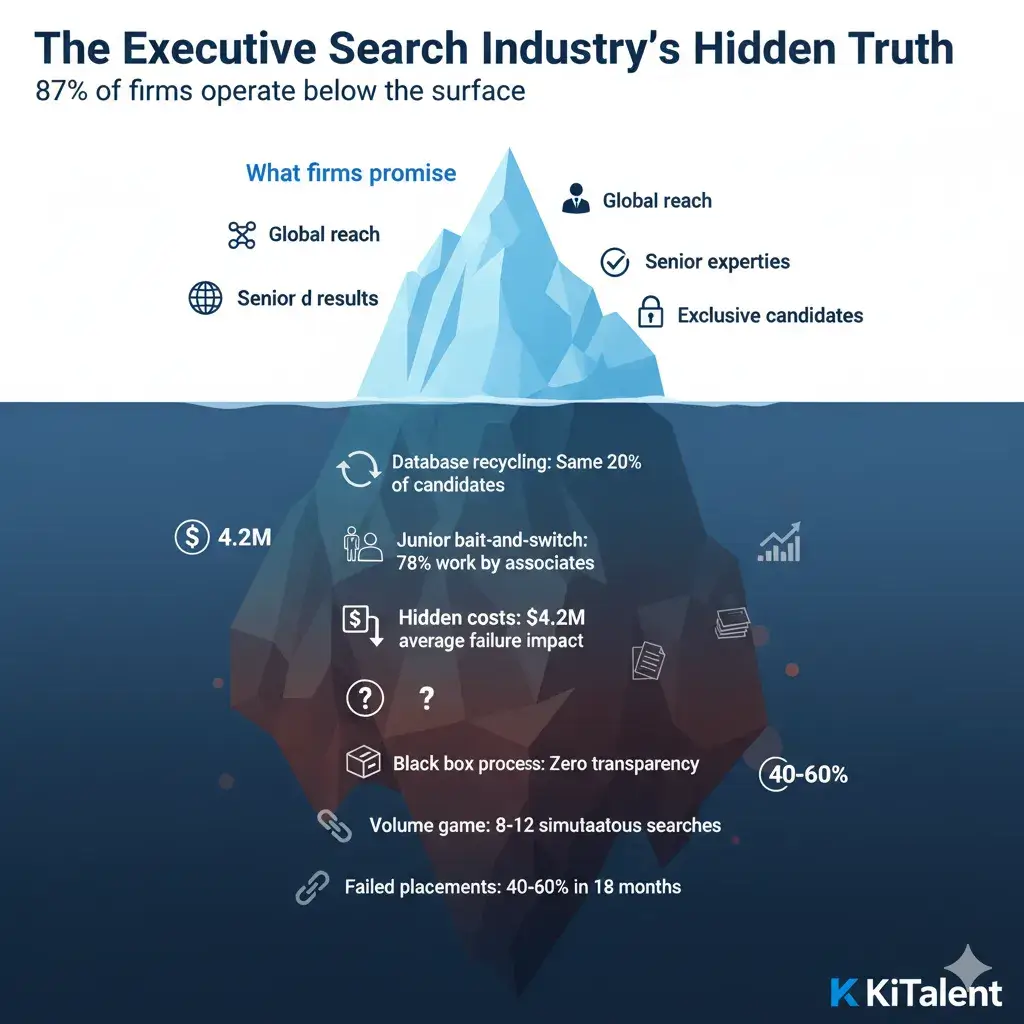
Executive Search会社の87%が質の高い結果を出せない理由を学びましょう。業界の隠れた落とし穴を特定するための重要なインサイトと戦略をご紹介します。

不適切なエグゼクティブ採用は、その役職の年収の200%以上のコストにつながる可能性があります。財務的、文化的、戦略的コスト—そして高額なリーダーシップの失敗から組織を守る方法を学びましょう。
人材紹介会社と Executive Search の間で選択することは、ステータスの問題ではありません。案件のリスク、複雑性、可視性に見合った適切なモデルを選ぶことです。
卓越したリーダーを見つける準備はできていますか?実績ある方法論により、10~15日以内に適格な候補者をご紹介します。
エグゼクティブとしてのキャリア機会をお探しですか?非公開ポジションへのアクセスと戦略的なキャリアアドバイスのために、私たちのネットワークにご参加ください。