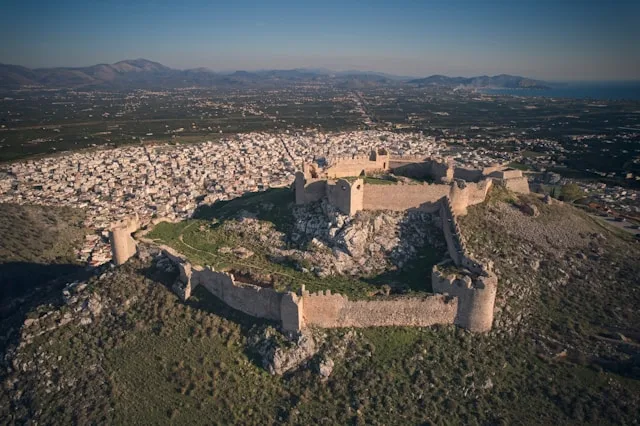
Larissa, Greece Executive Search

Executive Search in Larissa

KiTalent brings sector-specific intelligence and direct headhunting capability to senior leadership searches across Larissa.

7-10

days to qualified shortlists in many searches

80%

of relevant passive talent reached through direct headhunting

42%

faster time-to-hire than traditional search benchmarks

96%

one-year retention from KiTalent's broader methodology

These are KiTalent track-record figures referenced across our core about, services, and methodology pages.

Why Larissa is one of Greece's most deceptive hiring markets

Post a senior role in Larissa through conventional channels and you will receive applications. Many of them. The city's 10.8% unemployment rate suggests a deep candidate pool. That impression is misleading. The roles driving Larissa's economic growth require combinations of skills that barely existed here five years ago: agronomy fused with data science, medical device regulation paired with clinical operations leadership, cold-chain logistics expertise calibrated to pharmaceutical compliance standards. The candidates who hold these capabilities are already employed, already well-compensated, and not looking at job boards.

Larissa's workforce was shaped by decades of traditional agriculture and public-sector healthcare. The city's pivot toward precision agri-food, robotic surgery, and automated warehousing has created a mismatch between available experience and actual need. When KAGKAS S.A. completed its €22M dairy automation upgrade, the leadership profiles required to run the new operation bore little resemblance to those who had managed the old one. This pattern repeats across every growth sector. The 29% of the population over 60 compounds the pressure, making the skilled workforce increasingly dependent on inward migration from rural Thessaly, Albania, and North Macedonia.

Larissa's metro population of 285,000 means the pool of senior professionals in any given specialism is finite and well known. When the University Hospital of Larissa, Interamerican Diagnostic Centers, and MedTech Thessaly all compete for clinical data analysts or medical informatics leaders, they are approaching the same people. The same dynamic plays out in logistics, where the Amazon fulfillment centre, Lidl Hellas distribution, and emerging 3PL operators at the Larissa Logistics Park draw from an identical talent base. In a community this interconnected, how a search is conducted matters as much as who it identifies. A poorly managed approach travels fast.

Larissa's economy grew 2.9% in 2025, outpacing the national average by nearly a full percentage point. FDI inflows rose from €125M in 2023 to €185M in 2025, primarily from German and Dutch investors targeting logistics and agri-tech. The Thessaly Digital Innovation Hub has incubated 47 startups. Logistics employment surged 24% in two years. This is not incremental change. It is a step-function increase in the sophistication of leadership required, and the local executive market has not caught up. The executives capable of running a green hydrogen pilot, directing a 180,000 m logistics park, or scaling an alternative protein startup are not concentrated in Larissa. They are scattered across Athens, Thessaloniki, northern Europe, and the broader Balkans. This is the environment where a Go-To Partner approach becomes essential. Reactive search in Larissa produces the visible 10% of the market. Reaching the hidden 80% of passive talent requires a fundamentally different method.


What is driving executive demand in Larissa

Several structural forces are converging to shape executive demand across Larissa.

Precision agriculture and agri-food innovation

Larissa is Greece's primary agricultural processing capital, but the value chain has shifted decisively upward. KAGKAS S.A.'s automated dairy operation, Elbisco's Smart Bakery R&D facility in Bio-City, and Agronut Labs' Series B-funded protein extraction plant represent a new generation of food and beverage enterprises that need leaders fluent in both production and technology. The Thessaly Food Innovation Cluster manages the 40-hectare Kileler Food Valley, dedicated to cold-chain logistics and alternative protein production. IoT-enabled irrigation subsidy uptake increased 40% in 2025, and AI-driven crop-yield prediction services are being exported to Balkan markets. These operations demand Chief Agricultural Operations Officers who combine agronomy with data science, and ESG compliance managers who understand the EU Deforestation Regulation. Neither profile exists in abundance locally.

Health and medical technology

The University Hospital of Larissa employs 3,400 staff and serves as the anchor for the Bio-City district, now a genuine healthcare and life sciences cluster. Its accreditation as a Centre of Excellence for Robotic Surgery has driven €34M in orthopedic medical tourism revenue from the Balkans and Cyprus, an 18% year-on-year increase. Interamerican Diagnostic Centers opened a private telemedicine hub in early 2026, employing 85 specialists. MedTech Thessaly, a University of Thessaly spin-off, manufactures 3D-printed custom orthopedic implants. The executive demand here centres on Chief Medical Information Officers who can integrate telemedicine platforms, medical device regulatory affairs directors working under MDR 2017/745, and clinical operations leaders who can manage a facility attracting international patient flows.

Logistics and e-fulfillment

Larissa sits at the intersection of the Egnatia Odos and PATHE motorways, and the conversion of a former military base into the 180,000 m Larissa Logistics Park has transformed this geographic advantage into operational reality. Amazon's EU fulfillment centre (1,200 employees) and Lidl Hellas regional distribution are the headline tenants, but the Ambelonas Intermodal Terminal's upgraded rail connection to Thessaloniki Port has made Larissa a credible alternative to northern Greece for warehousing and distribution. Cold-chain logistics directors, warehouse automation leaders, and bilingual supply chain directors (Greek/English) are in acute short supply. The profile of a logistics director here often requires cross-border experience that connects naturally to international executive search capability.

Green energy and circular economy

The post-2023 flood reconstruction catalysed a climate-resilience mandate that has become an economic cluster in its own right. Siemens Gamesa operates a wind farm service hub employing 180 engineers. The Thessaly Green Hydrogen Pilot, a consortium between Motor Oil Hellas and the University of Thessaly, runs a 10MW electrolyser supplying the Kileler industrial zone. Three anaerobic digestion plants process olive pomace and livestock waste at 18MW total capacity. These operations sit within the broader oil, energy, and renewables sector and require senior technical leaders who understand both the engineering and the regulatory frameworks of the European Green Deal.

Cross-border complexity

Larissa's growth sectors are not self-contained within Greece. Medical tourism revenue comes from Balkan and Cypriot patients. Agri-tech services are exported across Southeast Europe. FDI originates primarily from Germany and the Netherlands. Logistics operations connect to Thessaloniki Port and onward to Asian supply chains. Many senior roles in this city involve reporting lines that extend beyond Greek borders, making cross-border search design a recurring requirement rather than an exception.

Sector strengths that define Larissa executive search

Larissa's executive search market is strongest where its economic specialisation is deepest.

Why companies partner with KiTalent for executive search in Larissa

Companies rarely need only reach in Larissa. They need interpretation, calibration, and a search architecture that reflects the real structure of the market.

We operate across Greece

Our team coordinates Larissa mandates from our European headquarters in Turin, with direct access to the talent intelligence, compensation dynamics, and sector developments that drive search outcomes.

We reach the candidates that matter

The strongest executives in Larissa are passive. Our direct headhunting approach engages the hidden 80% of passive talent through discreet outreach rooted in real market knowledge.

We do not start from scratch

Our parallel mapping methodology means we already hold live intelligence on restructuring, transition windows, compensation patterns, and candidate attraction opportunities when a brief arrives.

Our model de-risks the investment

In Larissa, the cost of a wrong executive hire extends far beyond the recruitment fee. Our interview-fee model lets clients see real market output and qualified candidates before the bulk of the investment is committed.

How we run executive searches in Larissa

Larissa's combination of sector specialisation, finite talent pools, and cross-border candidate geographies requires a search methodology built for precision rather than volume. KiTalent delivers this from our European headquarters in Turin, with direct operational capability across Southeast Europe and the Eastern Mediterranean.

1. Parallel mapping before the brief is live

Before a client defines a role in Larissa, we have already mapped the relevant talent market. We track career movements among cold-chain logistics directors across Greece and the Balkans. We monitor leadership changes at University Hospital of Larissa, its competitor institutions, and private diagnostic chains. We follow the agri-tech startup ecosystem as founders scale and corporate R&D centres recruit. This continuous intelligence, detailed in our methodology, is what enables a qualified shortlist in 7 to 10 days rather than the 8 to 12 weeks a conventional search requires.

2. Direct headhunting into the hidden 80%

In a metro area of 285,000, the senior professionals who match a specific mandate are known quantities. They are not browsing job boards. They are managing dairy automation upgrades, running robotic surgery units, or directing warehouse operations for Amazon. Reaching them requires direct headhunting through individually crafted, discreet outreach that demonstrates genuine understanding of their work and presents a proposition calibrated to their actual motivations. Mass outreach in a community this small is not just ineffective. It is reputationally dangerous.

3. Market intelligence as a search output

Every Larissa mandate produces more than a candidate shortlist. Clients receive a complete market intelligence package that includes compensation benchmarking against Athens, Thessaloniki, and relevant European comparators. It includes an analysis of which organisations are gaining and losing talent, which roles are proving hardest to fill across the city's clusters, and where counter-offer risk is highest. This intelligence has standalone strategic value. It informs not just the current hire but the client's broader workforce planning for a market that is evolving rapidly.

Essential reading for Larissa hiring decisions

These resources provide deeper market intelligence and explain how KiTalent turns insight into a faster, more transparent search process.

Frequently asked questions about executive search in Larissa

These are the questions most closely tied to how executive search really works in Larissa.

Why do companies use executive recruiters in Larissa?

Larissa's growth sectors require leadership profiles that combine technical depth with commercial acuity: agronomy and data science, clinical operations and telemedicine, logistics automation and pharmaceutical compliance. These hybrid profiles are scarce nationally, and the candidates who hold them are almost always employed. Job postings in Larissa attract volume, not precision. Executive recruiters who specialise in direct headhunting reach the passive candidates who would never see or respond to an advertisement. In a market growing at 2.9% with €185M in annual FDI, the cost of leaving a leadership seat vacant far exceeds the cost of a properly structured search.

What makes Larissa different from Athens or Thessaloniki for executive hiring?

Athens and Thessaloniki offer large, diversified talent pools where multiple candidates typically exist for any given senior role. Larissa does not. The metro population of 285,000 means the addressable market for any specialised leadership position is small and highly visible. Everyone in a given sector knows everyone else. This changes every aspect of search design: discretion becomes essential, compensation benchmarking must account for relocation from larger cities, and the candidate experience must be flawless because reputational feedback circulates quickly. Larissa searches also frequently require geographic reach into Athens, Thessaloniki, or northern Europe to find the right profile.

How does KiTalent approach executive search in Larissa?

KiTalent treats Larissa as a precision market, not a volume market. From our European headquarters in Turin, we maintain continuous talent mapping across the agri-food, healthcare, logistics, and energy sectors that define the city's economy. When a mandate is briefed, we already have pre-existing intelligence on who holds which roles, what their career trajectories look like, and where compensation sits relative to Athens and broader European benchmarks. Every search combines direct headhunting of passive candidates with structured market intelligence delivery, and clients receive full pipeline visibility throughout the process.

How quickly can KiTalent present candidates in Larissa?

Interview-ready candidates are typically presented within 7 to 10 days of mandate confirmation. This speed comes from parallel mapping, not from compromising on assessment quality. Because we continuously track the talent markets relevant to Larissa's core sectors, the research phase that consumes 6 to 8 weeks in a conventional search has largely been completed before the brief arrives. Every candidate undergoes technical competency evaluation and a personal career-storytelling meeting to assess cultural fit and genuine motivation before being presented.

How does the small size of Larissa's professional community affect executive search?

It affects everything. In a market where the senior professionals in any given specialism can be counted in dozens rather than hundreds, a search firm's conduct directly shapes the hiring organisation's reputation. A withdrawn offer, an impersonal approach, or a poorly calibrated compensation proposal will be discussed within days across the relevant professional network. This is why process quality, employer brand protection, and transparent candidate communication are not differentiators in Larissa. They are prerequisites. It is also why the interview-fee model matters: clients invest meaningfully only after seeing real candidates and real market data, which means every search that proceeds to interview stage has been properly calibrated from the outset.

Start a conversation about your Larissa search

Whether you are hiring a cold-chain logistics director for the Larissa Logistics Park, a Chief Medical Information Officer for the Bio-City healthcare cluster, an ESG compliance leader for a Thessaly food processor, or a plant director for an automated production facility in the Kileler Industrial Zone, this is the right starting point.

What we bring to Larissa executive mandates:

Executive search and direct headhunting · Talent mapping and market intelligence · Compensation benchmarking and mandate calibration · Connection to KiTalent's European headquarters in Turin and international executive search network.

Tell us about your Larissa hiring challenge

Whether you are running a live mandate or want to pressure-test a brief before going to market, this is the right place to start the conversation.

Explore Our Executive Search Guides

Produced by KiTalent Research. Based on local market intelligence and executive-search data. Reviewed by Sonia Sarnataro.