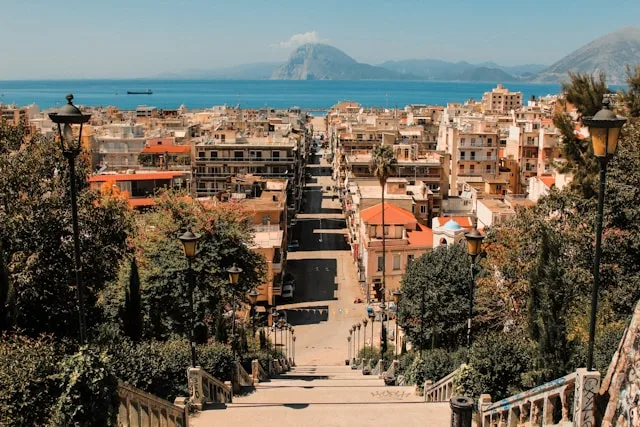
Why Patras is a deceptively difficult executive market
A city of 215,000 should be straightforward to recruit in. It is not. Patras combines the technical complexity of a deep industrial R&D cluster with the talent constraints of a regional market. The executives who run subsea cable production at Hellenic Cables, who lead green-cooling R&D at Frigoglass, or who manage multi-modal logistics at the Port of Patras are not browsing job boards. They are embedded in a professional community small enough that a clumsy approach travels fast.
Standard recruitment methods fail here for reasons that are specific to Patras, not generic to Greece.
The University of Patras generates the city's engineering and science talent pipeline. Patras Science Park hosts over 50 resident companies. FORTH/ICE-HT commercialises solid-state battery research through spin-offs like EnERes. This ecosystem is productive but concentrated. Senior technical leaders in maritime automation, industrial IoT, and bioprocess engineering cycle between a small number of employers. Corinth Pipeworks, Frigoglass, Space Hellas, and the port authority draw from the same well. When one of these organisations needs a CTO or head of operations, the shortlist of credible candidates overlaps heavily with names already known to every competitor in the Rio Business and Science Park.
Reaching the hidden 80% of passive talent requires more than a LinkedIn search. It requires a consultant who already knows who holds what role and why they might consider moving.
Senior software engineers in Patras earn €35,000 to €48,000 annually. That is below Athens. But cost-of-living adjusted competitiveness is rising, and executive compensation in port logistics has climbed 12% year-on-year as Igoumenitsa intensifies competition for the same Adriatic-route talent. The result is a market where offers must be precisely calibrated. Overshoot, and the board questions the cost. Undershoot, and the candidate stays put or moves to Athens.
Getting this right requires real compensation intelligence gathered from live mandates, not salary surveys published 18 months ago.
Patras is not hiring the same executives it hired five years ago. The city's pivot toward what local institutions call the "Blue-Green-Tech" identity requires leaders with dual competence: heavy industry experience combined with ESG compliance expertise, or manufacturing operations knowledge paired with cyber-physical systems fluency. These profiles are scarce nationally. They are almost nonexistent in the regional candidate pool. Filling them requires a search partner with international reach and sector-specific networks that extend well beyond Western Greece.
This is why the Go-To Partner approach exists. Not as a branding exercise, but as a response to markets where conventional sourcing produces available candidates rather than the right ones.