Niš, Serbia Executive Search

Executive Search in Niš

KiTalent brings sector-specific intelligence and direct headhunting capability to senior leadership searches across Niš.

7-10

days to qualified shortlists in many searches

80%

of relevant passive talent reached through direct headhunting

42%

faster time-to-hire than traditional search benchmarks

96%

one-year retention from KiTalent's broader methodology

These are KiTalent track-record figures referenced across our core about, services, and methodology pages.

Why Niš is a deceptively difficult executive market

From a distance, Niš looks like a straightforward manufacturing city with a growing tech sector. The reality is more complex. Standard recruitment methods, job postings, database searches, and LinkedIn outreach, consistently fail here because the executive talent pool is small, interconnected, and under siege from multiple directions at once.

Niš's metro population of 400,000 supports a professional community that is unusually tight. The senior leaders running automotive plants, managing R&D centres, and directing pharma operations largely graduated from the same two faculties at the University of Niš. They sit on the same advisory boards. Their children attend the same schools. In a market this interconnected, a poorly handled search does not just fail. It damages the hiring company's reputation across the entire professional community for years. The hidden 80% of passive talent that drives successful executive placement is, in Niš, also the visible 80%: people who know each other and talk.

Net emigration of skilled professionals to Belgrade, Vienna, Munich, and Frankfurt creates a 12% vacancy rate in high-skill manufacturing roles. This is not a temporary gap. It is a systemic loss that compounds annually. Every unfilled plant director role at ZF or Yazaki makes the next search harder because the pool is smaller and the remaining candidates hold more negotiating power. Firms relying on inbound applications find their pipelines thin and slow. The executives capable of running a 2,000-person automotive campus are not refreshing their CVs. They are being courted directly or they have already left the country.

Over 60% of manufacturing employment in Niš depends on German automotive FDI. ZF Friedrichshafen, Leoni, and their Tier-2 suppliers operate within German corporate reporting structures. Yazaki brings Japanese management culture. A Chinese-Serbian solar panel joint venture adds a third governance model. Each requires leaders who can operate across cultures, manage compliance across jurisdictions, and communicate fluently in at least two languages. A generalist recruiter who treats this as a standard Serbian manufacturing search will miss the cross-cultural competency requirements that determine whether a placement succeeds or fails within the first year. These dynamics make Niš a market where the Go-To Partner approach is not a luxury. It is a precondition for effective search. Sustained intelligence, pre-existing candidate relationships, and deep sector knowledge are the only things that compress timelines in a city where conventional methods consistently underperform.

What is driving executive demand in Niš

Several structural forces are converging to shape executive demand across Niš.

Automotive and electromobility components

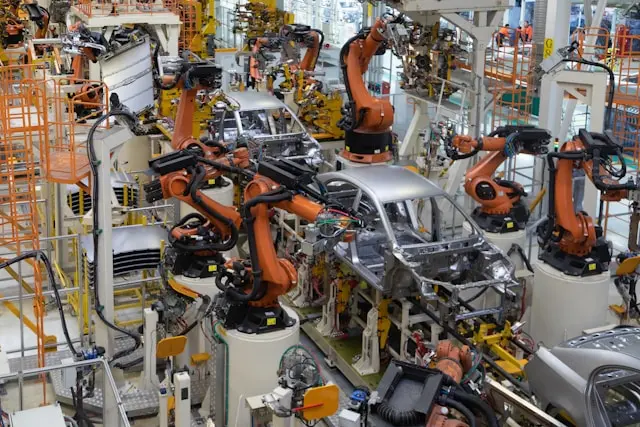
Niš is the epicentre of Serbia's wiring harness and EV component industry. Yazaki Corporation employs over 4,200 people at its largest Balkan facility, expanding its high-voltage cable unit in 2025. ZF Friedrichshafen's €180 million Campus West became fully operational in early 2026, producing electric powertrain components with a workforce targeted to reach 2,000 by 2027. Leoni Wiring Systems, after completing automation upgrades, runs a 2,800-person operation focused on higher output per unit. Automotive exports from Niš exceeded €1.4 billion in 2025, accounting for 38% of total export volume. This cluster needs plant managing directors, quality systems heads, and supply chain leaders fluent in both German corporate governance and Serbian operational realities. Our automotive executive search practice works directly within this ecosystem.

ICT, embedded systems, and industrial software

The Faculty of Electronic Engineering at the University of Niš feeds a tech sector that is small but rapidly maturing. The Science and Technology Park Niš (STPN) now hosts 68 companies following its Phase II expansion, specialising in industrial IoT, embedded systems, and automotive software. CATENA employs 350 engineers building autonomous vehicle testing software. The Niš IT Cluster reports 120 active startups, with health-tech and agri-tech drones showing particular traction. Senior software developers earn €2,500 to €3,200 monthly, competitive by Serbian standards but vulnerable to remote offers from Western European employers. Finding CTOs and R&D directors who will commit to building in Niš, rather than taking a remote contract from Berlin, requires a different kind of conversation. KiTalent's AI and technology sector expertise is built for precisely these mandates.

Defence and dual-use technology

Yugoimport SDPR, state-owned but operationally autonomous, opened a precision munitions plant in 2025 incorporating STPN-developed sensor technology. Prva Iskra, privatised in 2023, now focuses on aerospace electronics and secure communications with 900 employees. These organisations need leaders who can bridge legacy military procurement culture with commercial R&D discipline. The security clearance requirements and the sensitivity of these searches make them particularly unsuitable for generalist recruiters. Our aerospace, defence, and space practice understands the discretion and domain knowledge these mandates demand.

Pharmaceuticals and medical services

Zdravlje Actavis, part of the Teva Pharmaceuticals group, completed a €40 million facility modernisation in late 2025, making it the largest generic drug manufacturer in Southern Serbia. Clinical Centre Niš, with 1,500 beds, anchors a medical tourism cluster in Niška Banja specialising in rehabilitation and cardiology. As the pharma facility transitions to higher-value production, it needs regulatory affairs directors, quality assurance heads, and R&D leaders with EU GMP certification experience. Our healthcare and life sciences team works across the regulatory frameworks that govern these roles.

Cross-border complexity and nearshoring dynamics

The Niš-Sofia Expressway, completed in late 2025, cuts transit time to Bulgaria by 45 minutes. Constantine the Great Airport's new cargo terminal opened in January 2026 with direct freight routes to Cologne/Bonn and Istanbul. The Free Zone Niš, at 95% occupancy with a 15-hectare expansion approved, functions as a duty-free manufacturing base for companies serving EU markets. Every major employer in this zone operates within international executive search parameters: multi-country reporting lines, transfer pricing considerations, and leadership teams that span Belgrade, Munich, Tokyo, and increasingly Shanghai.

Sector strengths that define Niš executive search

Niš's executive search market is strongest where its economic specialisation is deepest.

Why companies partner with KiTalent for executive search in Niš

Companies rarely need only reach in Niš. They need interpretation, calibration, and a search architecture that reflects the real structure of the market.

We operate across Serbia

Our team coordinates Niš mandates from our European headquarters in Turin, with direct access to the talent intelligence, compensation dynamics, and sector developments that drive search outcomes.

We reach the candidates that matter

The strongest executives in Niš are passive. Our direct headhunting approach engages the hidden 80% of passive talent through discreet outreach rooted in real market knowledge.

We do not start from scratch

Our parallel mapping methodology means we already hold live intelligence on restructuring, transition windows, compensation patterns, and candidate attraction opportunities when a brief arrives.

Our model de-risks the investment

In Niš, the cost of a wrong executive hire extends far beyond the recruitment fee. Our interview-fee model lets clients see real market output and qualified candidates before the bulk of the investment is committed.

How we run executive searches in Niš

Every Niš mandate is coordinated from KiTalent's European headquarters in Turin, with consultants who understand the Balkan talent market, Serbian business culture, and the cross-border reporting structures that define this city's major employers. The proximity matters: Turin to Niš is the same time zone, the same working day, and a direct line into the automotive and manufacturing networks that link Northern Italy to Southeast Europe.

1. Parallel mapping before the brief is live

KiTalent does not wait for a client to issue a mandate before building intelligence on Niš's executive market. Through continuous parallel mapping, the firm tracks career movements, compensation shifts, and organisational changes across the automotive, tech, pharma, and defence clusters in real time. When a client needs a plant director for a Tier-2 supplier in the Free Zone, or a CTO for an STPN-based scale-up, the shortlist process does not begin with a blank page. It begins with a pre-existing map of who holds what role, where they came from, and what it would take to move them.

2. Direct headhunting into the hidden 80%

In a city where 90% of the executives you need are not actively looking, direct headhunting is not one sourcing channel among many. It is the only channel that works. KiTalent's approach is individually crafted outreach: each candidate is approached with a proposition specific to their career trajectory, their current constraints, and their professional ambitions. Mass messaging does not work in Niš. The professional community is too small and too interconnected. A candidate who receives a generic InMail from a recruiter who clearly does not understand the local market will not respond. Worse, they will mention it to colleagues.

3. Market intelligence as a search output

Every Niš engagement produces more than a shortlist. It produces a detailed market map: who holds the target profile, which companies are competing for the same talent, what compensation packages are being offered, and how the candidate pool has shifted since the last comparable search. This intelligence, grounded in real-time compensation data, becomes a strategic asset that clients use well beyond the immediate hire. In a market growing at 4.2% with 9% annual salary inflation, this kind of current, specific intelligence is what separates a confident hiring decision from a guess.

Essential reading for Niš hiring decisions

These resources provide deeper market intelligence and explain how KiTalent turns insight into a faster, more transparent search process.

Frequently asked questions about executive search in Niš

These are the questions most closely tied to how executive search really works in Niš.

Why do companies use executive recruiters in Niš?

The visible candidate market in Niš is thin. With a metro population of 400,000 and a 12% vacancy rate in high-skill manufacturing roles, the executives who can lead a 2,000-person automotive plant or direct an R&D programme at STPN are not browsing job boards. They are deeply embedded in their current roles. Reaching them requires direct, discreet, individually crafted outreach by consultants who understand the sectors they operate in. An executive recruiter with pre-existing market intelligence can produce a qualified shortlist in days rather than the months a conventional process takes.

What makes Niš different from Belgrade for executive hiring?

Belgrade is a diversified capital city with a large, fluid professional market. Niš is a concentrated industrial economy where automotive, defence, and pharma dominate. The talent pool is smaller, more specialised, and more interconnected. Compensation benchmarks differ materially: Belgrade salaries for comparable roles run 20 to 40% higher, but Niš offers lower cost of living and shorter commutes. The key difference for search design is community size. In Belgrade, a poorly handled approach to a candidate may go unnoticed. In Niš, it will be discussed across the professional network within days.

How does KiTalent approach executive search in Niš?

Every search begins with the intelligence KiTalent has already built through parallel mapping. This means the firm has a current view of who holds what role across Niš's automotive, tech, pharma, and defence clusters before a client even defines the need. From there, the dedicated consultant conducts direct headhunting into the passive talent pool, supported by real-time compensation data and a three-tier assessment process covering technical competency, cultural fit, and motivation. The engagement is coordinated from KiTalent's European headquarters in Turin, ensuring same-timezone responsiveness and deep familiarity with the Balkan talent market.

How quickly can KiTalent present candidates in Niš?

KiTalent delivers interview-ready candidates within 7 to 10 days. This speed comes from parallel mapping: the firm continuously tracks career movements, organisational changes, and compensation evolution across Niš's key sectors. When a mandate is received, the research phase is already substantially complete. The result is a 42% reduction in time-to-hire compared to traditional search benchmarks, without any compromise on the depth of candidate assessment.

How does emigration affect executive search in Niš?

The steady outflow of skilled professionals to Belgrade, Germany, and Austria is the defining constraint of this market. It shrinks the available talent pool annually and gives remaining candidates greater leverage. For search firms, this means every mandate must begin with intelligence on who is still in the market, who has recently returned, and who might be persuaded to relocate back. KiTalent's talent pipeline development approach is designed for exactly this dynamic: building and maintaining relationships with qualified professionals before a specific mandate requires them, so the firm can activate a warm network rather than discovering the pool has shrunk further.

Start a conversation about your Niš search

Whether you are hiring a plant managing director for an automotive campus, an R&D head for a pharma facility modernisation, a CTO for an STPN-based technology company, or a country general manager for a newly established foreign investment, the starting point is a conversation about what this market actually looks like today.

What we bring to Niš executive mandates:

Executive search and direct headhunting · Talent mapping and market intelligence · Compensation benchmarking and mandate calibration · Connection to KiTalent's European headquarters in Turin and international executive search network.

Tell us about your Niš hiring challenge

Whether you are running a live mandate or want to pressure-test a brief before going to market, this is the right place to start the conversation.

Explore Our Executive Search Guides

Produced by KiTalent Research. Based on local market intelligence and executive-search data. Reviewed by KiTalent Research Team.