Why Subotica is one of Europe's most deceptive hiring markets
A city of 96,400 people does not appear on most executive search firms' radar. That is precisely the problem. Subotica's economy grew 6.8% in 2025, nearly double Serbia's national average, and its Free Zone now hosts 62 export-oriented companies. The executive talent required to run these operations cannot be sourced through job postings or database searches. The pool is too small, too interconnected, and too actively courted by competing employers.
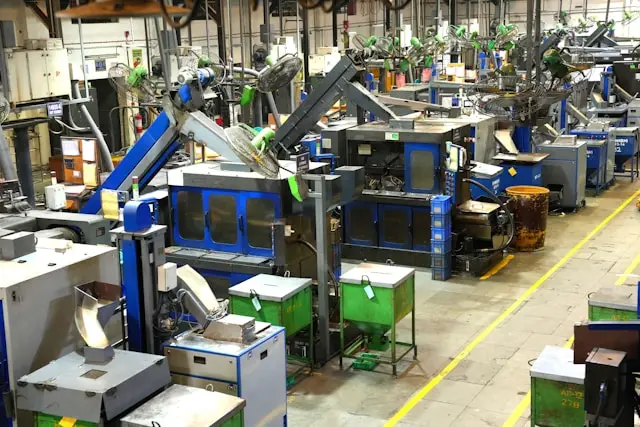
Three years ago, automotive and advanced manufacturing accounted for 12% of Subotica's exports. Today the figure is 38%. That shift happened faster than any local training pipeline could match. ZF Subotica employs 1,600 people. LEGO Manufacturing Serbia reached 1,200 at full production. KJG Europe Copper Foil added 850 workers in its second phase. These are not incremental additions to a stable market. They represent a fundamental recomposition of what "leadership" means in this city. Process engineers with electrochemistry credentials, supply chain directors fluent in Hungarian customs law, plant managers who understand both German quality systems and Chinese investor expectations: these profiles barely existed here before 2023.
Subotica loses 2.1% of its 18-to-35 cohort annually to Germany, Austria, and the broader EU. This is not a background statistic. It is the defining constraint on every senior hire. When a ZF or KJG plant needs a mid-career operations leader, the natural domestic pipeline has been thinned by a decade of outward migration. The automotive sector already reports 12% vacancy rates for skilled technicians. At the leadership level, the numbers are worse because the base population is smaller and the competing offers from Budapest or Vienna are stronger. Reaching the hidden 80% of passive talent is not a luxury here. It is the only viable sourcing strategy.
Subotica sits less than two hours from Budapest by road, and the high-speed rail link under construction will tighten that connection further. KJG produces battery-grade copper foil destined for CATL and Eve Energy plants across the Hungarian border in Debrecen and Göd. ZF's e-mobility systems feed assembly lines in multiple EU countries. The leadership these firms need must think across borders: Hungarian regulatory frameworks, EU REACH chemical standards, Serbian Free Zone incentives, and Chinese parent-company governance. Yet most recruitment firms treat Subotica as a single-country assignment. The result is shortlists that miss the bilingual, cross-border operators who actually run this corridor. This is exactly the environment where a Go-To Partner approach replaces transactional recruitment with sustained market intelligence.