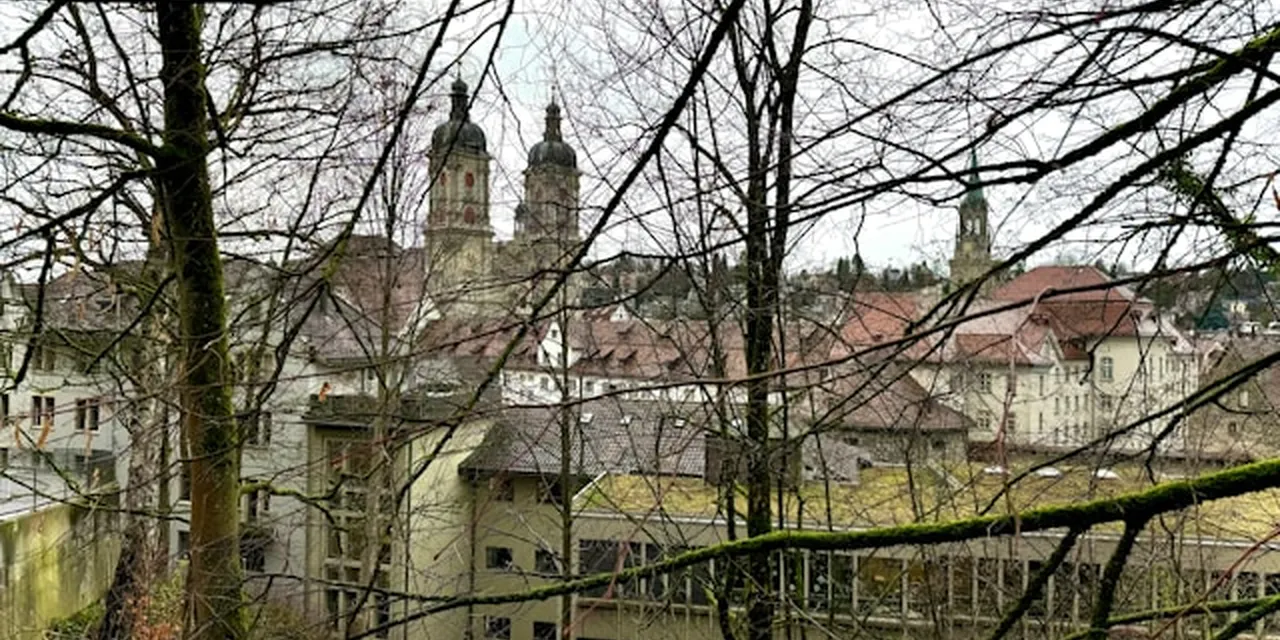
Why St. Gallen is one of Switzerland's most deceptive hiring markets
From the outside, St. Gallen looks manageable. A city of 82,000. Low unemployment at 2.1%. A recognisable set of anchor employers. But these surface-level facts conceal a hiring environment that punishes conventional approaches. The visible talent pool is almost empty. The professionals who could fill senior roles are embedded in institutions they are unlikely to leave without a precisely calibrated proposition. And the interconnected nature of the city's professional community means a poorly managed search does lasting reputational damage.
St. Gallen sits in a basin. Horizontal expansion is impossible. Housing vacancy sits below 0.5%, making relocation a genuine obstacle for external candidates. IT salaries have compressed to 85 to 90% of Zurich levels, up from 80% in 2020, which means the cost-of-living argument that once attracted talent from the Greater Zurich Area has weakened. With an absolute shortage of over 2,500 skilled workers, the city depends on cross-border commuters from Vorarlberg and Liechtenstein for a quarter of its workforce. For executive roles, this dependency creates a search radius that stretches across three countries and two legal jurisdictions.
Insurance, financial services, and HSG-adjacent ventures dominate. Approximately 6,500 people work directly in the insurance cluster. The city's total workforce is compact enough that senior professionals in adjacent sectors regularly overlap at SQUARE events, cantonal industry dinners, and HSG advisory boards. This is not Zurich, where scale provides anonymity. A discreet approach is not a luxury here. It is a precondition for any search that touches the insurance or HealthTech clusters. The hidden 80% of executives who are not actively looking are also not invisible to their peers. They are known, watched, and talked about.
Roughly 35% of industrial firm owners in the region are at or past retirement age. At the same time, insurance incumbents are deep into legacy modernisation, having completed cloud migrations and now demanding embedded insurance product developers and AI-driven claims specialists. These two pressures collide: the city needs experienced leaders who can manage ownership transitions in the Mittelstand while also sourcing transformation-native executives for its insurance and InsurTech core. These are different talent profiles drawn from different markets. Treating them as a single search challenge is a common and expensive mistake.
KiTalent's Go-To Partner approach is built for exactly this kind of market: small, interconnected, operating under multiple simultaneous talent pressures that require intelligence gathered before a mandate begins.