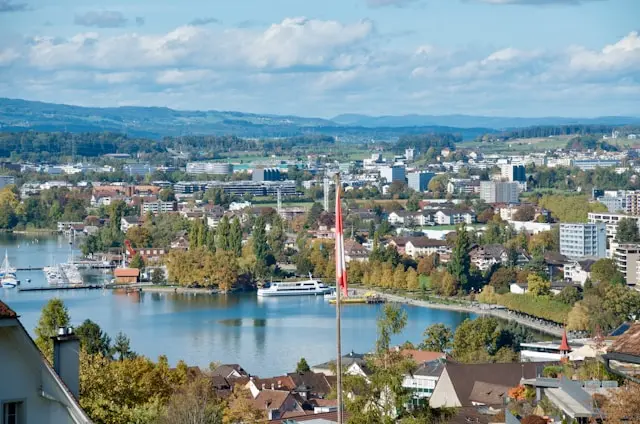
Zug, Switzerland Executive Search

Executive Search in Zug

KiTalent brings sector-specific intelligence and direct headhunting capability to senior leadership searches across Zug.

7-10

days to qualified shortlists in many searches

80%

of relevant passive talent reached through direct headhunting

42%

faster time-to-hire than traditional search benchmarks

96%

one-year retention from KiTalent's broader methodology

These are KiTalent track-record figures referenced across our core about, services, and methodology pages.

Why Zug is the hardest small city in Europe to hire in

A city of 31,200 residents should not generate the executive search complexity that Zug does. But this is not a city defined by its population. It is defined by the density of its corporate infrastructure, the specificity of its talent requirements, and the near-total absence of available candidates at any given moment. Standard recruitment methods do not merely underperform here. They produce nothing.

Unemployment in Zug sits below 1.2%. That is not a tight labour market. That is a labour market where every qualified professional is already employed, well compensated, and largely invisible to conventional search methods. Sixty-five percent of the workforce commutes across borders from Germany, Austria, and Italy. Forty percent hold tertiary STEM or legal degrees. The executives who run tokenization platforms, oversee DLT compliance, or manage family office portfolios in Zug are not browsing job boards. They are solving problems that most organisations have not yet encountered. Reaching the hidden 80% of passive talent is not an advantage in this market. It is the only viable approach.

Zug's fastest-growing roles do not have established career paths. Chief Tokenization Officers, Heads of AI Governance under FINMA guidance, Digital Asset Custody Architects building multi-party computation systems: these are positions where the global candidate pool might number in the dozens. The city's evolution from speculative crypto hub to institutional-grade RegFi centre has created a demand profile that combines deep financial regulation knowledge with distributed ledger engineering. No single university programme produces this combination. No recruiter database contains it.

In a city where 80 multi-family offices line the Poststrasse-Alpenstrasse corridor and 200 specialist law firms service the same corporate ecosystem, professional networks are tight. A poorly managed search process is not just a risk to the hiring company. It is a signal to the entire market. Candidates who are approached clumsily talk to each other. Offers that are withdrawn damage reputations for years. The quality of the search process matters as much as its outcome, and that reality shapes every mandate KiTalent accepts in Zug. These dynamics make Zug a market where the Go-To Partner approach is not a positioning statement but a practical necessity. Long-term market knowledge, pre-existing candidate relationships, and disciplined process are the only tools that work.

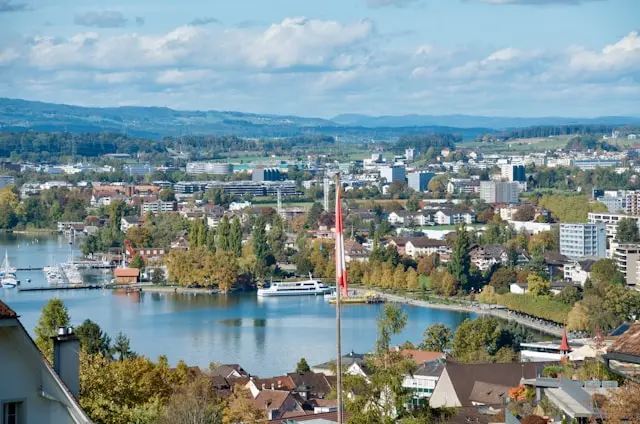
What is driving executive demand in Zug

Several structural forces are converging to shape executive demand across Zug.

Blockchain and digital asset infrastructure

Zug's Crypto Valley has matured. The city now anchors the global shift from speculative cryptocurrency to regulated tokenization of real-world assets. The Ethereum Foundation maintains its headquarters here. Cardano Foundation and Polkadot retain core operational entities in the city centre. CV Labs on Gubelstrasse has expanded to 15,000 square metres, housing over 50 Series B-stage firms focused on tokenization infrastructure. Crypto Finance AG, a Deutsche Börse subsidiary, employs more than 120 people locally in institutional custody and brokerage. Venture capital deployment across the canton reached CHF 800 million to one billion in 2025, with 60% concentrated in Zug City's tokenization and fintech verticals. This cluster generates intense demand for leaders who understand both AI and technology architecture and banking and wealth management regulation simultaneously.

Life sciences and pharma

Zug City functions as the corporate nerve centre for global pharmaceutical operations while manufacturing sits in Rotkreuz and Steinhausen. CSL Vifor maintains its global headquarters at Rechenstrasse 37, employing over 450 people in commercial and regulatory functions following the CSL acquisition integration. Maximo Pharma AG operates specialty generics and biosimilars trading from the city. A notable convergence is underway: Zug-based startups now manage an estimated 15% of European clinical trial consent tokenisation and pharmaceutical supply chain verification. The healthcare and life sciences executive profile in Zug increasingly requires digital literacy that would have been irrelevant five years ago.

Wealth management and family offices

The city manages an estimated CHF 150 to 200 billion in assets under management for international private clients. The concentration of 80-plus multi-family offices along the Poststrasse-Alpenstrasse corridor, now specialising in crypto-wealth succession planning and art and commodity tokenisation, creates demand for leaders with deep private equity and venture capital experience overlaid with digital asset fluency. Family Office Directors with crypto expertise command CHF 250,000 or more with carried interest. Finding them requires networks that extend well beyond Switzerland.

Commodity trading services and legal infrastructure

While the trading giants operate primarily from Baar and Geneva, Zug City hosts the high-value service layer. Höegh Autoliners runs its maritime vehicle transport operations from Zugerstrasse. Mercuria Energy Trading locates back-office and risk management functions here. The city's 200-plus specialist law firms, including Walder Wyss, MME, and Kellerhals Carrard, provide structuring for global commodity finance. This legal and compliance cluster generates consistent demand for senior partners and practice heads with legal and tax consulting expertise spanning Swiss and EU regulatory frameworks.

Cross-border complexity as a default condition

With 65% of the workforce commuting from neighbouring countries and nearly every significant Zug employer serving clients across multiple jurisdictions, cross-border search is not a special service line. It is the baseline. The divergence between Swiss FINMA rules and EU MiCA creates compliance friction for Zug-based firms serving European clients. Leaders who can operate across this regulatory boundary are scarce and highly sought after, making international executive search capability essential for any mandate in this market.

Sector strengths that define Zug executive search

Zug's executive search market is strongest where its economic specialisation is deepest.

Why companies partner with KiTalent for executive search in Zug

Companies rarely need only reach in Zug. They need interpretation, calibration, and a search architecture that reflects the real structure of the market.

We operate across Switzerland

Our team coordinates Zug mandates from our European headquarters in Turin, with direct access to the talent intelligence, compensation dynamics, and sector developments that drive search outcomes.

We reach the candidates that matter

The strongest executives in Zug are passive. Our direct headhunting approach engages the hidden 80% of passive talent through discreet outreach rooted in real market knowledge.

We do not start from scratch

Our parallel mapping methodology means we already hold live intelligence on restructuring, transition windows, compensation patterns, and candidate attraction opportunities when a brief arrives.

Our model de-risks the investment

In Zug, the cost of a wrong executive hire extends far beyond the recruitment fee. Our interview-fee model lets clients see real market output and qualified candidates before the bulk of the investment is committed.

How we run executive searches in Zug

Every Zug mandate is coordinated from KiTalent's European headquarters in Turin, 450 kilometres south but connected by direct rail and a shared Continental European business culture. The firm's consultants working on Swiss mandates bring German and English language capability, FINMA-aware regulatory understanding, and established networks across the Crypto Valley ecosystem. The proximity means face-to-face meetings in Zug are routine, not exceptional.

1. Parallel mapping before the brief is live

KiTalent continuously tracks career movements, compensation evolution, and organisational changes across the sectors that define Zug's economy. When a client engages us for a Head of AI Governance or a Family Office Director with crypto expertise, the mapping work has already been underway for months. This is why KiTalent delivers interview-ready shortlists in 7 to 10 days rather than the 8 to 12 weeks typical of firms that begin research only after receiving a signed mandate. In a market where 2,000 new roles are coming online in a single development phase, this speed is a competitive advantage for every client.

2. Direct headhunting into the hidden 80%

Zug's executives do not respond to mass outreach. They respond to individually crafted, sector-informed approaches from consultants who understand their work. KiTalent's headhunting methodology is built for exactly this: direct engagement with the passive professionals who represent the strongest possible shortlist. In a community this small and interconnected, the quality of each interaction protects the client's employer brand while opening doors that generic recruitment cannot.

3. Market intelligence as a search output

Every Zug search produces a comprehensive market map that clients retain regardless of the hiring outcome. This includes compensation benchmarking across Swiss and cross-border comparators, candidate availability analysis, and a view of how the role compares to equivalent positions at competing employers. For a C-level executive search in a market where CHF 250,000-plus packages with carried interest are standard for senior family office roles, this intelligence is not a bonus. It is what makes the difference between an offer that closes and one that loses to a counteroffer.

Essential reading for Zug hiring decisions

These resources provide deeper market intelligence and explain how KiTalent turns insight into a faster, more transparent search process.

Frequently asked questions about executive search in Zug

These are the questions most closely tied to how executive search really works in Zug.

Why do companies use executive recruiters in Zug?

Zug's unemployment rate sits below 1.2%, meaning virtually every qualified executive is already employed and not actively seeking new roles. Job postings and inbound applications produce negligible results at the senior level. The city's most critical roles, from Chief Tokenisation Officers to DLT Compliance Leads, require combinations of financial regulation knowledge and distributed ledger expertise that no standard candidate database captures. Executive recruiters with established networks in the Crypto Valley ecosystem and the family office corridor are the only reliable route to a qualified shortlist. Without direct headhunting, the search never starts.

What makes Zug different from Zurich or Geneva for executive hiring?

Zurich and Geneva are large financial centres with deep candidate pools across traditional banking and asset management. Zug is a micro-market: 31,200 residents, a professional community where most senior leaders know each other, and role requirements that sit at the intersection of blockchain technology, Swiss financial regulation, and institutional finance. Compensation structures in Zug increasingly include token-based incentives alongside Swiss base packages, creating a benchmarking challenge that does not exist in conventional banking centres. The search process itself must be more discreet and more precisely targeted because the community is small enough that a poorly managed approach reaches every relevant candidate within days.

How does KiTalent approach executive search in Zug?

Every Zug mandate begins with intelligence that already exists. Through parallel mapping, KiTalent continuously tracks the senior talent market across Zug's core sectors before any client engagement. This means shortlists are built from pre-existing knowledge of who holds what role, at which firm, and what their likely motivations are. Candidates are engaged through individually crafted outreach by sector-native consultants who understand the regulatory and technical context of each role. The result is interview-ready candidates in 7 to 10 days, with full market intelligence delivered alongside the shortlist.

How quickly can KiTalent present candidates in Zug?

Qualified shortlists are delivered in 7 to 10 days. This speed comes from continuous pre-mandate mapping across Zug's blockchain, life sciences, wealth management, and legal sectors. KiTalent does not begin research after receiving a brief. The firm maintains a live view of talent movements and compensation dynamics in this market on an ongoing basis. When a mandate is signed, the activation draws on months of accumulated intelligence rather than starting from a blank page.

How does OECD Pillar Two affect executive hiring in Zug?

The implementation of the 15% global minimum corporate tax has narrowed the absolute rate differential between Zug and competing jurisdictions like Dublin, Luxembourg, and Singapore. Zug has responded with Qualified Domestic Minimum Top-Up Taxes while shifting its competitive proposition from pure tax arbitrage to infrastructure quality: regulatory clarity under the DLT Act, political stability, municipal digital infrastructure, and proximity to Zurich's financial ecosystem. For executive search, this means the talent conversation has changed. Companies can no longer rely on tax advantage alone to attract leaders. The proposition must include the quality of the role, the city's institutional ecosystem, and a compensation package calibrated to Zug's considerable cost of living. This is why compensation benchmarking has become central to every Zug mandate.

Start a conversation about your Zug search

Whether you are building a leadership team or filling a succession gap in Zug, we can help you map the talent landscape, calibrate the brief, and reach the passive candidates who will not surface through any other method.

What we bring to Zug executive mandates:

Executive search and direct headhunting · Talent mapping and market intelligence · Compensation benchmarking and mandate calibration · Connection to KiTalent's European headquarters in Turin and our international executive search network.

Tell us about your Zug hiring challenge

Whether you are running a live mandate or want to pressure-test a brief before going to market, this is the right place to start the conversation.

Explore Our Executive Search Guides

Produced by KiTalent Research. Based on local market intelligence and executive-search data. Reviewed by Chiara Giacoletti.