Dubrovnik, Croatia Executive Search

Executive Search in Dubrovnik

KiTalent brings sector-specific intelligence and direct headhunting capability to senior leadership searches across Dubrovnik.

7-10

days to qualified shortlists in many searches

80%

of relevant passive talent reached through direct headhunting

42%

faster time-to-hire than traditional search benchmarks

96%

one-year retention from KiTalent's broader methodology

These are KiTalent track-record figures referenced across our core about, services, and methodology pages.

Why Dubrovnik is one of Europe's most constrained executive markets

A city of 42,000 residents generating €1.8 billion in gross value added does not have a normal talent market. The ratio of economic output to population creates a leadership vacuum that job postings cannot fill. General managers, harbour masters, marine engineers, production supervisors, and tech directors are not scrolling Croatian job boards. They are either locked into roles at one of Dubrovnik's small number of premium employers, or they are based in Zagreb, Split, or abroad and need a reason to relocate to a city where average property prices have reached €6,200 per square metre.

Standard recruitment methods produce a familiar pattern here: the same dozen names circulating between the same dozen employers, with no net gain in capability for anyone.

UNESCO buffer zone restrictions prohibit new construction above eight metres within 500 metres of the city walls. The "Respect the City" protocols cap daily Old Town entries at 8,000. These are not symbolic gestures. They physically limit the number of businesses that can operate, the number of residences that can exist, and therefore the number of senior professionals who can live and work in the city. The working-age population declined 4% between 2020 and 2025. When a luxury hotel GM departs, there is no deep bench to draw from. The replacement is almost certainly outside the city, possibly outside the country.

Dubrovnik's unemployment swings by 14 percentage points between January and August. This seasonal variance means executive compensation must account for year-round retention in a city where operational intensity peaks violently in summer and drops to a skeleton crew in winter. Hospitality GMs command €65,000 to €85,000 and need to speak Mandarin, Arabic, or Japanese. Marine electrical engineers certified for hybrid yacht systems face 220 unfilled vacancies. The compensation calibration required to attract and hold these professionals is not something a standard recruiter can estimate from a database.

Fourteen five-star properties, 14 specialist marine engineering firms, and 52 tech park companies all compete for talent from the same tiny residential base. When Rixos Premium Dubrovnik, Hilton Worldwide Adriatic, and Art Hotel Dubrovnik all need a director of operations in the same quarter, the visible candidate market is exhausted before the search begins. This is why reaching the hidden 80% of passive talent is not a nice-to-have in Dubrovnik. It is the only viable strategy. These dynamics make Dubrovnik a market where a Go-To Partner approach matters more than search volume. The firm that wins here is the one that already knows who holds what role, what it would take to move them, and which candidates from Zagreb, the wider Adriatic, or the Croatian diaspora could be persuaded to relocate.

What is driving executive demand in Dubrovnik

Several structural forces are converging to shape executive demand across Dubrovnik.

Premium hospitality and experiential tourism

Dubrovnik's hospitality sector accounts for 42% of local GVA and 8,400 seasonally adjusted jobs. The shift from cruise dependency to ultra-premium positioning is complete: hard caps of two cruise ships daily reduced passenger volumes by 40% but tripled on-shore spending per transit passenger to €85. Fourteen five-star properties now operate in the city, including the expanded Rixos Premium Dubrovnik and the restored Hotel Excelsior complex. Dubrovnik Heritage Hotels, a public-private consortium, manages 12 restored palazzos within the UNESCO buffer zone with 1,200 staff in conservation-sensitive roles. The wellness and medical tourism cluster at Babin Kuk, anchored by the Thalasso Wellness Center and private clinics like Poliklinika Medikol, generates €120 million annually targeting GCC and Scandinavian markets. Every one of these operations needs leaders who understand luxury brand standards, heritage site compliance, and multi-language guest relations. Our travel and hospitality practice works with exactly this profile of employer.

Maritime services and superyacht refit

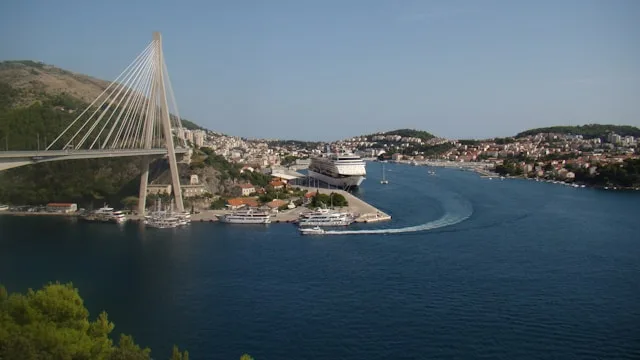
The Port of Dubrovnik has consolidated its position as the southern Adriatic's premier superyacht maintenance hub. The Gruž Marina expansion, completed in late 2024, added 120 berths for vessels over 40 metres with dedicated dry-dock capabilities. Fourteen specialist firms operate in the Gruž Industrial Zone, including Croatia Yachting and Nautika Service Dubrovnik, offering classification society-certified repairs. The Adriatic Marine Innovation Lab, opened in 2025 with the University of Dubrovnik, focuses on antifouling technologies and electric propulsion. The 2025 Croatian Maritime Code amendments mandate shore-power connection for large vessels, with non-compliance fines of €10,000 per day. This regulatory pressure accelerates demand for technical leadership in maritime and offshore operations, particularly marine electrical engineers and harbour operations directors.

Screen production and creative industries

Three Lions Studio, a 12,000-square-metre facility in Rijeka Dubrovačka, has been operational since 2024 and can accommodate two major productions simultaneously. Local firms Rolling Stock and the Dubrovnik Film Commission facilitated 14 international productions in 2025, including a Star Wars spinoff series. Digital Tides, acquired by Tencent in 2024, employs developers focused on historical simulation and VR tourism experiences. The "King's Landing" IP licensing alone generates €8 million annually. This cluster needs production supervisors, VFX leads, and studio operations directors who understand both the creative pipeline and the logistical constraints of filming within a UNESCO heritage site.

Digital services and remote-work infrastructure

The Dubrovnik Tech Park in Rijeka Dubrovačka now houses 52 companies, up from 18 in 2023, specialising in maritime logistics SaaS, hospitality tech, and cybersecurity for yacht systems. Booking.com operates an Adriatic UX research hub here. Oracle runs a cloud infrastructure support centre for yacht management software. The Dubrovnik Digital Nomad Valley in Komolac hosts 1,400 registered remote workers annually. The sector employs 3,200 people and contributes 12% of local GVA. CTOs and product VPs are increasingly recruited from Zagreb and the Croatian diaspora through the "Dubrovnik Calling" returnee programme, which offers three-year tax incentives. Our AI and technology sector team understands the particular challenge of hiring tech leadership into a city that competes with Zagreb, Berlin, and Lisbon for the same profiles.

Cross-border complexity

Dubrovnik's luxury hotel GMs are predominantly expatriate: Italian, Austrian, and Turkish nationals leading properties for international chains. Marine engineering certifications cross national regulatory boundaries. Screen productions involve multinational crews and co-production agreements. The superyacht client base is inherently international. Nearly every senior hire in this city touches international executive search territory, requiring multi-jurisdiction candidate assessment, relocation support, and compensation benchmarking across markets.

Sector strengths that define Dubrovnik executive search

Dubrovnik's executive search market is strongest where its economic specialisation is deepest.

Why companies partner with KiTalent for executive search in Dubrovnik

Companies rarely need only reach in Dubrovnik. They need interpretation, calibration, and a search architecture that reflects the real structure of the market.

We operate across Croatia

Our team coordinates Dubrovnik mandates from our European headquarters in Turin, with direct access to the talent intelligence, compensation dynamics, and sector developments that drive search outcomes.

We reach the candidates that matter

The strongest executives in Dubrovnik are passive. Our direct headhunting approach engages the hidden 80% of passive talent through discreet outreach rooted in real market knowledge.

We do not start from scratch

Our parallel mapping methodology means we already hold live intelligence on restructuring, transition windows, compensation patterns, and candidate attraction opportunities when a brief arrives.

Our model de-risks the investment

In Dubrovnik, the cost of a wrong executive hire extends far beyond the recruitment fee. Our interview-fee model lets clients see real market output and qualified candidates before the bulk of the investment is committed.

How we run executive searches in Dubrovnik

Dubrovnik's constraints are what make it a rewarding market for a firm built on pre-existing intelligence and direct candidate relationships. The city punishes firms that start cold. It rewards firms that arrive with a map already drawn.

1. Parallel mapping before the brief is live

Through continuous talent mapping, KiTalent tracks career movements, compensation trajectories, and organisational changes across Dubrovnik's key sectors independently of any specific mandate. When a luxury hotel group needs a new GM or the Port of Dubrovnik needs a harbour operations director, the firm already has a preliminary view of who is available, who might be persuadable, and what the market expects. This is why qualified shortlists arrive in 7 to 10 days, not 8 to 12 weeks.

2. Direct headhunting into the hidden 80%

In a city of 42,000, the candidates who will transform a leadership team are almost never on the open market. They are running competing properties, managing refit operations in Montenegro, or leading tech teams in Zagreb. Reaching them requires direct, discreet, individually crafted outreach built on genuine sector knowledge. A marine engineering director will not respond to a generic recruiter message. They will respond to a consultant who understands classification society standards, hybrid propulsion systems, and the specific opportunity the Gruž expansion represents.

3. Market intelligence as a search output

Every Dubrovnik mandate produces more than a shortlist. Clients receive a comprehensive view of the talent market: who holds what role, how compensation is structured, where the gaps are, and how the client's proposition compares to competitors. This market intelligence becomes a strategic asset that informs hiring decisions well beyond the immediate search. In a micro-economy with this level of employer overlap, understanding the full competitive picture is not optional.

Essential reading for Dubrovnik hiring decisions

These resources provide deeper market intelligence and explain how KiTalent turns insight into a faster, more transparent search process.

Frequently asked questions about executive search in Dubrovnik

These are the questions most closely tied to how executive search really works in Dubrovnik.

Why do companies use executive recruiters in Dubrovnik?

Dubrovnik's talent pool is physically capped by a residential population of 42,000 and heritage regulations that limit urban expansion. The senior professionals capable of running a five-star property, directing a superyacht refit operation, or leading a tech park company are a finite group. Most are employed and not actively looking. Standard recruitment channels produce the same recycled names. An executive search firm with pre-existing market intelligence and direct access to passive candidates across Croatia, the Adriatic, and the international market is the only reliable way to find leaders who genuinely add capability rather than simply fill a seat.

What makes Dubrovnik different from Zagreb or Split for executive hiring?

Zagreb is Croatia's corporate capital with deep talent pools across financial services, technology, and manufacturing. Split is a growing tech and logistics hub with a larger residential base. Dubrovnik is neither. It is a micro-economy with extreme sector concentration in premium hospitality, maritime services, and screen production. The talent market is smaller, the compensation dynamics are distorted by seasonal variance and housing costs 40% above the national average, and nearly every senior hire requires relocation planning. Search strategies that work in Zagreb will underperform in Dubrovnik because the market fundamentals are different.

How does KiTalent approach executive search in Dubrovnik?

Mandates are coordinated from KiTalent's European headquarters in Turin, positioned within the Adriatic economic corridor. The firm draws on parallel mapping that tracks career movements and compensation trends across Dubrovnik's key sectors before any mandate begins. Candidate sourcing extends beyond the city to Zagreb, the Croatian diaspora, and the wider Eastern Mediterranean. Every candidate undergoes a three-tier assessment covering technical competence, cultural and lifestyle fit, and genuine motivation to relocate to and remain in a constrained but high-value market.

How quickly can KiTalent present candidates in Dubrovnik?

Qualified shortlists are typically delivered within 7 to 10 days. This speed is possible because the firm maintains ongoing intelligence on Dubrovnik's key sectors rather than starting research from zero. In seasonal markets where a hospitality GM vacancy in February must be filled before the April peak, or where a marine technical director is needed before a scheduled refit window, this timeline is the difference between an orderly transition and an operational crisis.

How does Dubrovnik's housing market affect executive recruitment?

Average property prices of €6,200 per square metre and rents 40% above the national average make Dubrovnik one of Croatia's most expensive cities to live in. The 2024 short-term rental regulations returned some units to the residential market, but affordability remains a material barrier. Every executive search must account for housing as part of the total compensation proposition. Candidates relocating from Zagreb, where costs are lower, or from international markets, where salaries may be higher but lifestyle trade-offs differ, need a clear picture of what living in Dubrovnik actually costs. Market benchmarking that includes housing and relocation data is essential to preventing late-stage offer rejections.

Start a conversation about your Dubrovnik search

Whether you are hiring a luxury hotel general manager, a marine engineering director for the Gruž superyacht cluster, a CTO for a tech park company, or a studio operations head for screen production, this is where that process begins.

What we bring to Dubrovnik executive mandates:

Executive search and direct headhunting · Talent mapping and market intelligence · Compensation benchmarking and mandate calibration · Connection to KiTalent's European headquarters in Turin and international executive search network.

Tell us about your Dubrovnik hiring challenge

Whether you are running a live mandate or want to pressure-test a brief before going to market, this is the right place to start the conversation.

Explore Our Executive Search Guides

Produced by KiTalent Research. Based on local market intelligence and executive-search data. Reviewed by KiTalent Research Team.