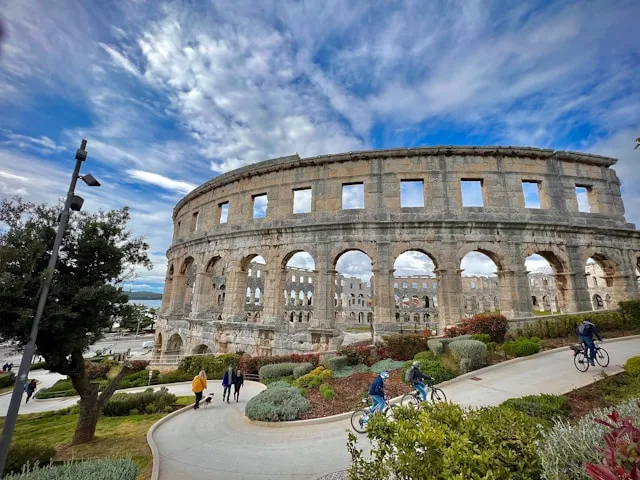
Pula, Croatia Executive Search

Executive Search in Pula

KiTalent brings sector-specific intelligence and direct headhunting capability to senior leadership searches across Pula.

7-10

days to qualified shortlists in many searches

80%

of relevant passive talent reached through direct headhunting

42%

faster time-to-hire than traditional search benchmarks

96%

one-year retention from KiTalent's broader methodology

These are KiTalent track-record figures referenced across our core about, services, and methodology pages.

Why Pula is a deceptively difficult hiring market

Pula looks, on paper, like a manageable city. Roughly 58,000 residents. A regional economy generating €2.1 billion across Istria County. A handful of dominant employers. The assumption is that senior hiring here should be straightforward: a small market with identifiable talent.

That assumption is wrong. Pula's executive market is shaped by three forces that make conventional recruitment consistently ineffective.

The collapse of Uljanik Shipyard in 2019 did not simply eliminate jobs. It triggered a wholesale restructuring of the city's professional workforce. The 2,800-strong shipyard workforce was dispersed, and many of its most experienced engineers and managers were absorbed into the marine refit sector, offshore wind maintenance, or left the region entirely. What replaced Uljanik is a cluster of smaller, specialised firms: Tehnomont, the Naval Service Center, maritime tech startups at the Science and Technology Park. These employers compete fiercely for a finite pool of marine engineers, project leaders, and operations directors who understand both legacy shipbuilding and modern offshore energy systems. Posting a job on a Croatian portal reaches none of them.

Tech sector salaries in Pula now average €2,200 net per month, approaching Zagreb levels. This creates compression. A senior developer at a maritime software firm earns close to what a plant manager at Pilkington or a department head at Teva takes home. The result is that compensation alone no longer differentiates one offer from another. Candidates weigh role scope, lifestyle factors, and career trajectory with equal weight. Any search that relies on a salary premium to attract shortlisted candidates will fail in this environment. Calibrating the full proposition requires market benchmarking that goes beyond headline pay.

Pula is a city where senior professionals in marine technologies, pharmaceuticals, and hospitality management know each other personally. A clumsy recruitment approach, a poorly positioned role, or a withdrawn offer travels through the community within days. This is not Zagreb or Munich, where anonymity provides a buffer. Here, the quality of the search process directly determines whether your employer brand is strengthened or damaged. The Go-To Partner approach exists precisely for markets like this: long-term relationships, discreet outreach, and a methodology that treats every candidate interaction as a reflection of the client's reputation. For organisations hiring in Pula, these dynamics demand a search partner with pre-existing intelligence on who holds what role, where compensation thresholds sit, and how to engage passive leaders without creating market noise. Reaching the hidden 80% of passive talent is not optional here. It is the only viable path to a strong shortlist.

What is driving executive demand in Pula

Several structural forces are converging to shape executive demand across Pula.

Advanced maritime and marine technologies

The Škver Innovation Harbour, built on the former Uljanik site, now houses a specialised cluster of yacht refit, marine engineering R&D, and offshore wind maintenance operations. Tehnomont and the Naval Service Center together employ over 1,200 people, and growing NATO activity in the Adriatic is expanding the military vessel maintenance pipeline. The 100-plus turbine Pometeno Brdo wind farm requires site directors, maintenance programme leads, and subsea robotics specialists who combine maritime domain knowledge with renewable energy operations experience. This cluster generates €180 million annually and its leadership needs sit squarely within our maritime, shipbuilding and offshore practice, with growing overlap into oil, energy and renewables as the offshore wind component matures.

Pharmaceuticals and precision manufacturing

Teva Pharmaceutical Industries operates Pula's largest single private facility, employing roughly 950 people and specialising in high-value generic injectables and biologics. The €45 million facility modernisation completed in 2025 has intensified demand for biotech QA specialists, regulatory affairs directors, and plant managers with EU pharmaceutical compliance expertise. Pilkington Automotive (NSG Group) adds another 650 employees in automotive glass for premium European brands, requiring supply chain and operations leaders fluent in German OEM quality standards. Both anchor employers sit within the Štinjan Industrial Park alongside 40-plus SMEs in metal fabrication and plastics, creating a dense industrial manufacturing ecosystem that needs functional leaders at every level.

Digital technology and creative industries

Pula's ICT sector has nearly doubled since 2022, reaching 3,800 full-time employees by 2026. The STP Pula science and technology park hosts 35 startups focused on AI for logistics and blue biotech. Game development studios including a Croteam satellite office and Gamechuck contribute to a growing creative technology cluster. Maritime software companies like Oradian and Navela serve global vessel management markets. With operational costs running 25% below Zagreb, this is a market pulling talent from the capital and from international remote pools. Search mandates here require consultants who understand both AI and technology hiring and the specific dynamics of secondary tech hubs where employer brand and role design matter more than in established centres.

Regenerative tourism and MICE

Tourism accounts for 45% of Pula's GDP, but the model has fundamentally shifted. The Arena Pula hosts 45-plus events annually generating €28 million in direct spend. The new Convention Center, opened in 2025 with 1,200-person capacity, targets medical and maritime conferences. Valamar Riviera and Maistra (Park Plaza Histria) lead a hospitality sector that increasingly competes on year-round programming rather than seasonal volume. General managers, revenue directors, and F&B leaders with German and Italian fluency are persistently scarce. Our travel and hospitality team regularly sees this pattern in Adriatic markets: the skill set required to run a year-round cultural destination is fundamentally different from managing a summer resort.

Cross-border complexity

Pula's economy is deeply interlinked with Italy, Austria, and Germany through supply chains, tourism flows, and professional networks. Teva reports to European headquarters. Pilkington serves German OEMs. Hospitality operators market primarily to Italian, German, and Austrian guests. Many senior roles require leaders comfortable reporting across borders, operating in multiple regulatory frameworks, and communicating in at least three languages. This is where international executive search capability becomes essential, not as a theoretical offering but as a practical requirement of almost every C-level mandate in the city.

Sector strengths that define Pula executive search

Pula's executive search market is strongest where its economic specialisation is deepest.

Why companies partner with KiTalent for executive search in Pula

Companies rarely need only reach in Pula. They need interpretation, calibration, and a search architecture that reflects the real structure of the market.

We operate across Croatia

Our team coordinates Pula mandates from our European headquarters in Turin, with direct access to the talent intelligence, compensation dynamics, and sector developments that drive search outcomes.

We reach the candidates that matter

The strongest executives in Pula are passive. Our direct headhunting approach engages the hidden 80% of passive talent through discreet outreach rooted in real market knowledge.

We do not start from scratch

Our parallel mapping methodology means we already hold live intelligence on restructuring, transition windows, compensation patterns, and candidate attraction opportunities when a brief arrives.

Our model de-risks the investment

In Pula, the cost of a wrong executive hire extends far beyond the recruitment fee. Our interview-fee model lets clients see real market output and qualified candidates before the bulk of the investment is committed.

How we run executive searches in Pula

Pula's market conditions require a methodology built for speed, discretion, and depth of intelligence. Every search we conduct here is coordinated from our European headquarters in Turin, with consultants who understand the Adriatic economy, speak the relevant languages, and maintain active networks across Croatia, Italy, and the broader Central European region.

1. Parallel mapping before the brief is live

We do not start researching the Pula market when a client calls. Our methodology is built on continuous, pre-mandate talent intelligence. We track career movements at Teva, Tehnomont, Valamar Riviera, and across the Štinjan industrial cluster on an ongoing basis. When a mandate arrives, we activate a warm network of pre-identified professionals rather than starting cold. This is how we deliver qualified shortlists in 7 to 10 days. In a market where the same marine engineers and pharmaceutical leaders are being courted by multiple employers, this head start is decisive.

2. Direct headhunting into the hidden 80%

The executives who can lead a €45 million pharmaceutical modernisation, scale a maritime tech startup to international markets, or reposition a hospitality portfolio for year-round performance are not responding to job advertisements. Our direct headhunting process reaches them through individually crafted, sector-specific outreach. Each approach is built on genuine understanding of the candidate's current role, motivations, and career trajectory. In Pula's tight professional circles, this credibility is what earns a conversation. Generic mass messaging does not.

3. Market intelligence as a search output

Every Pula engagement produces more than a candidate shortlist. Clients receive a complete view of the talent market: who holds comparable roles, where compensation thresholds sit, how the competitive field is structured, and what proposition is required to attract the strongest candidates. This intelligence, grounded in our market benchmarking rigour, becomes a strategic asset that informs not just the current hire but future workforce planning.

Essential reading for Pula hiring decisions

These resources provide deeper market intelligence and explain how KiTalent turns insight into a faster, more transparent search process.

Frequently asked questions about executive search in Pula

These are the questions most closely tied to how executive search really works in Pula.

Why do companies use executive recruiters in Pula?

Pula's labour market is at 4.2% unemployment. At this level, the visible candidate pool is essentially exhausted for senior roles. The executives who can lead a pharmaceutical facility, scale a maritime technology firm, or manage a year-round hospitality operation are already employed and not actively looking. Companies use executive recruiters because direct headhunting is the only reliable method for reaching these professionals. In a city this small, the quality of the approach also matters: a respected search firm protects the client's employer brand in a professional community where reputation is currency.

What makes Pula different from Zagreb for executive hiring?

Zagreb offers scale: a larger talent pool, more employers, and greater anonymity. Pula offers none of that. The senior professional community here numbers in the hundreds, not thousands. Every search is visible. Compensation dynamics are different too, with tech salaries approaching Zagreb levels while housing costs have surged 38% since 2022. The cross-border dimension is also more pronounced. Many Pula roles require fluency in Italian or German and experience reporting into Austrian or Italian headquarters. A search approach that works in Zagreb will underperform in Pula because it fails to account for these realities.

How does KiTalent approach executive search in Pula?

Searches are coordinated from our European headquarters in Turin, with consultants who maintain continuous intelligence on Pula's key employers and sector clusters. We use parallel mapping to track talent movements before a mandate begins, which allows us to deliver qualified shortlists within 7 to 10 days. Every candidate undergoes a three-tier assessment covering technical competency, cultural alignment, and motivation. The process is fully transparent: clients receive weekly pipeline reports and comprehensive market documentation throughout the engagement.

How quickly can KiTalent present candidates in Pula?

Interview-ready candidates are typically presented within 7 to 10 days of mandate confirmation. This speed comes from pre-existing market intelligence, not from cutting corners. Because we continuously map career movements across Pula's maritime, pharmaceutical, technology, and hospitality sectors, we have already identified and assessed potential candidates before many searches formally begin. For cross-border roles requiring relocation from Italy, Germany, or Austria, the initial shortlist follows the same timeline, with relocation logistics managed in parallel.

How does the small size of Pula's professional community affect the search process?

It changes everything. In a city where senior professionals across sectors know each other by name, discretion becomes the most important variable in search design. A candidate approached clumsily or a confidential mandate that leaks can close doors permanently. Our process is built around individually crafted outreach, strict confidentiality protocols, and a commitment to protecting the client's employer brand at every stage. We also decline mandates that do not meet our quality criteria, because in a community this tight, every interaction shapes future access to the talent market.

Start a conversation about your Pula search

Whether you are hiring a pharmaceutical plant director, a maritime programme leader, a hospitality general manager, or a CTO for a maritime tech venture, the starting point is the same: a confidential conversation about your requirements, timeline, and market position.

What we bring to Pula executive mandates:

Executive search and direct headhunting · Talent mapping and market intelligence · Compensation benchmarking and mandate calibration · Connection to KiTalent's Turin European headquarters and international executive search network.

Tell us about your Pula hiring challenge

Whether you are running a live mandate or want to pressure-test a brief before going to market, this is the right place to start the conversation.

Explore Our Executive Search Guides

Produced by KiTalent Research. Based on local market intelligence and executive-search data. Reviewed by KiTalent Research Team.