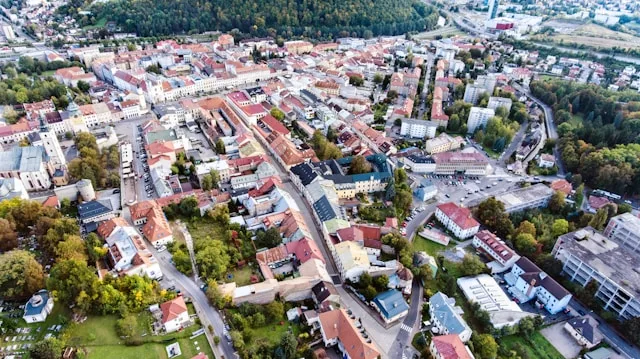
Why Klagenfurt is a deceptively difficult market to recruit in
A city of 102,000 people with a 5.8% unemployment rate looks manageable on paper. It is not. Klagenfurt's executive market is shaped by forces that make conventional sourcing ineffective and poorly designed searches actively damaging.
The Lakeside corridor, the Metnitzstraße office district, and the Alpen-Adria-Universität form a tight triangle. Senior engineers and R&D leaders in power electronics, embedded systems, and energy informatics rotate between a small number of employers: Infineon, NXP, Bitmovin, Kapsch, Verbund, and a handful of AAU spin-offs. In a city this size, a clumsy approach to a passive candidate reaches their current employer within days. The professional community is too small and too interconnected for anything less than a carefully managed, discreet search process. This is why process quality and employer brand protection are not abstract principles here. They are operational necessities.
Average rents have risen 18% since 2022, reaching €13.50 per square metre. The cause is specific: Lakeside employee demand colliding with Wörthersee shoreline protection laws that limit horizontal expansion. The "Klagenfurt 2030" housing initiative targets 2,500 new units by 2028, but building-permit backlogs of 12 to 18 months are slowing delivery. For executive search, this means compensation packages alone do not close candidates. Relocation support, housing access, and quality-of-life positioning all become part of the mandate design. A search firm that presents candidates without calibrating the full proposition will lose them at offer stage.
Klagenfurt's major technology employers are headquartered elsewhere. Infineon runs from Munich. NXP from Eindhoven. Intel from Santa Clara. This creates a recurring tension: the city hosts world-class R&D teams, but the most senior decision-making roles often sit in other countries. Companies seeking to build genuine local leadership, not just functional management reporting upward, need executives who can operate with autonomy while maintaining alignment with a distant headquarters. Finding these leaders requires international executive search capability and an understanding of cross-border reporting structures that most regional recruitment firms simply do not possess.
These dynamics are why a transactional approach to hiring fails in Klagenfurt. The city rewards firms that invest in continuous market intelligence and long-term relationships. It is precisely the kind of market where a Go-To Partner model outperforms one-off mandates.