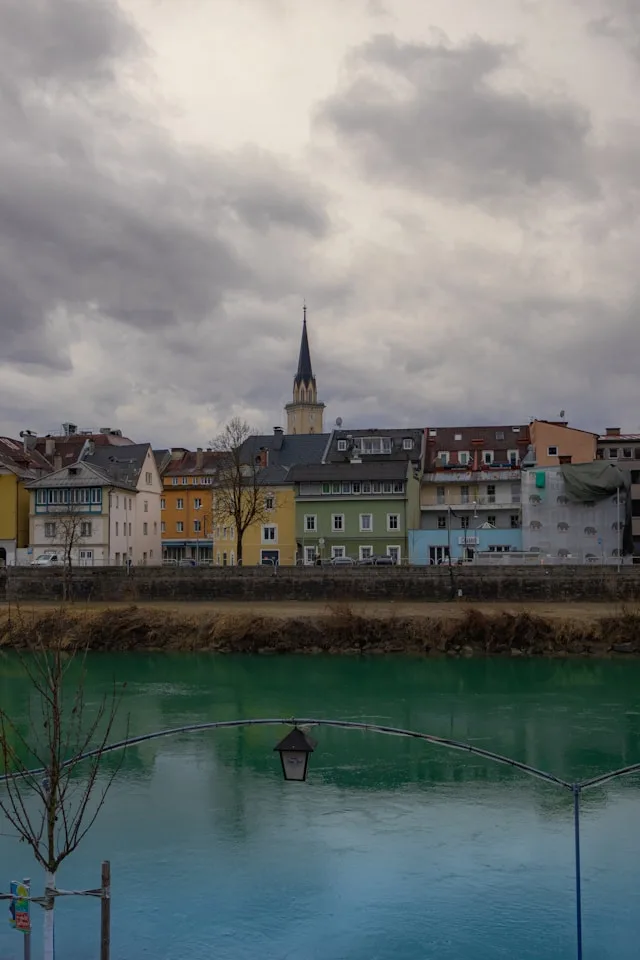
Why Vienna is one of Europe's most deceptive executive markets
Vienna looks, at first glance, like a city with abundant talent. A highly educated population. Strong universities. A quality of life that consistently ranks among the world's best. These conditions suggest that filling senior roles should be straightforward. It is not.
The challenge is not scarcity in the abstract. It is the specific combination of deep sectoral specialisation, a tightly connected professional community, and a passive talent pool that resists conventional outreach. Companies that rely on job postings or generalist recruiters find themselves circulating the same small pool of active candidates while the people they actually need remain invisible.
Vienna's life sciences ecosystem has grown to more than 750 companies generating roughly €22.7 billion in revenue. The talent pool stands at approximately 49,000 specialists. That sounds large until you consider the breadth of disciplines involved: molecular biology, biostatistics, regulatory affairs, clinical development, GMP compliance, and an emerging layer of computational biology that sits at the intersection of wet lab and AI. The people who combine two or more of these competencies number far fewer than 49,000. And they know their value. Employers ranging from established pharma operations at Campus Vienna Biocenter to early-stage scaleups in Neu Marx compete for the same leaders. When a regulatory affairs director or a clinical operations head moves, the entire cluster feels it.
Erste Group, Raiffeisen Bank International, Vienna Insurance Group, and a cluster of CEE-facing financial institutions all run their regional operations from Vienna. These organisations employ tens of thousands across the group level. Erste alone reports approximately 45,000 employees group-wide, and RBI operates with around 42,000. At the executive level, however, the circuit is remarkably small. The compliance officers, structured finance specialists, and CEE market heads who understand both the Austrian regulatory environment and the complexity of operating across Central and Eastern Europe form a population measured in dozens, not hundreds. They know each other. They notice who is being approached, by whom, and how professionally the approach is handled.
Vienna's ICT and AI sector is growing fast, supported by city investment, the establishment of the AITHYRA institute for AI in biomedicine, and a startup ecosystem that attracted 218 foreign company projects in 2024 alone. But the leadership layer has not kept pace with the commercial expansion. Chief data officers, heads of AI engineering, and product leaders with domain expertise in health or biotech are in exceptionally short supply. Many of Vienna's strongest digital leaders hold positions at well-funded companies or research institutes where compensation, purpose, and autonomy are all high. They are not reading job boards. They are not responding to generic LinkedIn messages. Reaching them requires direct headhunting conducted by people who understand both the technical domain and the candidate's current situation.
These three dynamics converge on a single conclusion. Standard recruitment in Vienna produces standard results: a shortlist drawn from whoever happens to be available. For companies that need leaders capable of shaping a biotech scaleup, running a CEE banking operation, or building an AI function from scratch, availability is not the relevant criterion. This is why Vienna's most consequential hires are made through a Go-To Partner approach that begins long before a mandate is signed.