Why Villach is one of Europe's most difficult executive hiring markets
A city that accounts for over 30% of its industrial output through a single corporate ecosystem does not behave like a normal recruitment market. Job postings in Villach's core disciplines attract thin response. The professionals who could fill the most critical roles are already inside Infineon, CTR Carinthian Tech Research, or Siemens Mobility. They are not browsing job boards. They are not updating their CVs.
The real challenge is more specific than general talent scarcity. It is the intersection of extreme specialisation, a small professional community where everyone knows everyone, and a set of constraints that make relocation harder than the compensation alone would suggest.
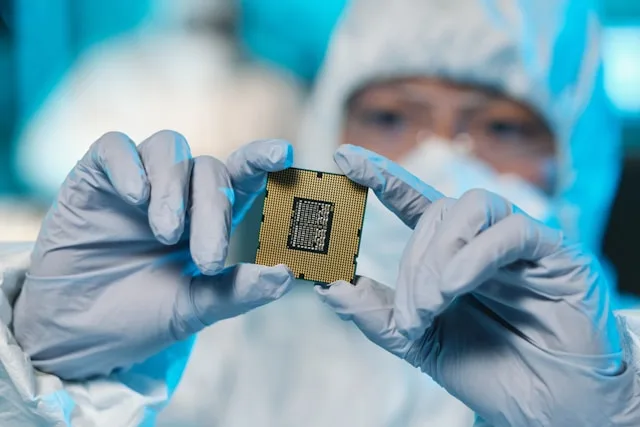
Wide bandgap semiconductor design, high-voltage testing above 1kV, thermal simulation for power modules: these are the skills that Villach's employers need most, and the skills that take the longest to fill. Engineering vacancies in the city sit open for an average of 4.8 months. The reason is simple. The number of people in Europe who combine cleanroom manufacturing experience with 300mm wafer fab expertise is finite. Many of them already work within a few kilometres of the Infineon campus in Villach West.
When the target candidate population is this narrow, conventional search methods produce nothing. Direct headhunting into the hidden 80% of passive talent is the only reliable path to a credible shortlist.
Villach's residential purchase prices rose 7% year-on-year in 2025, outpacing wage growth of 4.2%. Building permits for new housing take 14 to 18 months. For a senior engineer or operations director considering a move from Munich, Graz, or Milan, the gap between compensation and living costs is a real deterrent. This is not a market where a strong offer letter alone closes the deal. Candidates need to be shown a complete proposition: role quality, career trajectory, family infrastructure, and realistic housing options.
Compensation calibration through market benchmarking becomes essential here. An offer that is competitive on paper but ignores the affordability reality will fail at the negotiation stage.
Villach's technology ecosystem is tightly knit. The Silicon Alps Cluster connects Infineon, CTR, Siemens Mobility, FH Kärnten, and dozens of specialist SMEs into a community where hiring decisions are visible and poorly managed searches create lasting reputational damage. A withdrawn offer, a clumsy approach to a candidate who is happily employed, or a search that generates market noise without a hire all carry consequences that extend well beyond a single mandate.
This is why KiTalent's Go-To Partner approach was designed for exactly this kind of environment. Process quality is not a luxury in Villach. It is a prerequisite for any firm that wants to operate credibly in the market over time.