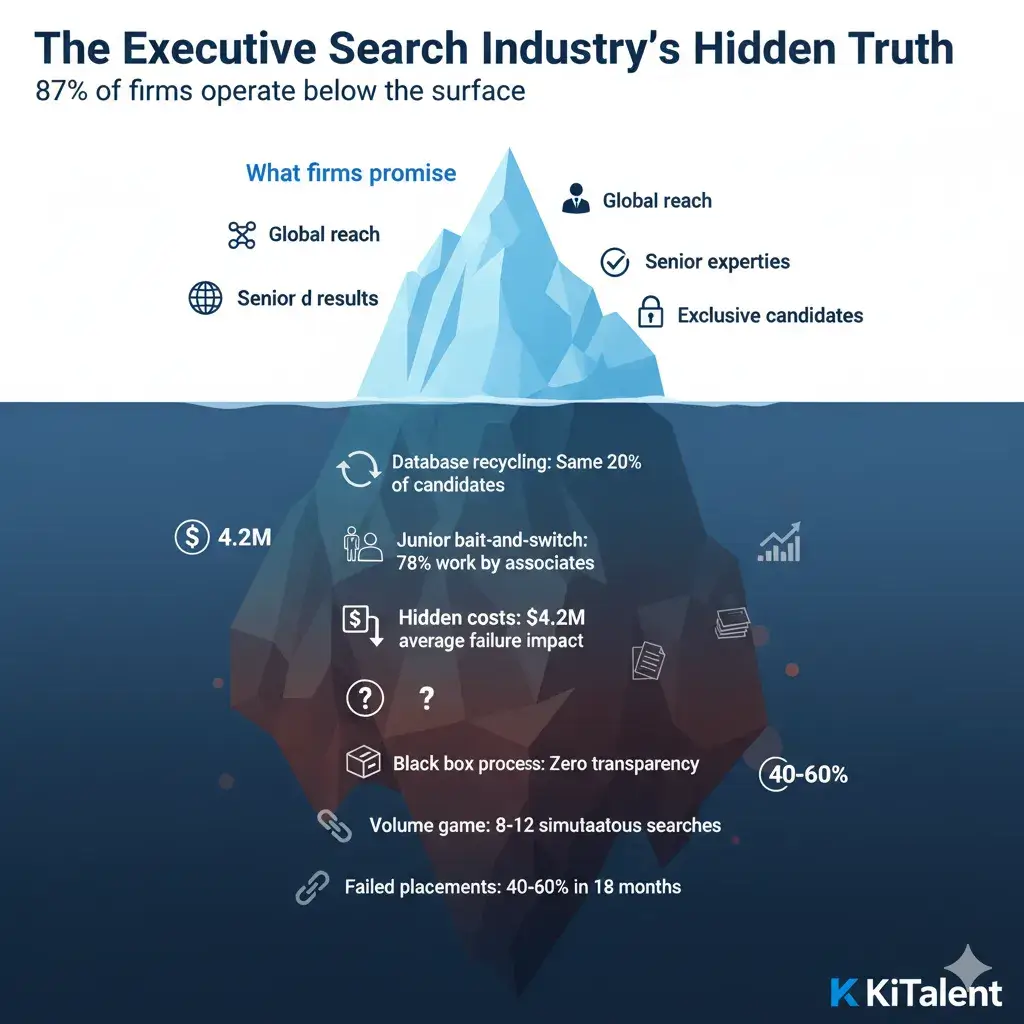
为什么87%的Executive Search公司未能交付成果:行业最严守秘密的内部揭秘
了解Executive Search公司87%失败率的根本原因。获取关键洞察和策略,识别行业的隐藏陷阱。

严谨的 Executive Search(高管寻聘)流程有助于董事会(董事会)、CEO、人力资源负责人及投资者降低招聘风险,统一决策层意见,并确保获得能够在复杂环境中胜任的领导力。本指南阐述高管猎头生命周期、各阶段的核心交付成果、客户应期待的管控机制,以及 retainer 合作伙伴如何从委托定义到入职全程创造掌控力。
适用于战略性职位委托、人才紧缺市场以及不会主动投递的候选人。 适用于 China 的委托。
Built for high-stakes leadership mandates
Executive Search 流程并非简单的面试序列。在高层级别,它是一项结构化的商业实践,旨在回答三个关键问题:业务需要达成何种领导成果、合适的人才存在于何处,以及哪位候选人最有可能在实际运营环境中交付成果。当涉及 CEO、CFO、CHRO、业务单元负责人或其他关键任命时,模糊性的代价高昂。严谨的流程为将塑造战略、文化、执行力及投资者信心的决策注入纪律性。
紧急领导职位空缺通常会失败,不是因为市场没有人才,而是因为流程定义不明确、利益相关者联盟薄弱,或者在成功概况清晰之前就开始外展。严格的高管猎头流程可以通过尽早制定治理、预先调整文化和绩效标准以及在授权进入市场后保持高动力来降低风险。如果时间是主要压力,我们的执行搜索时间线 解释了在不损害质量的情况下可以获得速度的地方。
实践中,最优秀的高层候选人往往不会主动应聘广告职位。他们在其他组织表现优异,管理着敏感职责,仅对可信、审慎的接触方式持开放态度。这正是优质领导力招聘高度依赖 Talent Mapping、直接接触、校准评估及严格保密管理的原因。
Retained Search 模式至关重要,因其创造专注度、深度与问责制。搜索公司并非被动应对流入的申请,而是基于商定的委托、明确的目标市场及清晰的治理框架开展工作。若希望了解实践中的差异,我们的 Retained Search 方法 阐述了合作伙伴主导搜索的核心原则。
每次成功的搜索皆始于清晰。第一阶段为详细的需求导入,涵盖业务战略、组织背景、董事会期望、汇报线、利益相关者复杂性、薪酬体系,以及前 12 至 18 个月内成功应呈现的具体样貌。对于 Private Equity 支持的企业,通常还包括价值创造计划、转型里程碑及退出周期;对于上市公司或跨国组织,则可能涉及治理动态、市场敞口及区域复杂性。
此阶段的核心交付成果为成功画像,而非仅止于职位描述。强有力的成功画像界定成果、领导能力、运营风格、文化契合要素及潜在 derailers,同时明确角色必须灵活之处与不可妥协之处。当客户在行业专业知识与可转移性之间,或经证实的规模与创业视野之间寻求平衡时,这一点尤为关键。
运行良好的需求导入还能在接触市场前使利益相关者群体达成一致。这意味着明确谁评估什么、如何做出决策以及哪些标准权重最高。许多搜索进展缓慢并非因为人才匮乏,而是客户团队未能尽早化解内部分歧。因此,Executive Search 生命周期的第一阶段既关乎决策架构,亦关乎角色定义。
委托定义完成后,搜索进入 Talent Mapping 与 origination 阶段。此阶段识别目标公司、相邻行业、可比环境及地理人才池,同时考量背景多样性、运营情境及领导历程。例如,某企业最初可能要求行业复制,随后发现最优领导解决方案位于相邻领域,该候选人已解决类似的规模、复杂性或转型挑战。
此阶段的主要交付成果为经研究的市场地图与长名单。该长名单并非随机姓名集合,而是对相关 talent universe 的审慎呈现,包括高度可见的候选人、未被广泛关注的候选人,以及仅在特定情境下可信的候选人。在复杂搜索中,长名单亦经校准:市场实际可提供的人选、可能出现的薪酬差距、哪些画像更可能转化。
随后通过审慎、精心设计的接触方式推进。在高层级别,信息传达至关重要。优秀候选人回应的是机会质量、发起人可信度及流程严肃性。接触应保护保密性,避免不必要的市场噪音,并保持足够速度以维持势头。若需了解 [Executive Search 阶段](/executive-search-process-steps) 的实务分解,此处正是研究质量与市场判断开始区分成果的关键节点。
评估是 Executive Search 流程真正创造价值之处。搜索合作伙伴不应仅确认候选人能流畅陈述过往成就,而须针对特定委托测试领导绩效的证据:战略视野、运营纪律、人员领导力、治理成熟度、韧性,以及在可比条件下创造成果的能力。评估必须区分声誉与实证。
这通常涉及结构化面试、详细职业分析、动机测试,以及深入检视候选人如何领导增长、危机、重组、转型或规模扩张。视角色需要,流程可能纳入心理测评或领导风格工具,但这些应辅助判断而非取代判断。对于 C-suite 招聘,合作伙伴判断始终是核心。最优评估融合数据、模式识别与知情挑战。
质量控制应内嵌于此阶段,而非留至最后。这意味着核查面试中的事实一致性、探究角色间过渡、测试 headline 成就背后的深度,并识别利益相关者证明人后续可能确认或 contradict 搜索叙事之处。客户应期待坦诚、具可比性且有助于决策的候选人报告。强有力的短名单不仅呈现优势,更阐释权衡、风险及情境契合度。
短名单本身是另一重要交付成果。它应简洁、基于证据,并以正确方式体现多样性:非为表面形象的多元化,而是一组通过不同但可辩护路径满足委托的可信领导者。此时,搜索公司还应提供市场反馈、薪酬视角,以及关于如何设计客户面试序列以提升决策质量的建议。
As the preferred candidate emerges, the process shifts from comparison to confirmation. Referencing at executive level should go far beyond generic validation. It should test operating style, stakeholder management, judgment under pressure, team-building capability, and the context behind claimed results. In senior mandates, referencing often works best when it is layered: informal market referencing early enough to surface themes, followed by formal referencing once mutual commitment is clear.
This stage may also involve deeper diligence depending on the role and jurisdiction. Academic verification, employment checks, regulatory considerations, conflicts of interest, reputation review, and compensation history may all become relevant. The purpose is not bureaucracy; it is to prevent avoidable surprises after an appointment has already been socially or internally committed.
Offer management is equally strategic. The best candidate is often managing multiple career variables at once: compensation, scope, governance, location, team quality, board chemistry, timing, and personal risk. An experienced search partner helps clients craft an offer that is competitive, coherent, and aligned with what truly motivates the candidate. That includes managing counteroffers, maintaining momentum, and protecting the relationship through a period when many searches are won or lost.
The executive search lifecycle works best when governance is explicit. Clients should expect regular progress updates, market intelligence, calibrated recommendations, and transparency about challenges. Weekly or biweekly reporting is typical in active phases of the search. These updates should not simply list activity; they should explain what the market is saying, where the brief may need refinement, and what decisions are required from the client to keep the search on track.
Confidentiality should be handled with the same seriousness as assessment. For replacement situations, sensitive restructurings, or investor-led leadership changes, this means staged disclosure, careful document control, and targeted outreach. Candidates should receive enough information to evaluate credibility, but not so much that a confidential process becomes exposed prematurely. Done well, confidentiality protects both the client's strategic interests and the candidate's current position.
Search timing is shaped by role complexity, geography, stakeholder availability, and market accessibility. Many senior mandates conclude within roughly three to six months, though urgency, cross-border scope, or unusual profile requirements can lengthen or compress that range. What matters more than headline duration is whether the process has the right pace and decision discipline. Our executive search timeline explains how long a search takes and where delays most commonly occur.
Clients should also expect support beyond signature. Senior appointments succeed or fail early, often in the first 90 to 180 days. Effective post-placement support includes transition planning, stakeholder alignment, and follow-up to address integration risks before they become performance issues. For additional detail on questions clients often ask, including guarantees, confidentiality, and process design, our supporting guidance expands on the practical issues that matter most.
A premium search partner does not simply introduce candidates. The firm should challenge the brief when market evidence requires it, advise on trade-offs, and help the client make a better hiring decision than it would make alone. That includes bringing external perspective on compensation, title calibration, talent availability, and the credibility of different profile options.
Clients should expect candour. If the original mandate is too narrow, compensation is below market, or internal decision-making is slowing conversion, the search partner should say so early. Equally, if a candidate is impressive but misaligned, the assessment should be clear enough to prevent an expensive compromise. Sophisticated boards and leadership teams value transparency because it improves outcomes.
Finally, clients should expect consistency from briefing to close. The best executive search process is partner-led, evidence-based, and commercially grounded. It respects the reality that leadership hiring is never only about capability on paper. It is about readiness for a specific mandate, in a specific context, with a specific group of stakeholders and expectations. When that discipline is present, the search becomes faster to navigate, easier to govern, and materially more likely to produce a durable hire.
These sector hubs show how the search process changes when the mandate moves from a general brief to a specialist market with real talent scarcity.
Market, sector, and leadership-hiring analyses that connect directly to Executive Search Process.
若您正规划 CEO、CFO、CHRO 或其他领导层招聘,请下载 KiTalent 的 Executive Search 流程摘要,获取阶段、交付成果、治理及预期时间的简明概览。
准备好寻找卓越领导力了吗?我们将通过经验证的方法论在 10-15 天内呈递合格候选人。
正在探索高管职业机会?加入我们的网络,获取未公开招聘职位及战略性职业指导。