隠れた80%:なぜ次のスター幹部はあなたを探していないのか(そしてどう見つけるか)

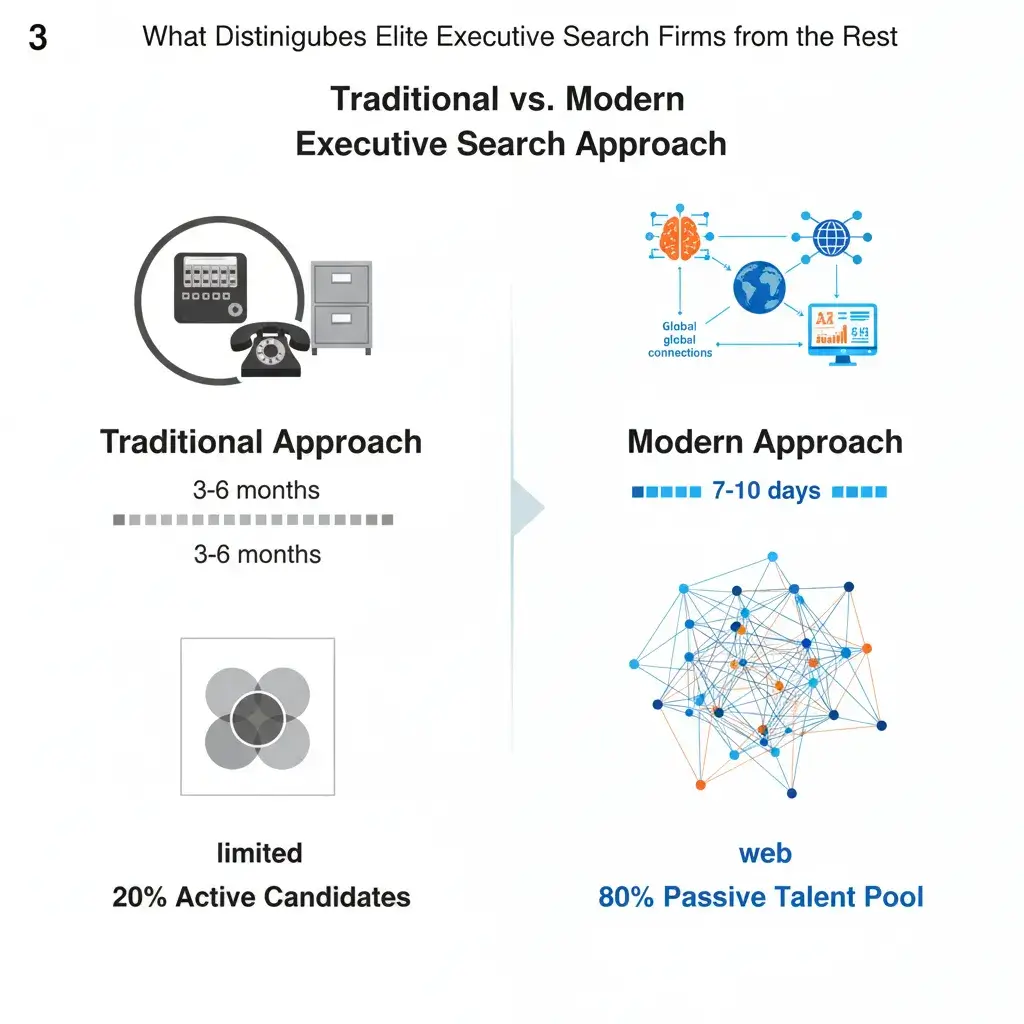
あなたの組織にとって最も変革的なリーダーは、求人情報を閲覧していません。LinkedInのプロフィールを「求職中」に更新していません。あなたの求人広告に応募することもないでしょう。実際、LinkedInのGlobal Talent Trendsレポートから得られた調査は、エグゼクティブ人材プールの80%がパッシブ候補者—新しい機会を積極的に探してはいないが、適切な対話にはオープンな成功したリーダー—で構成されていることを示しています。 They're not updating their LinkedIn profiles to "Open to Work." They're certainly not responding to your job postings. In fact, research from LinkedIn's Global Talent Trends Report reveals that 80% of the executive talent pool consists of passive candidates—successful leaders who aren't actively seeking new opportunities but remain open to the right conversation.
これはエグゼクティブ採用における根本的なパラドックスを生み出します:変革を推進する能力が最も高いリーダーは、あなたのオープンポジションに応募する可能性が最も低いのです。この隠れた人材市場を理解し、アクセスすることは、現代のエグゼクティブ採用戦略における決定的な課題であり、機会でもあります。
パッシブタレント現象:エグゼクティブ心理の理解
なぜハイレベルなエグゼクティブは積極的に求職しないのでしょうか?答えは成功の心理学にあります。ハイパフォーマンスなエグゼクティブは通常、重要な株式ポジション、深い組織的知識、確立された権力ネットワーク、実証された業績、そして快適な報酬パッケージを享受しています。 According to research from Wharton Executive Education, executives who are thriving in their current roles experience what psychologists call "golden handcuffs"—a complex web of financial incentives, established relationships, and organizational influence that creates significant switching costs.
アクティブプールでの「釣り」の実質コスト
組織がエグゼクティブ採用をアクティブ候補者に限定すると、利用可能な人材の20%のみを巡って競争することになります。McKinsey & Companyの調査は驚くべき違いを示しています:パッシブエグゼクティブは23%高いパフォーマンス評価を示し、40%長く在籍し、67%高い文化適合性評価を得て、フル生産性に3ヶ月早く到達します。
- パッシブエグゼクティブのマインドセットを解読する
- パッシブエグゼクティブは根本的に異なるトリガーに反応します:戦略的影響力の機会、知的挑戦と成長、文化的・価値観の一致です。
- パッシブタレントを引き付ける技術と科学
- パッシブエグゼクティブの成功的なエンゲージメントには、リサーチ、タイムリーなアプローチ、そして従来の方法では提供できないパーソナライズされたコネクションの精緻な組み合わせが必要です。これには、コンタクト前のインテリジェンス構築、インパクトのあるファーストコンタクト、業界に特化したアプローチが含まれます。
- パッシブタレントパイプラインの構築
These factors create what Harvard Business School researchers call "embedded leaders"—executives so integrated into their organizations that traditional executive recruitment approaches simply cannot reach them. This is why posting a C-suite position on job boards or LinkedIn often attracts candidates who are either unhappy, underperforming, or in transition—rarely the transformational leaders organizations actually need.
パッシブエグゼクティブ採用のROI
パッシブタレントエンゲージメントへの投資は測定可能なリターンをもたらします:失敗した採用コストの50%削減、空席ポジション期間の30%短縮、フル生産性到達までの時間の25%加速、チームパフォーマンス指標の35%改善です。
結論:パッシブタレントの命題
Research from McKinsey & Company shows striking differences between active and passive executive candidates:
- 隠れた80%は実際には隠れていません—従来のエグゼクティブ採用方法には見えないだけです。適切なアプローチ、忍耐、そして専門知識があれば、これらの変革的リーダーは見つけるだけでなく、採用することも可能です。
- 2025年9月24日
- KiTalentにお問い合わせください
- 他の記事を見る
Modern executive recruitment vs traditional methods Through talent mapping and strategic market intelligence, companies can identify and engage these hidden high-performers before competitors even know they exist.
Executive Search会社の87%失敗率を明らかにする
Executive Search会社の87%がなぜ質の高い結果を出せないのかを知りましょう。業界で最も厳重に守られた秘密を内部から明らかにします。
- 続きを読む
- Legal documents and non-compete agreement
- エグゼクティブ契約における競業避止条項をナビゲートする
- 競業避止条項とそのエグゼクティブキャリアの流動性への影響を理解する。
続きを読む
Strategic business meeting with executives
Executive Search会社の進化:ヘッドハンターから戦略的パートナーへ According to research from MIT Sloan School of Management, passive executives respond to fundamentally different triggers than active job seekers:
エグゼクティブ採用が従来のヘッドハンティングから戦略的パートナーシップへとどのように進化したか。
続きを読む
- すべての記事を見る
- Clear pathways to implement their vision
- Resources and authority to drive significant change
- Opportunities to build legacy achievements
2. Intellectual Challenge and Growth Despite current success, top executives crave intellectual stimulation:
- Complex problems requiring innovative solutions
- Exposure to new industries or business models
- Opportunities to develop new competencies
- Challenges that stretch their capabilities
3. Cultural and Values Alignment Unlike active candidates who may compromise on culture, passive executives prioritize:
- Leadership philosophy alignment
- Organizational values that match personal principles
- Team quality and collaborative environment
- Long-term organizational sustainability
This understanding is why specialized C-level executive search firms invest heavily in understanding both organizational culture and executive motivations before initiating contact.
The Art and Science of Engaging Passive Talent
Successfully engaging passive executives requires a sophisticated blend of research, timing, and personalized outreach that traditional executive recruitment methods cannot deliver.
Building Intelligence Before お問い合わせ
Modern executive recruitment leverages multiple intelligence streams:
Digital Footprint Analysis
- Patent filings and innovation indicators
- Conference presentations and thought leadership
- Board appointments and advisory roles
- Media coverage and industry recognition
Network Mapping
- Professional association leadership
- Alumni networks and affiliations
- Industry connections and collaborations
- Mentor-mentee relationships
Performance Indicators
- Company performance during their tenure
- Team building and retention metrics
- Strategic initiatives launched
- Market value creation
This comprehensive approach, detailed in our methodology, enables recruiters to understand not just what an executive has achieved, but how they think, what drives them, and when they might be receptive to new opportunities.
The Critical First お問い合わせ
Research from INSEAD shows that passive executives make decisions about recruiter credibility within the first 30 seconds of contact. Successful outreach requires:
Demonstration of Deep Understanding
- Reference specific achievements not found on LinkedIn
- Connect their work to broader industry trends
- Show understanding of their current challenges
- Articulate why this specific opportunity aligns with their trajectory
Value-First Approach Rather than leading with the job opportunity, successful executive recruitment provides immediate value:
- Market intelligence about their sector
- Insights into competitor movements
- Industry trend analysis
- Benchmarking data about their current position
Respectful Persistence Studies show it takes an average of 7-12 touchpoints to engage a passive executive. This requires:
- Multiple communication channels (email, LinkedIn, phone)
- Varied messaging that builds upon previous contacts
- Strategic timing around career milestones
- Patience to build trust over months, not days
Industry-Specific Approaches to Passive Talent
Different sectors require tailored strategies for engaging passive executives:
Technology Sector
The tech industry's rapid evolution means passive executives are often engaged in transformative projects. Successful executive recruitment in technology requires understanding product launch cycles, funding rounds, and the post-vest timing when equity-heavy executives become more mobile. Our AI・テクノロジー practice has identified that tech executives are 3x more likely to engage during specific windows: post-product launch, after major funding events, or following acquisition integration periods.
Financial サービス
Banking and investment executives operate under complex compensation structures with significant deferred components. According to Financial Times research, successful engagement requires understanding bonus cycles, clawback provisions, and regulatory cooling-off periods. The 銀行・ウェルスマネジメント sector sees peak executive movement in Q1 after bonus payments and in September as fiscal years close.
Healthcare and Life Sciences
Healthcare executives balance patient care missions with business imperatives. Engaging these leaders requires demonstrating both financial opportunity and mission alignment. Research shows healthcare executives are most receptive to executive recruitment approaches that emphasize patient impact, innovation potential, and the opportunity to influence healthcare delivery models. The ヘルスケア・ライフサイエンス landscape requires understanding clinical credibility alongside business acumen.
Industrial and 製造業
製造業 leaders often have deep, multi-decade relationships with single organizations. Successfully recruiting these executives requires understanding operational cycles, union relationships, and the technical expertise that makes them valuable. Our 製造業 experience shows these executives respond best to opportunities involving operational transformation, technology modernization, or international expansion.
Building Your Passive Talent Pipeline
Organizations that consistently access top passive talent don't rely on reactive executive recruitment—they build strategic talent pipelines years before needs arise.
The Continuous Engagement Model
Leading companies are adopting what Boston Consulting Group calls "always-on talent acquisition":
Proactive Market Mapping
- Continuously identify rising stars in target companies
- Track career progression of high-potential executives
- Monitor competitive movements and team changes
- Build relationships before positions open
Strategic Relationship Building
- Regular industry events and executive roundtables
- Thought leadership partnerships
- Advisory board appointments
- Alumni network cultivation
Intelligence Gathering
- Compensation benchmarking
- Organizational structure analysis
- Succession planning intelligence
- Cultural assessment of target talent pools
This approach, which we detail in our talent pipeline services, transforms executive recruitment from emergency response to strategic capability.
Technology-Enabled Passive Talent Identification
Modern executive recruitment leverages sophisticated technology to identify and track passive talent:
AI-Powered Talent Mapping Advanced algorithms analyze millions of data points to identify executives who exhibit "pre-movement" signals—patterns that indicate potential receptiveness to new opportunities. These might include:
- Changes in public activity patterns
- Shifts in professional network connections
- Alterations in content sharing behavior
- Timeline patterns suggesting career milestone approaches
Predictive Analytics Machine learning models can predict with increasing accuracy when executives might be open to conversations, based on factors like:
- Typical tenure patterns in their industry
- Company performance trajectories
- Market consolidation activities
- Personal career arc analysis
However, technology only enables human connection—it doesn't replace it. As explored in our analysis of international executive search, the most effective approaches combine technological intelligence with human insight and relationship building.
The ROI of Passive Executive Recruitment
Investing in passive talent acquisition delivers measurable returns that justify the additional time and resources required:
Quantifiable Benefits
Reduced Total Cost of Hire While passive executive recruitment requires higher upfront investment, total costs are often lower:
- 50% reduction in failed hire costs
- 30% less time in vacant positions
- 40% lower replacement recruiting costs
- Decreased interim management expenses
Performance Improvements Organizations hiring passive executives report:
- 25% faster time to full productivity
- 35% better team performance metrics
- 20% higher revenue growth in executive-led divisions
- 45% better retention of direct reports
Strategic Advantages
- Access to competitor intelligence
- Fresh perspectives and best practices
- Established industry relationships
- Proven transformation capabilities
These metrics explain why leading organizations increasingly view executive recruitment as a strategic investment rather than a cost center. Our retained search model aligns with this perspective, ensuring dedicated resources for accessing passive talent.
Overcoming Common Obstacles in Passive Recruitment
Organizations often face challenges when pursuing passive executives:
The Confidentiality Challenge
Both parties often require discretion, creating complex communication dynamics. Solutions include:
- Using trusted intermediaries
- Establishing secure communication channels
- Creating "exploratory conversation" frameworks
- Leveraging executive search firms as confidential bridges
The Timing Dilemma
Passive executives move on their timeline, not yours. Managing this requires:
- Building pipelines before needs arise
- Considering interim management solutions
- Maintaining warm relationships over extended periods
- Creating compelling "now or never" value propositions
The Compensation Complexity
Passive executives often have complex compensation packages. Successfully recruiting them requires:
- Comprehensive total compensation analysis
- Creative structuring including equity, benefits, and perks
- Understanding of deferred compensation implications
- Negotiation expertise around non-compete agreements
Our article on navigating non-compete clauses provides detailed guidance on this critical aspect.
The Future of Passive Executive Recruitment
As the war for executive talent intensifies, several trends are reshaping how organizations access passive talent:
The Rise of Executive Intelligence Platforms
New technologies are democratizing access to passive talent intelligence, though human relationships remain irreplaceable for actual engagement.
Increased Transparency
Passive executives increasingly expect detailed information about opportunities before engaging, requiring recruiters to balance confidentiality with transparency.
Global Talent Mobility
Remote work acceptance has expanded the passive talent pool globally, though this also increases competition for top executives.
Purpose-Driven Recruitment
Younger executives prioritize purpose alongside compensation, requiring organizations to articulate compelling mission narratives.
Best Practices for Organizations
To successfully access the hidden 80% of executive talent, organizations should:
1. Invest in Continuous Talent Intelligence Don't wait for vacancies to understand your talent market. Regular market benchmarking provides crucial intelligence for engaging passive executives.
2. Build Your Employer Brand Passive executives research organizations extensively before engaging. Invest in thought leadership, employee advocacy, and authentic culture communication.
3. Partner with Specialists Accessing passive talent requires expertise, networks, and time that internal teams rarely possess. Specialized executive recruitment partners provide the infrastructure and relationships necessary for success.
4. Think Long-Term The best passive candidates may not be ready to move today. Build relationships that position you as their first call when they're ready.
5. Prepare for Different エンゲージメントモデル Passive executives may initially prefer advisory roles, board positions, or consulting arrangements before committing to full-time roles.
Conclusion: The Passive Talent Imperative
The mathematics of executive recruitment are clear: limiting your search to active candidates means competing for 20% of the talent pool while missing the 80% who could transform your organization. This hidden majority—successful, stable, and highly capable—represents the difference between filling a position and securing competitive advantage.
Accessing this passive talent requires a fundamental shift from traditional executive recruitment to strategic talent engagement. It demands patience over urgency, relationships over transactions, and intelligence over advertising. Organizations that master this shift don't just hire better executives—they build sustainable competitive advantages through superior leadership.
As detailed in our analysis of talent acquisition trends, the future belongs to organizations that can identify, engage, and attract executives who aren't looking but are perfect for their needs. The question isn't whether to pursue passive talent, but how quickly you can build the capabilities to access it.
The hidden 80% isn't really hidden—they're simply invisible to traditional executive recruitment methods. With the right approach, patience, and expertise, these transformational leaders are not only findable but recruitable. The organizations that understand this reality and act on it will define the next generation of market leaders.

このページは KiTalent Research により作成されました。一次的な市場ソースと KiTalent の市場インテリジェンス・プロセスに基づいています。