숨겨진 80%: 왜 당신의 다음 스타 임원은 당신을 찾고 있지 않은가 (그리고 어떻게 찾을 수 있는가)

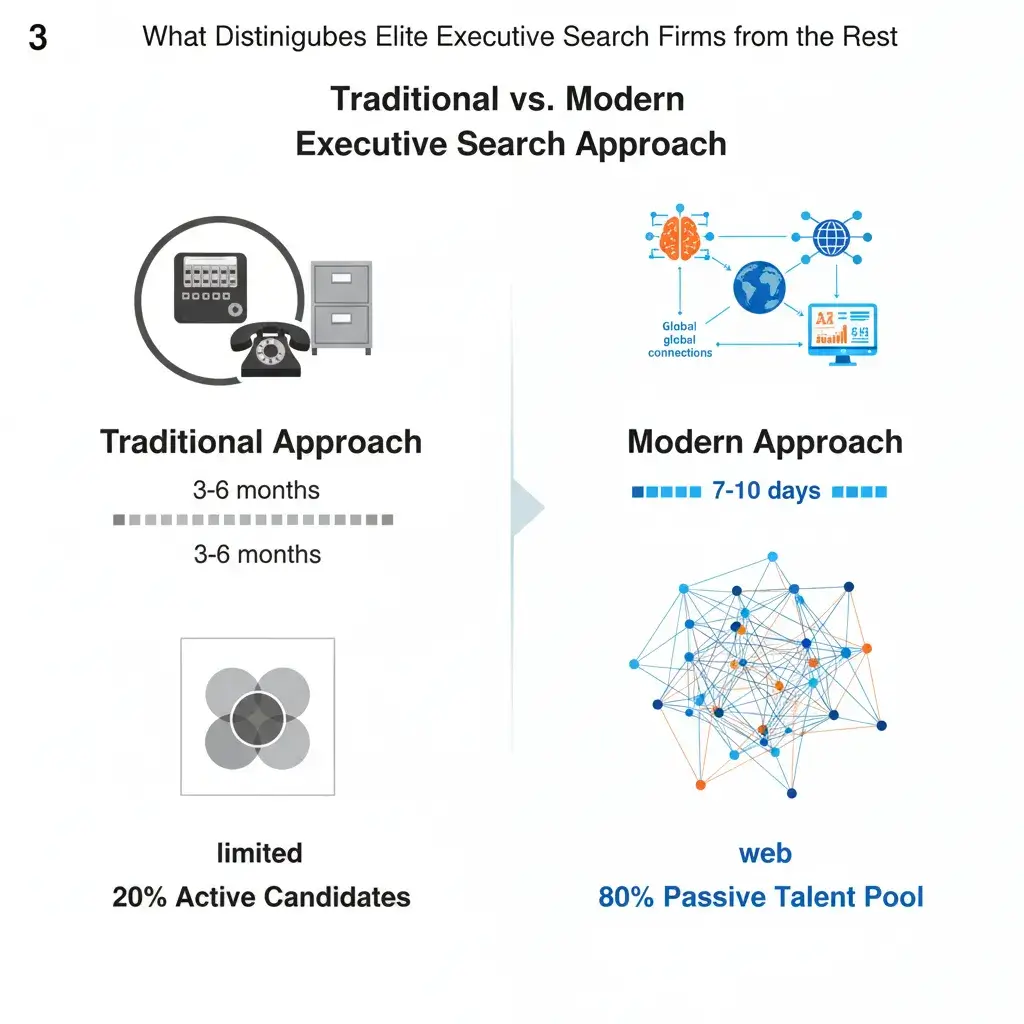
당신의 조직에 가장 변혁적인 리더들은 채용 공고를 훑어보고 있지 않습니다. LinkedIn 프로필을 "구직 중"으로 업데이트하지 않았습니다. In fact, research from LinkedIn's Global Talent Trends Report reveals that 80% of the executive talent pool consists of passive candidates—successful leaders who aren't actively seeking new opportunities but remain open to the right conversation.
이는 임원급 채용에서 근본적인 패러독스를 만들어냅니다: 변혁을 주도하는 데 가장 능력 있는 리더들이 당신의 공석 포지션에 지원할 가능성이 가장 낮습니다. 이 숨겨진 인재 시장을 이해하고 접근하는 것이 현대 임원급 채용 전략의 결정적 과제이자 기회가 되었습니다.
수동적 인재 현상: 임원 심리 이해
왜 고위급 임원들은 적극적으로 구직하지 않을까요? 답은 성공의 심리를 이해하는 데 있습니다. According to research from Wharton Executive Education, executives who are thriving in their current roles experience what psychologists call "golden handcuffs"—a complex web of financial incentives, established relationships, and organizational influence that creates significant switching costs.
활성 풀에서만 "낚시하기"의 실제 비용
조직이 임원급 채용을 활성 후보자로만 제한할 때, 본질적으로 가용 인재의 20%에 대해서만 경쟁하게 됩니다. McKinsey & Company 연구는 놀라운 차이를 보여줍니다: 수동적 임원은 23% 더 높은 성과 평가, 40% 더 긴 재직 기간, 67% 더 나은 문화적 적합성 평가를 보이며 완전한 생산성에 3개월 더 빨리 도달합니다.
- 수동적 임원의 사고방식 해독
- 수동적 임원들은 근본적으로 다른 트리거에 반응합니다: 전략적 영향력 행사 기회, 지적 도전과 성장, 문화적 및 가치관 정렬.
- 수동적 인재를 끌어들이는 기술과 과학
- 수동적 임원을 성공적으로 끌어들이려면 전통적 방법으로는 제공할 수 없는 리서치, 적시 접근 및 맞춤화된 소통의 정교한 조합이 필요합니다. 이는 접근 전 인텔리전스 구축, 중요한 첫 번째 접촉, 산업별 접근법을 포함합니다.
- 수동적 인재 파이프라인 구축
These factors create what Harvard Business School researchers call "embedded leaders"—executives so integrated into their organizations that traditional executive recruitment approaches simply cannot reach them. This is why posting a C-suite position on job boards or LinkedIn often attracts candidates who are either unhappy, underperforming, or in transition—rarely the transformational leaders organizations actually need.
수동적 임원급 채용의 ROI
수동적 인재 참여에 투자하면 측정 가능한 수익을 제공합니다: 실패한 채용 비용 50% 감소, 공석 기간 30% 단축, 완전한 생산성까지의 시간 25% 단축, 팀 성과 지표 35% 개선.
결론: 수동적 인재의 필수성
Research from McKinsey & Company shows striking differences between active and passive executive candidates:
- 숨겨진 80%는 사실 숨겨져 있지 않습니다 — 그들은 단지 전통적 임원급 채용 방법에는 보이지 않을 뿐입니다. 올바른 접근법, 인내심, 전문성이 있으면 이 변혁적 리더들은 찾을 수 있을 뿐만 아니라 채용할 수도 있습니다.
- 2025년 9월 24일
- KiTalent에 연락하기
- 더 많은 아티클 탐색
Modern executive recruitment vs traditional methods Through talent mapping and strategic market intelligence, companies can identify and engage these hidden high-performers before competitors even know they exist.
Executive Search 회사의 87% 실패율 공개
Executive Search 회사의 87%가 왜 양질의 결과를 내지 못하는지 알아보세요. 업계에서 가장 잘 보호된 비밀의 내부 공개.
- 더 읽기
- Legal documents and non-compete agreement
- 임원 계약에서의 경업 금지 조항 탐색
- 경업 금지 조항과 이것이 임원급 커리어 이동성에 미치는 영향을 이해하세요.
더 읽기
Strategic business meeting with executives
Executive Search 회사의 진화: 헤드헌터에서 전략적 파트너로 According to research from MIT Sloan School of Management, passive executives respond to fundamentally different triggers than active job seekers:
임원급 채용이 전통적 헤드헌팅에서 전략적 파트너십으로 어떻게 발전했는지.
더 읽기
- 모든 아티클 보기
- Clear pathways to implement their vision
- Resources and authority to drive significant change
- Opportunities to build legacy achievements
2. Intellectual Challenge and Growth Despite current success, top executives crave intellectual stimulation:
- Complex problems requiring innovative solutions
- Exposure to new industries or business models
- Opportunities to develop new competencies
- Challenges that stretch their capabilities
3. Cultural and Values Alignment Unlike active candidates who may compromise on culture, passive executives prioritize:
- Leadership philosophy alignment
- Organizational values that match personal principles
- Team quality and collaborative environment
- Long-term organizational sustainability
This understanding is why specialized C-level executive search firms invest heavily in understanding both organizational culture and executive motivations before initiating contact.
The Art and Science of Engaging Passive Talent
Successfully engaging passive executives requires a sophisticated blend of research, timing, and personalized outreach that traditional executive recruitment methods cannot deliver.
Building Intelligence Before 연락처
Modern executive recruitment leverages multiple intelligence streams:
Digital Footprint Analysis
- Patent filings and innovation indicators
- Conference presentations and thought leadership
- Board appointments and advisory roles
- Media coverage and industry recognition
Network Mapping
- Professional association leadership
- Alumni networks and affiliations
- Industry connections and collaborations
- Mentor-mentee relationships
Performance Indicators
- Company performance during their tenure
- Team building and retention metrics
- Strategic initiatives launched
- Market value creation
This comprehensive approach, detailed in our methodology, enables recruiters to understand not just what an executive has achieved, but how they think, what drives them, and when they might be receptive to new opportunities.
The Critical First 연락처
Research from INSEAD shows that passive executives make decisions about recruiter credibility within the first 30 seconds of contact. Successful outreach requires:
Demonstration of Deep Understanding
- Reference specific achievements not found on LinkedIn
- Connect their work to broader industry trends
- Show understanding of their current challenges
- Articulate why this specific opportunity aligns with their trajectory
Value-First Approach Rather than leading with the job opportunity, successful executive recruitment provides immediate value:
- Market intelligence about their sector
- Insights into competitor movements
- Industry trend analysis
- Benchmarking data about their current position
Respectful Persistence Studies show it takes an average of 7-12 touchpoints to engage a passive executive. This requires:
- Multiple communication channels (email, LinkedIn, phone)
- Varied messaging that builds upon previous contacts
- Strategic timing around career milestones
- Patience to build trust over months, not days
Industry-Specific Approaches to Passive Talent
Different sectors require tailored strategies for engaging passive executives:
Technology Sector
The tech industry's rapid evolution means passive executives are often engaged in transformative projects. Successful executive recruitment in technology requires understanding product launch cycles, funding rounds, and the post-vest timing when equity-heavy executives become more mobile. Our AI·테크놀로지 practice has identified that tech executives are 3x more likely to engage during specific windows: post-product launch, after major funding events, or following acquisition integration periods.
Financial 서비스
Banking and investment executives operate under complex compensation structures with significant deferred components. According to Financial Times research, successful engagement requires understanding bonus cycles, clawback provisions, and regulatory cooling-off periods. The 은행·WM sector sees peak executive movement in Q1 after bonus payments and in September as fiscal years close.
Healthcare and Life Sciences
Healthcare executives balance patient care missions with business imperatives. Engaging these leaders requires demonstrating both financial opportunity and mission alignment. Research shows healthcare executives are most receptive to executive recruitment approaches that emphasize patient impact, innovation potential, and the opportunity to influence healthcare delivery models. The 헬스케어·라이프사이언스 landscape requires understanding clinical credibility alongside business acumen.
Industrial and 제조
제조 leaders often have deep, multi-decade relationships with single organizations. Successfully recruiting these executives requires understanding operational cycles, union relationships, and the technical expertise that makes them valuable. Our 제조 experience shows these executives respond best to opportunities involving operational transformation, technology modernization, or international expansion.
Building Your Passive Talent Pipeline
Organizations that consistently access top passive talent don't rely on reactive executive recruitment—they build strategic talent pipelines years before needs arise.
The Continuous Engagement Model
Leading companies are adopting what Boston Consulting Group calls "always-on talent acquisition":
Proactive Market Mapping
- Continuously identify rising stars in target companies
- Track career progression of high-potential executives
- Monitor competitive movements and team changes
- Build relationships before positions open
Strategic Relationship Building
- Regular industry events and executive roundtables
- Thought leadership partnerships
- Advisory board appointments
- Alumni network cultivation
Intelligence Gathering
- Compensation benchmarking
- Organizational structure analysis
- Succession planning intelligence
- Cultural assessment of target talent pools
This approach, which we detail in our talent pipeline services, transforms executive recruitment from emergency response to strategic capability.
Technology-Enabled Passive Talent Identification
Modern executive recruitment leverages sophisticated technology to identify and track passive talent:
AI-Powered Talent Mapping Advanced algorithms analyze millions of data points to identify executives who exhibit "pre-movement" signals—patterns that indicate potential receptiveness to new opportunities. These might include:
- Changes in public activity patterns
- Shifts in professional network connections
- Alterations in content sharing behavior
- Timeline patterns suggesting career milestone approaches
Predictive Analytics Machine learning models can predict with increasing accuracy when executives might be open to conversations, based on factors like:
- Typical tenure patterns in their industry
- Company performance trajectories
- Market consolidation activities
- Personal career arc analysis
However, technology only enables human connection—it doesn't replace it. As explored in our analysis of international executive search, the most effective approaches combine technological intelligence with human insight and relationship building.
The ROI of Passive Executive Recruitment
Investing in passive talent acquisition delivers measurable returns that justify the additional time and resources required:
Quantifiable Benefits
Reduced Total Cost of Hire While passive executive recruitment requires higher upfront investment, total costs are often lower:
- 50% reduction in failed hire costs
- 30% less time in vacant positions
- 40% lower replacement recruiting costs
- Decreased interim management expenses
Performance Improvements Organizations hiring passive executives report:
- 25% faster time to full productivity
- 35% better team performance metrics
- 20% higher revenue growth in executive-led divisions
- 45% better retention of direct reports
Strategic Advantages
- Access to competitor intelligence
- Fresh perspectives and best practices
- Established industry relationships
- Proven transformation capabilities
These metrics explain why leading organizations increasingly view executive recruitment as a strategic investment rather than a cost center. Our retained search model aligns with this perspective, ensuring dedicated resources for accessing passive talent.
Overcoming Common Obstacles in Passive Recruitment
Organizations often face challenges when pursuing passive executives:
The Confidentiality Challenge
Both parties often require discretion, creating complex communication dynamics. Solutions include:
- Using trusted intermediaries
- Establishing secure communication channels
- Creating "exploratory conversation" frameworks
- Leveraging executive search firms as confidential bridges
The Timing Dilemma
Passive executives move on their timeline, not yours. Managing this requires:
- Building pipelines before needs arise
- Considering interim management solutions
- Maintaining warm relationships over extended periods
- Creating compelling "now or never" value propositions
The Compensation Complexity
Passive executives often have complex compensation packages. Successfully recruiting them requires:
- Comprehensive total compensation analysis
- Creative structuring including equity, benefits, and perks
- Understanding of deferred compensation implications
- Negotiation expertise around non-compete agreements
Our article on navigating non-compete clauses provides detailed guidance on this critical aspect.
The Future of Passive Executive Recruitment
As the war for executive talent intensifies, several trends are reshaping how organizations access passive talent:
The Rise of Executive Intelligence Platforms
New technologies are democratizing access to passive talent intelligence, though human relationships remain irreplaceable for actual engagement.
Increased Transparency
Passive executives increasingly expect detailed information about opportunities before engaging, requiring recruiters to balance confidentiality with transparency.
Global Talent Mobility
Remote work acceptance has expanded the passive talent pool globally, though this also increases competition for top executives.
Purpose-Driven Recruitment
Younger executives prioritize purpose alongside compensation, requiring organizations to articulate compelling mission narratives.
Best Practices for Organizations
To successfully access the hidden 80% of executive talent, organizations should:
1. Invest in Continuous Talent Intelligence Don't wait for vacancies to understand your talent market. Regular market benchmarking provides crucial intelligence for engaging passive executives.
2. Build Your Employer Brand Passive executives research organizations extensively before engaging. Invest in thought leadership, employee advocacy, and authentic culture communication.
3. Partner with Specialists Accessing passive talent requires expertise, networks, and time that internal teams rarely possess. Specialized executive recruitment partners provide the infrastructure and relationships necessary for success.
4. Think Long-Term The best passive candidates may not be ready to move today. Build relationships that position you as their first call when they're ready.
5. Prepare for Different Engagement Models Passive executives may initially prefer advisory roles, board positions, or consulting arrangements before committing to full-time roles.
Conclusion: The Passive Talent Imperative
The mathematics of executive recruitment are clear: limiting your search to active candidates means competing for 20% of the talent pool while missing the 80% who could transform your organization. This hidden majority—successful, stable, and highly capable—represents the difference between filling a position and securing competitive advantage.
Accessing this passive talent requires a fundamental shift from traditional executive recruitment to strategic talent engagement. It demands patience over urgency, relationships over transactions, and intelligence over advertising. Organizations that master this shift don't just hire better executives—they build sustainable competitive advantages through superior leadership.
As detailed in our analysis of talent acquisition trends, the future belongs to organizations that can identify, engage, and attract executives who aren't looking but are perfect for their needs. The question isn't whether to pursue passive talent, but how quickly you can build the capabilities to access it.
The hidden 80% isn't really hidden—they're simply invisible to traditional executive recruitment methods. With the right approach, patience, and expertise, these transformational leaders are not only findable but recruitable. The organizations that understand this reality and act on it will define the next generation of market leaders.

KiTalent Research가 제작했습니다. 1차 시장 자료와 KiTalent의 market intelligence 프로세스를 기반으로 합니다.