Augsburg, Germany Executive Search

Executive Search in Augsburg

KiTalent brings sector-specific intelligence and direct headhunting capability to senior leadership searches across Augsburg.

7-10

days to qualified shortlists in many searches

80%

of relevant passive talent reached through direct headhunting

42%

faster time-to-hire than traditional search benchmarks

96%

one-year retention from KiTalent's broader methodology

These are KiTalent track-record figures referenced across our core about, services, and methodology pages.

Why Augsburg is one of Germany's most concentrated executive markets

Post a senior leadership role on a job board in Augsburg and you will hear from candidates in Munich, Ingolstadt, and Stuttgart. You will not hear from the people you actually need. The executives running satellite composite manufacturing at Airbus, directing cobotics R&D at KUKA, or managing hydrogen infrastructure deployment at Stadtwerke Augsburg are not browsing listings. They are deeply embedded in programmes with multi-year horizons, and they are not visible through conventional sourcing.

Augsburg's executive market presents a specific set of conditions that make standard recruitment methods inadequate. Understanding these conditions is the prerequisite for any search that aims to produce more than an available shortlist.

Aerospace and defence accounts for roughly 18% of regional GDP and employs over 22,000 people. Airbus Defence and Space alone has 6,800 staff in the Haunstetten district, producing carbon-fibre payload adapters for Ariane 6 and military avionics systems. The 2025 Sondervermögen II triggered a EUR 400 million expansion of composite manufacturing at the site. Premium Aerotec, Diehl Defence, and RUAG satellite components form the surrounding tier-2/3 network. This cluster creates a candidate pool where many senior professionals hold NATO security clearances. They cannot be approached casually. The hidden 80% of passive talent is not merely disengaged from the job market here. A portion of it is contractually and legally constrained from disclosing their current responsibilities. Direct search in this environment requires discretion, sector-specific credibility, and an understanding of which conversations can happen and which cannot.

KUKA AG is operationally headquartered in Augsburg but owned by China's Midea Group. This creates a bilingual, bicultural leadership environment where German engineering culture intersects with Chinese corporate governance. The company completed its Smart Production Campus retrofit in 2025 and employs 3,200 people locally. Mandarin language capability is an advantage for supply chain management roles. German-English bilingualism is mandatory across the board. For any firm conducting international executive search in Augsburg, this dual orientation is not a footnote. It shapes reporting lines, board expectations, and the profile of candidates who can succeed. A VP of Operations at KUKA faces a different governance reality than the same title at a purely German Mittelstand firm. Search design must reflect this.

Residential rents in Augsburg rose 8.4% in 2025 alone, driven by Munich commuter spillover. Heritage protection regulations under the Bayerisches Denkmalschutzgesetz slow densification in the historic core. The result: senior candidates considering a move to Augsburg face compensation arithmetic that can derail an offer at the final stage. This is not a secondary consideration. It is a deal-breaker that collapses searches in their final week. Any executive search partner working in this city needs to integrate compensation calibration and relocation economics into the mandate from day one. The Go-To Partner approach exists precisely for markets where the distance between identifying a candidate and closing a hire is filled with obstacles that pure sourcing cannot solve.
What is driving executive demand in Augsburg

Several structural forces are converging to shape executive demand across Augsburg.

Aerospace and defence

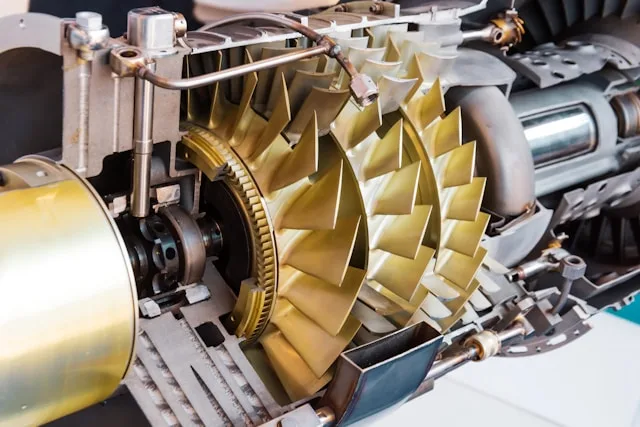
The Zeitenwende dividend is real. Airbus Augsburg's EUR 200 million investment in automated fibre placement machinery for satellite components, announced in mid-2025, is one commitment among many flowing from sustained federal defence budget expansion. The site is pivoting from purely mechanical production to software-defined defence systems, integrating AI-based predictive maintenance for military fleets. This pivot demands leaders who combine composite manufacturing expertise with digital systems fluency. Our aerospace, defence and space executive search practice engages with exactly this profile: executives who understand both the physical production environment and the software layer now governing it.

Industrial automation and robotics

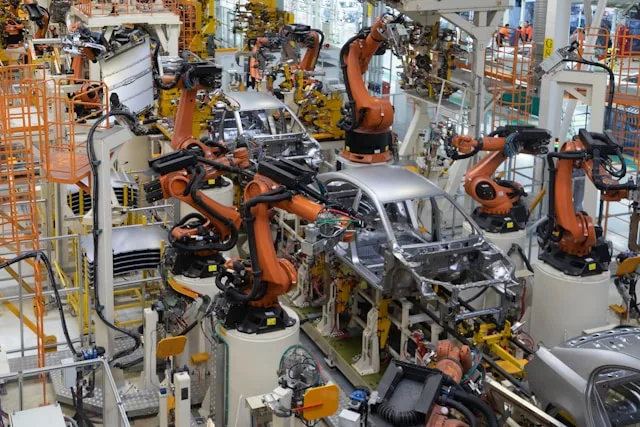
KUKA's Augsburg campus is a global reference site for Industrie 4.0. Siemens Digital Industries employs 2,400 people locally, specialising in high-power charging infrastructure for commercial e-mobility. The cluster is converging on collaborative robotics for SMEs, supported by the Mittelstand 4.0-Kompetenzzentrum in the Textilviertel. Leadership demand centres on CDOs who can translate factory-floor automation into commercial propositions, and on R&D directors capable of managing joint ventures across the KUKA-Midea axis. The talent pool for industrial automation and robotics leadership at this level is small, global, and intensely competed for.

Green technology and hydrogen systems

Augsburg anchors the HyBayern Hydrogen Cluster. Stadtwerke Augsburg operates a 10 MW municipal electrolyser pilot expanded in 2025. The Innovation Park hosts startups developing solid-state battery recycling chemistry. Growth here ran at 8.9% year-on-year through 2025, the fastest of any Augsburg cluster. The executive profiles in demand are Chief Sustainability Officers who can manage Scope 3 emissions across complex supply chains, and operations leaders for hydrogen high-pressure infrastructure. These are not roles that can be filled from the active candidate market. They require targeted talent mapping across Germany's emerging energy ecosystem.

Semiconductors and optoelectronics

ams OSRAM employs 1,800 people in Augsburg, producing LED and optical sensing components for automotive applications. The semiconductor supply chain's dependence on Taiwanese fabrication and Chinese rare earths, now under scrutiny from the EU Critical Raw Materials Act, is forcing costly supply chain audits. Senior procurement and compliance leadership is in acute demand. These roles sit at the intersection of semiconductors manufacturing and geopolitical risk management.

IT and digital business services

Fujitsu Technology Solutions runs a European delivery centre from Augsburg with 1,500 staff. Swiss Life Deutschland bases its German headquarters and IT operations here. The sector has bifurcated into industrial cybersecurity for OT environments and insurtech applications. The Augsburg Digital Hub, launched in 2025, focuses on Edge AI for manufacturing SMEs. This cluster demands a different leadership profile: less hardware-centric, more platform- and compliance-oriented, with particular urgency around the EU AI Act's implications for industrial AI deployment.

Sector strengths that define Augsburg executive search

Augsburg's executive search market is strongest where its economic specialisation is deepest.

Why companies partner with KiTalent for executive search in Augsburg

Companies rarely need only reach in Augsburg. They need interpretation, calibration, and a search architecture that reflects the real structure of the market.

We operate across Germany

Our team coordinates Augsburg mandates from our European headquarters in Turin, with direct access to the talent intelligence, compensation dynamics, and sector developments that drive search outcomes.

We reach the candidates that matter

The strongest executives in Augsburg are passive. Our direct headhunting approach engages the hidden 80% of passive talent through discreet outreach rooted in real market knowledge.

We do not start from scratch

Our parallel mapping methodology means we already hold live intelligence on restructuring, transition windows, compensation patterns, and candidate attraction opportunities when a brief arrives.

Our model de-risks the investment

In Augsburg, the cost of a wrong executive hire extends far beyond the recruitment fee. Our interview-fee model lets clients see real market output and qualified candidates before the bulk of the investment is committed.

How we run executive searches in Augsburg

Augsburg's combination of defence-industrial concentration, cross-cultural corporate governance, and a tight housing market makes it a city where methodology determines outcomes. A search partner without pre-existing market intelligence, sector-specific credibility, and compensation data calibrated to local reality will produce a shortlist that looks adequate on paper and fails in execution.

1. Parallel mapping before the brief is live

KiTalent continuously tracks career movements, organisational changes, and compensation evolution across Augsburg's core sectors. When the Airbus composite expansion announcement came, our methodology meant we had already identified the senior production engineering and programme management talent relevant to the resulting leadership needs. This is how a qualified shortlist reaches a client within 7 to 10 days rather than 8 to 12 weeks. The intelligence exists before the mandate does.

2. Direct headhunting into the hidden 80%

In a city where unemployment sits at 4.2% and the most critical profiles hold security clearances or are locked into multi-year defence programmes, conventional sourcing methods produce negligible results. Every KiTalent search is built on direct headhunting: discreet, individually crafted outreach to specific individuals identified through parallel mapping. This is how we reach the 80% of high-performing executives who are not actively considering a move but would engage with the right proposition.

3. Market intelligence as a search output

Every Augsburg mandate produces a comprehensive market report alongside the candidate shortlist. This includes compensation benchmarking against Munich, Stuttgart, and Ingolstadt comparators. It includes mapping of which companies are expanding, restructuring, or losing talent. And it includes an honest assessment of how the client's proposition compares to what the market's strongest candidates are currently earning and experiencing. This intelligence has value beyond the immediate hire. It informs workforce planning, retention strategy, and future search design.

Essential reading for Augsburg hiring decisions

These resources provide deeper market intelligence and explain how KiTalent turns insight into a faster, more transparent search process.

Frequently asked questions about executive search in Augsburg

These are the questions most closely tied to how executive search really works in Augsburg.

Why do companies use executive recruiters in Augsburg?

Augsburg's core industries, from aerospace defence to industrial robotics, employ senior professionals who are deeply embedded in long-cycle programmes. At 4.2% unemployment and with acute shortages in embedded systems, cybersecurity, and hydrogen infrastructure, the visible candidate market is nearly empty at senior levels. Job postings and inbound applications produce volume without relevance. Executive recruiters who specialise in direct search reach the passive professionals who would strengthen a leadership team but are not actively looking. In a city where the top employers in any given specialism often share the same industrial park, discretion and sector credibility determine whether a search produces results.

What makes Augsburg different from Munich for executive hiring?

Munich is a financial, technology, and professional services hub with a vast, diverse talent pool. Augsburg is a concentrated manufacturing-and-defence economy where 22,000 people work in aerospace alone. The candidate communities are smaller, more interconnected, and more technically specialised. Compensation expectations are shaped by Munich spillover: candidates benchmark against Munich salaries but face Augsburg's own 8.4% rent increases. The cross-cultural dimension, particularly KUKA's Chinese ownership structure, adds a governance complexity that Munich's more Western-oriented corporate environment does not typically present. Search methodology must account for all of this.

How does KiTalent approach executive search in Augsburg?

KiTalent maintains continuous talent mapping across Augsburg's aerospace, robotics, and energy clusters. When a mandate arrives, the firm already holds intelligence on who occupies which roles, how compensation is structured, and where mobility signals exist. Each search combines this pre-existing intelligence with direct, discreet outreach to specific individuals. Candidates undergo a three-tier assessment covering technical competency, cultural and motivational fit, and optional psychometric evaluation. The process is fully transparent: clients receive weekly progress reports and comprehensive market documentation throughout.

How quickly can KiTalent present candidates in Augsburg?

Interview-ready candidates are typically presented within 7 to 10 days of mandate confirmation. This speed comes from parallel mapping, not from shortcuts in assessment. Because KiTalent tracks Augsburg's leadership markets continuously, the research phase that delays conventional searches by weeks has already been completed before the client defines the role. In time-sensitive situations, such as the simultaneous leadership needs created by the Airbus expansion and incoming data centre investment, this speed is the difference between securing a first-choice candidate and losing them to a competitor.

How does the defence and security dimension affect executive search in Augsburg?

A meaningful proportion of Augsburg's senior talent holds NATO security clearances or works under defence-programme confidentiality obligations. This constrains how candidates can be identified, approached, and assessed. Standard LinkedIn-based sourcing is ineffective for this population. Executive search in this environment requires established relationships within the defence-industrial community, an understanding of which contractual frameworks govern candidate mobility, and a process designed to protect both the client's and the candidate's position. KiTalent's sector-native consultants in aerospace and defence bring this understanding as a baseline, not an afterthought.

Start a conversation about your Augsburg search

Whether you are hiring a Chief Digital Officer for a robotics headquarters, a VP of Composite Manufacturing for a defence programme expansion, or a Chief Sustainability Officer to manage emissions across a multi-tier aerospace supply chain, this is where to begin.

What we bring to Augsburg executive mandates:

Executive search and direct headhunting · Talent mapping and market intelligence · Compensation benchmarking and mandate calibration · Connection to KiTalent's European headquarters in Turin and international executive search network.

Tell us about your Augsburg hiring challenge

Whether you are running a live mandate or want to pressure-test a brief before going to market, this is the right place to start the conversation.

Explore Our Executive Search Guides

Produced by KiTalent Research. Based on local market intelligence and executive-search data. Reviewed by Chiara Giacoletti.