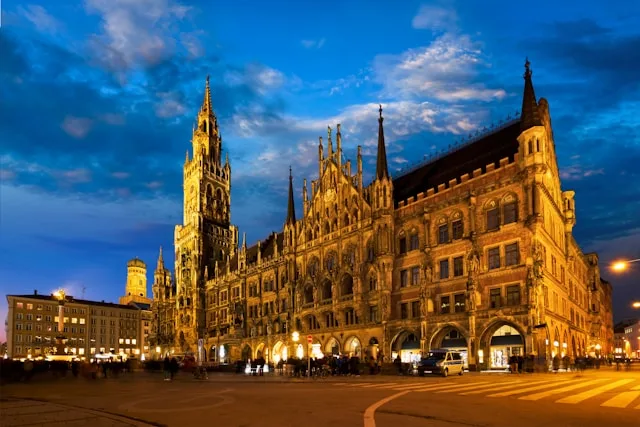
Munich, Germany Executive Search

Executive Search in Munich

KiTalent brings sector-specific intelligence and direct headhunting capability to senior leadership searches across Munich.

7-10

days to qualified shortlists in many searches

80%

of relevant passive talent reached through direct headhunting

42%

faster time-to-hire than traditional search benchmarks

96%

one-year retention from KiTalent's broader methodology

These are KiTalent track-record figures referenced across our core about, services, and methodology pages.

Why Munich is one of Europe's most contested executive markets

Standard recruitment fails in Munich for reasons that have nothing to do with effort and everything to do with market structure. This is a city of 1.6 million people where multiple Fortune Global 500 companies, a world-class research ecosystem, and one of Europe's densest startup clusters are all drawing from the same pool of senior technical and commercial leaders. Posting a role and waiting for applications produces a shallow, unrepresentative candidate field. The executives who define outcomes here are already employed, well-compensated, and not looking.

A head of embedded systems at BMW is equally attractive to Infineon, to Siemens, and to three VC-backed deep-tech firms in the Isar Valley corridor. An actuarial director at Munich Re has skills that Allianz and a dozen insurtech startups also need. Munich's sector clusters do not operate in isolation. They overlap at the level of individual competencies: power electronics, machine learning, risk modelling, regulatory affairs. This means any serious search is competing not just with direct sector rivals but with adjacent industries that value the same profile. The visible candidate market is a fraction of the real one.

Munich's constrained land market produces some of the highest office rents and housing costs in Germany. This has a direct effect on executive recruitment. Compensation expectations are elevated. Relocation packages require careful calibration. And candidates already established in the city carry a significant switching cost: they are often in dual-income households, with children in specific schools, and embedded in professional networks that took years to build. A search process that drags on for three months loses candidates to faster-moving competitors. Every week a leadership seat stays vacant costs real money in delayed strategy and team uncertainty, a dynamic explored in detail in our analysis of the hidden cost of a bad executive hire.

Munich's executive community is smaller and more interconnected than its economic output would suggest. Senior leaders in insurance know their counterparts in reinsurance. Automotive R&D directors sit on the same TUM advisory boards as semiconductor executives. A poorly managed search process, a withdrawn offer, or a clumsy approach to a passive candidate does not stay private. It circulates. This is why the quality of the search process matters as much as the outcome. It is why KiTalent's Go-To Partner approach is built around protecting the client's employer brand in every candidate interaction, and why understanding the hidden 80% of executives not actively on the market is not a marketing concept but an operational necessity.

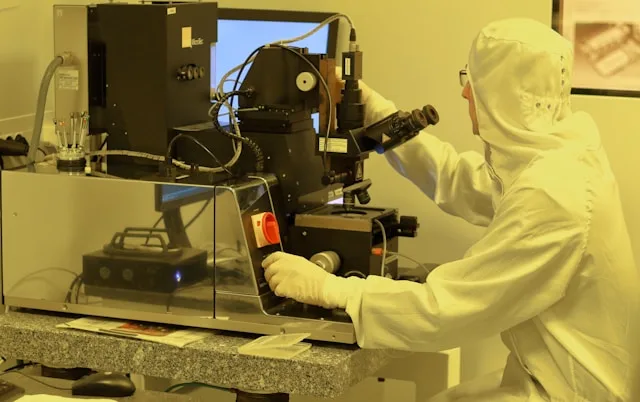
What is driving executive demand in Munich

Several structural forces are converging to shape executive demand across Munich.

Automotive transformation and the Neue Klasse programme

BMW Group's Munich plant retooling for its next-generation electric vehicle platform is the single largest industrial transformation programme in the city. It demands plant operations leaders, EV systems engineers, battery technology directors, and software architects who can bridge hardware and digital product development. The supplier network feeding this programme creates parallel demand for procurement, quality, and programme management executives. Our automotive executive search practice tracks these shifts in real time across European OEMs and their supplier ecosystems.

Semiconductors, power electronics and embedded systems

Infineon's presence anchors a cluster that extends from chip design through power electronics to sensor systems. Munich and its near suburbs rank among Europe's leading semiconductor hubs. The demand is for R&D directors with deep process knowledge, product managers who understand automotive and industrial end-markets, and commercial leaders who can position European semiconductor capabilities against global competition. This cluster intersects directly with the automotive and industrial automation sectors, which is why semiconductor and electronics executive search in Munich requires cross-sector intelligence.

Insurance, reinsurance and financial services

Allianz and Munich Re are not just large employers. They are global centres of gravity for risk management, actuarial science, and increasingly for insurtech innovation. Executive demand spans traditional leadership roles (chief underwriting officers, heads of claims, actuarial directors) and newer positions created by digital transformation (chief data officers, heads of AI-enabled pricing, cybersecurity leaders). The insurance sector talent pool in Munich is deep but intensely competitive, and the best candidates are typically bound by long-tenure loyalty, complex deferred compensation structures, and deep institutional knowledge that makes them reluctant to move without a compelling proposition.

AI, software and deep-tech startups

Munich's Isar Valley ecosystem generated over 43,000 local jobs and attracted sustained European VC investment through 2024 and 2025, with particular concentration in AI, healthtech, and defence-security-resilience (DSR) startups. Scaling firms need CTOs, VP Engineering roles, heads of product, and commercial leaders who can bridge the gap between deep-tech capability and market traction. The demand for AI and technology executives in Munich is intensifying precisely because the pipeline of leaders with both technical depth and commercial scaling experience is thin.

Life sciences, MedTech and biotech

The Martinsried/Planegg biotech cluster, Helmholtz Zentrum München, and the university hospitals create a research-to-commercialisation pipeline that generates executive demand at every stage: R&D directors, regulatory and clinical-trial leads, heads of quality for medical device firms, and CEOs for spin-outs transitioning from grant funding to commercial revenue. Healthcare and life sciences search here requires fluency in both the science and the regulatory environment, particularly as EU medical device and AI Act requirements tighten productisation timelines.

Sector strengths that define Munich executive search

Munich's executive search market is strongest where its economic specialisation is deepest.

Why companies partner with KiTalent for executive search in Munich

Companies rarely need only reach in Munich. They need interpretation, calibration, and a search architecture that reflects the real structure of the market.

We operate across Germany

Our team coordinates Munich mandates from our European headquarters in Turin, with direct access to the talent intelligence, compensation dynamics, and sector developments that drive search outcomes.

We reach the candidates that matter

The strongest executives in Munich are passive. Our direct headhunting approach engages the hidden 80% of passive talent through discreet outreach rooted in real market knowledge.

We do not start from scratch

Our parallel mapping methodology means we already hold live intelligence on restructuring, transition windows, compensation patterns, and candidate attraction opportunities when a brief arrives.

Our model de-risks the investment

In Munich, the cost of a wrong executive hire extends far beyond the recruitment fee. Our interview-fee model lets clients see real market output and qualified candidates before the bulk of the investment is committed.

How we run executive searches in Munich

Munich search mandates are coordinated from KiTalent's European headquarters in Turin, less than a ninety-minute flight from Munich Airport. Our consultants bring direct knowledge of the German executive market, the regulatory environment, and the compensation dynamics that shape candidate decision-making in Bavaria's capital. The proximity means face-to-face meetings, market visits, and client calibration sessions are straightforward to arrange.

1. Parallel mapping before the brief is live

KiTalent continuously tracks career movements, organisational changes, and compensation shifts across Munich's core sectors. When a client defines a need, we are not starting research from zero. The parallel mapping methodology means we have already identified potential candidates at BMW, Siemens, Allianz, Munich Re, Infineon, and the city's scaling startups. This is the engine behind the 7-to-10 day shortlist speed, and it is particularly valuable in a market where the same senior professionals are being approached by multiple firms every quarter.

2. Direct headhunting into the hidden 80%

Eighty percent of Munich's strongest executives are not actively looking. They are well-positioned, well-compensated, and solving problems their current employers cannot afford to lose. Reaching them requires direct, discreet, individually crafted outreach from consultants who understand their sector, speak their technical language, and can articulate a proposition that justifies the disruption of a move. Mass messaging produces noise. Targeted headhunting produces shortlists.

3. Market intelligence as a search output

Every Munich mandate produces more than a candidate shortlist. It generates a documented map of the relevant talent market: who holds what role, at which companies, at what compensation level, and with what availability signals. This market intelligence becomes a strategic asset for the client. It informs future hiring, internal benchmarking, and competitive analysis long after the immediate role is filled.

Essential reading for Munich hiring decisions

These resources provide deeper market intelligence and explain how KiTalent turns insight into a faster, more transparent search process.

Frequently asked questions about executive search in Munich

These are the questions most closely tied to how executive search really works in Munich.

Why do companies use executive recruiters in Munich?

Munich's executive market is defined by overlapping demand from automotive, semiconductor, insurance, and deep-tech employers all competing for the same specialised profiles. Job postings and inbound applications reach only the fraction of leaders who happen to be actively looking. The executives who would most improve a leadership team are typically well-positioned at BMW, Infineon, Allianz, or one of the city's scaling AI firms. Reaching them requires direct, sector-credible outreach that only a specialist executive search firm can deliver consistently.

What makes Munich different from Frankfurt, Stuttgart, or Berlin for executive hiring?

Frankfurt is primarily a financial services market. Stuttgart is automotive and engineering. Berlin is startup and creative economy. Munich combines all of these at scale, in a single metropolitan area, which means executive searches here face multi-sector competition for the same candidates. A semiconductor executive in Munich is being courted by automotive, industrial automation, and deep-tech firms simultaneously. This density of overlapping demand, combined with Germany's highest cost of living, creates a market where speed, compensation accuracy, and process quality are all decisive.

How does KiTalent approach executive search in Munich?

Mandates are coordinated from our European headquarters in Turin, with consultants who bring direct experience in Munich's core sectors. The process begins with parallel mapping: continuous intelligence on who holds what role, at which company, and at what compensation level. This pre-existing knowledge base allows us to present interview-ready candidates within 7 to 10 days. Every candidate undergoes technical competency evaluation, a career-motivation assessment, and optional psychometric testing. The result is a shortlist built on quality, not volume.

How quickly can KiTalent present candidates in Munich?

Our standard delivery is a qualified shortlist within 7 to 10 days of mandate confirmation. This speed comes from parallel mapping: we have already identified and built preliminary relationships with potential candidates before a client defines the brief. In Munich's fast-moving market, where automotive production ramps and VC-backed firms operate on compressed timelines, this speed is not a luxury. It is what prevents the best candidates from being lost to competing offers.

How does Munich's cost of living affect executive search?

Munich's housing costs, commercial rents, and overall cost of living are the highest in Germany. This means compensation packages must be calibrated with precision. An offer that looks competitive on paper may fail if it does not account for the real cost of relocation, dual-income household dynamics, or the deferred compensation a candidate forfeits by leaving their current employer. KiTalent's market benchmarking provides the data layer that ensures clients enter the market with a proposition calibrated to Munich's reality, not to national averages.

Start a conversation about your Munich search

Whether you are hiring a Chief Technology Officer for an automotive transformation programme, an R&D Director for a semiconductor design centre, a Chief Risk Officer for a global insurance carrier, or a commercial leader for a scaling AI firm, Munich's executive market rewards precision, speed, and sector credibility.

What we bring to Munich executive mandates:

Executive search and direct headhunting · Talent mapping and market intelligence · Compensation benchmarking and mandate calibration · Connection to KiTalent's European headquarters in Turin and international executive search network.

Tell us about your Munich hiring challenge

Whether you are running a live mandate or want to pressure-test a brief before going to market, this is the right place to start the conversation.

Explore Our Executive Search Guides

Produced by KiTalent Research. Based on local market intelligence and executive-search data. Reviewed by Chiara Giacoletti.