Why Regensburg is one of Europe's most concentrated executive markets
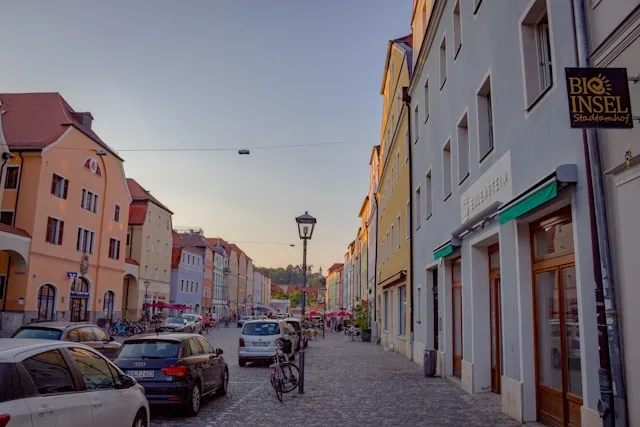
Standard recruitment fails in Regensburg for a reason that has nothing to do with effort. The city packs continental-scale semiconductor fabrication, premium automotive production, and a growing life sciences cluster into a medieval urban footprint of 157,000 residents. That concentration creates a hiring environment where the same 200 senior professionals appear on every shortlist, compensation benchmarks shift quarterly, and a poorly handled approach to a passive candidate can reach the rest of the market within days.
Regensburg's metropolitan region holds roughly 600,000 people. The population of executives qualified to lead SiC wafer fabrication, automotive E/E architecture programmes, or clinical-stage biotech operations within that radius is extraordinarily small. Infineon alone employs over 3,200 at its Wernerwerkstraße site. BMW Werk Regensburg runs with approximately 9,000 staff. Continental's Electronics Business Unit adds another 4,500. These three employers, plus the 110 companies in BioPark and 180 ventures at TechBase, are all drawing from the same finite group of senior technical and commercial leaders. Job postings in this environment attract candidates who are already visible. They do not surface the people who would actually change the trajectory of a hire.
Regensburg's GDP per capita exceeds €65,000. Median rents have risen 8% year-on-year to €14.20 per square metre. Zero greenfield industrial zones remain within city limits. The A3 Autobahn corridor experiences 45-minute delays that affect just-in-time logistics planning. This is a city where capital investment is running ahead of the infrastructure required to support it. For hiring, the implication is direct: relocation packages must account for a housing market that competes with Munich on price but not on scale, and compensation offers calibrated to last year's data will fail at the offer stage. Understanding these dynamics before a search begins is not optional. It is the difference between a successful placement and a withdrawn candidate.
The transition from internal combustion to electrification has created overlapping demand across sectors that previously operated in parallel. BMW needs high-voltage battery assembly leadership. Infineon needs automotive-qualified power module engineers. Continental needs embedded cybersecurity architects for zonal E/E platforms. ams OSRAM needs optical semiconductor specialists for automotive LiDAR. These are not separate talent pools. They are the same professionals, evaluated through different lenses. A search that treats any one of these mandates in isolation will miss the competitive dynamics shaping candidate availability and expectations.
This is the kind of market where a Go-To Partner approach produces results that transactional recruitment cannot. Continuous intelligence on who holds what role, at which company, and what it would take to move them is the foundation of every successful senior hire in Regensburg. Reaching the hidden 80% of passive talent requires pre-existing relationships and discreet, individually crafted outreach, not job board postings into a 3.1% unemployment market.