Why Lübeck is a deceptively complex executive market
A city with one dominant employer, a concentrated industrial ecosystem, and a working-age population contracting by 0.9% annually does not behave like a typical German hiring market. Standard recruitment methods fail here for reasons that go beyond simple talent scarcity. The dynamics are specific, and they demand a search approach designed around them.
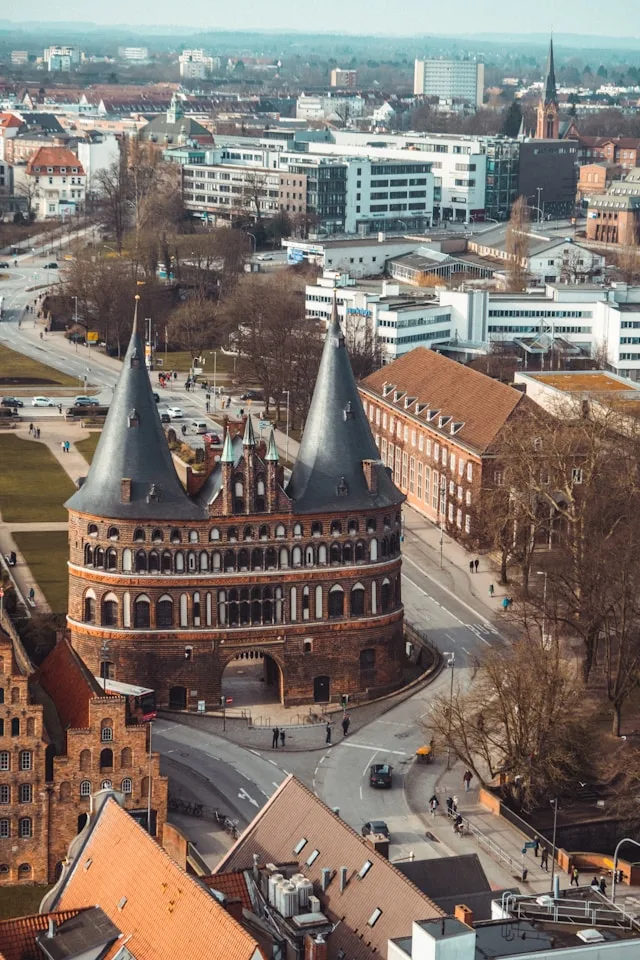
Lübeck's MedTech cluster generates an estimated €3.2 billion in regional turnover. Yet the senior professionals driving that output number in the hundreds, not thousands. Regulatory affairs directors, embedded systems architects, and clinical data science leads form a tightly connected professional community. Drägerwerk alone employs roughly 4,800 people locally. Philips Medical Systems, the University Hospital Schleswig-Holstein Campus Lübeck, and the 120-plus SMEs coordinated through MedTech Cluster North draw from the same finite population. In a market this concentrated, every senior appointment is visible. A poorly managed search process or a withdrawn offer does not stay private. It circulates within weeks. This is why employer brand protection is not a luxury in Lübeck. It is a precondition for being taken seriously by the candidates who matter.
Lübeck is not simply a MedTech city. It is simultaneously a port city reinventing its economic model. The Skandinavienkai now serves as the primary service base for the Baltic Eagle and Arcadis Ost 1 offshore wind farms. The SoutH2Port terminal entered pilot operations in late 2025, positioning Lübeck as a northern German hydrogen gateway. These transitions require a completely different leadership profile: hydrogen infrastructure engineers, offshore wind programme directors, sustainability officers fluent in EU ETS Phase IV compliance. The challenge is that these roles barely existed in Lübeck five years ago. The candidates who can fill them are scattered across Hamburg, Bremerhaven, Esbjerg, and Stavanger. Reaching them requires international executive search capability, not a regional job posting.
The working-age population is shrinking. The A1 motorway upgrade improved freight connectivity to Hamburg, but the Lübeck to Hamburg railway electrification is delayed until 2027. This constrains the commuter labour flow that could partially offset local demographic decline. The city's Lübeck 4.0 programme focuses on upskilling migrants for healthcare and logistics roles. That addresses volume hiring. It does not produce the chief digital officers, regulatory strategy vice presidents, and directors of sustainability that Lübeck's employers now need. For these roles, proactive identification of the hidden 80% of passive talent is the only viable strategy.
These three dynamics, concentration, parallel transition, and demographic pressure, make Lübeck a market where the conventional search playbook consistently underperforms. They also make it a market where a Go-To Partner approach built on continuous intelligence and discreet direct outreach produces disproportionate results.