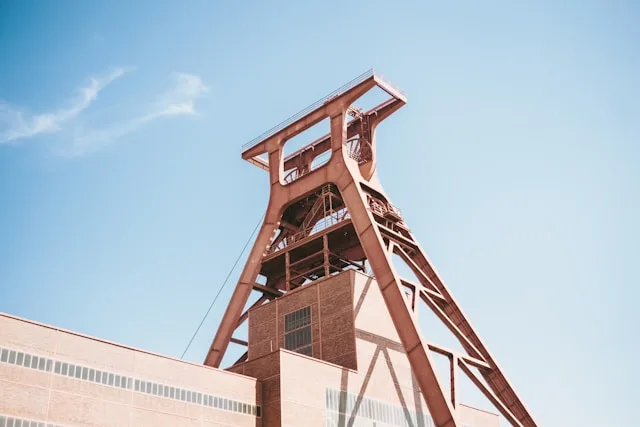
Essen, Germany Executive Search

Executive Search in Essen

KiTalent brings sector-specific intelligence and direct headhunting capability to senior leadership searches across Essen.

7-10

days to qualified shortlists in many searches

80%

of relevant passive talent reached through direct headhunting

42%

faster time-to-hire than traditional search benchmarks

96%

one-year retention from KiTalent's broader methodology

These are KiTalent track-record figures referenced across our core about, services, and methodology pages.

Why Essen is a deceptively concentrated executive market

Post a leadership role at an Essen energy company and the response will look adequate. Dozens of applications will arrive from across North Rhine-Westphalia. But the candidates who matter, the ones who understand grid-scale hydrogen economics or the regulatory contours of Germany's Heizungsgesetz, are not applying. They are already employed at the two or three firms across the Südviertel that dominate the same talent pool. This is the defining challenge of executive recruitment in Essen: the city's economy is deep in specific sectors but narrow in the number of organisations that employ senior talent within them.

E.ON, RWE, and the legacy Innogy talent pool sit within a few kilometres of each other. A Head of Grid Strategy at E.ON likely spent formative years at RWE or one of the Stadtwerke network operators. A Chief Decarbonisation Officer candidate at a mid-cap industrial has probably been approached by both energy majors in the past eighteen months. The circularity is intense. When three global headquarters draw from the same population of executives, conventional search methods simply recirculate known names. Reaching the hidden 80% of passive talent requires looking beyond Essen's visible professional community: into Scandinavian grid operators, Dutch hydrogen ventures, and UK-based energy traders who have not yet considered the Ruhr.

Evonik Industries employs roughly 7,500 people in Essen and has just completed the divestment of its commodity chemicals business. The company is now a pure-play specialty chemicals and biosolutions firm, and the leadership profiles it needs have shifted accordingly. CRISPR-literate bioprocess directors, sustainable nutrition R&D heads, and green-feedstock supply chain leaders are not roles that Essen's legacy talent base can fill from within. The Marl-Essen Chemical Park network, Brenntag's nearby distribution headquarters, and Covestro's peripheral presence create a regional chemicals value chain of 22,000 workers. But the senior talent driving bio-based innovation is scattered across Basel, Ludwigshafen, and the Netherlands. Identifying these individuals requires systematic talent mapping that operates across borders before a mandate is even confirmed.

Essen's unemployment rate of 7.8% masks a deeper problem. Twenty-eight percent of the city's workforce is over 55. Replacement demand in technical and managerial roles will accelerate sharply through 2027. Youth unemployment remains sticky at 9%, and the pipeline of mid-career leaders who can step into senior positions is thinner than most hiring committees expect. Wage compression between public-sector pay scales and private energy salaries, a gap of 15 to 20 percent, is draining talent from municipal utilities and public institutions. For organisations competing to fill leadership roles in this environment, a Go-To Partner approach to talent acquisition is not a luxury. It is the only way to maintain a continuous view of who is available, who is moveable, and what it will cost to move them.


What is driving executive demand in Essen

Several structural forces are converging to shape executive demand across Essen.

Energy transition and hydrogen infrastructure

E.ON's new Innovation Campus, operational since late 2025, focuses on sector coupling and smart-metering at scale. RWE is leading the SoutH2 pipeline corridor to import hydrogen from North Africa, with Essen as the regulatory and trading hub. The HyRes Essen project, piloting hydrogen storage in former coal seams, has attracted €400 million in federal and research funding. These are not incremental expansions. They are new business lines that require Chief Operating Officers for hydrogen logistics, Heads of Regulatory Affairs who understand cross-border pipeline governance, and senior commercial leaders who can price a molecule that barely has a market yet. Our oil, energy and renewables practice tracks these leadership needs across Europe's energy capitals.

Specialty chemicals and advanced materials

Evonik's forthcoming Innovation Center, a €200 million investment, will centralise global R&D for sustainable nutrition and specialty additives. The shift from commodity to biosolutions means the company needs leaders who bridge classical chemical engineering and biotechnology. At the same time, Brenntag's distribution network and the broader Marl-Essen chemical park ecosystem require supply chain directors who can manage the transition to bio-based feedstocks without disrupting existing production. Industrial manufacturing leadership in Essen now looks fundamentally different from what it did five years ago.

Life sciences and MedTech

University Hospital Essen operates with an annual budget of €1.2 billion and 8,200 employees. The Westdeutsches Protonentherapiezentrum, operational since 2024, has positioned the hospital as a global destination for oncology treatment and is driving demand for MedTech R&D directors with expertise in proton therapy AI and robotic surgery. Around 120 SMEs in the Rüttenscheid MedTech cluster work in diagnostics, prosthetics, and digital health. Fresenius Medical Care maintains satellite labs here. The search for clinical and commercial leaders in this corridor is a healthcare and life sciences challenge that extends well beyond the city's borders.

Logistics and supply chain management

DB Schenker's European air and ocean freight booking centre employs roughly 2,800 staff in Essen. DHL Supply Chain operates a distribution campus in Karnap. Less visibly, Aldi Nord's corporate headquarters in Borbeck houses approximately 3,000 white-collar employees focused on buying and logistics. Aldi's ongoing digitisation of supply chains is a hidden technology driver that creates demand for Heads of Digital Procurement, Chief Technology Officers, and data engineering leaders. These roles sit at the intersection of retail operations and industrial technology, a combination our food, beverage and FMCG team understands well.

Climatetech and corporate venture building

Venture capital flowing into Essen reached €180 million in 2025, triple the 2020 level. The Digital Hub Energy at Zeche Zollverein now hosts 45 scale-ups including Gridware and 1Komma5°, alongside corporate venturing arms from Evonik and E.ON's Future Energy Ventures. Enviria, a solar asset management firm, completed a Series C in 2025 and now employs 300 people. Scale-ups at this stage need their first Chief Financial Officer, their first VP of People, or a commercial director who can sell into utility procurement cycles. These are executive search mandates that require speed and sector literacy in equal measure.

Sector strengths that define Essen executive search

Essen's executive search market is strongest where its economic specialisation is deepest.

Why companies partner with KiTalent for executive search in Essen

Companies rarely need only reach in Essen. They need interpretation, calibration, and a search architecture that reflects the real structure of the market.

We operate across Germany

Our team coordinates Essen mandates from our European headquarters in Turin, with direct access to the talent intelligence, compensation dynamics, and sector developments that drive search outcomes.

We reach the candidates that matter

The strongest executives in Essen are passive. Our direct headhunting approach engages the hidden 80% of passive talent through discreet outreach rooted in real market knowledge.

We do not start from scratch

Our parallel mapping methodology means we already hold live intelligence on restructuring, transition windows, compensation patterns, and candidate attraction opportunities when a brief arrives.

Our model de-risks the investment

In Essen, the cost of a wrong executive hire extends far beyond the recruitment fee. Our interview-fee model lets clients see real market output and qualified candidates before the bulk of the investment is committed.

How we run executive searches in Essen

Essen's concentrated corporate base and interconnected professional community demand a search methodology built on pre-existing intelligence, discreet outreach, and real-time market data. KiTalent coordinates Essen mandates from our European headquarters in Turin, with consultants who understand the Ruhr's industrial culture, Germany's regulatory environment, and the cross-border dynamics of the energy and chemicals sectors.

1. Parallel mapping before the brief is live

Long before a client defines an Essen mandate, our sector-native consultants are tracking career movements across European energy headquarters, specialty chemicals firms, and MedTech clusters. We monitor who has moved from E.ON to RWE, which Evonik directors have been promoted into global roles, and which hydrogen venture founders are approaching the point where a corporate return becomes attractive. This continuous mapping methodology is the reason we deliver interview-ready shortlists in 7 to 10 days rather than the 8 to 12 weeks a conventional firm requires.

2. Direct headhunting into the hidden 80%

The senior executives who will define Essen's next chapter are not on job boards. The grid engineers who understand electrolyser economics, the bioprocess directors who can lead Evonik's feedstock transition, and the MedTech leaders who have built proton therapy programmes are well-compensated and well-positioned. They will not respond to a generic LinkedIn message. Direct headhunting built on individually crafted outreach, informed by genuine sector knowledge, is the only way to reach them. Each approach is designed to protect the client's reputation in a market where discretion is not optional.

3. Market intelligence as a search output

Every Essen mandate produces more than a shortlist. Clients receive a comprehensive view of the talent market: who holds which roles at which companies, how compensation is structured across the relevant peer set, and how candidates are responding to the opportunity. This intelligence, grounded in live market benchmarking data, allows hiring committees to make informed decisions about role design, compensation calibration, and competitive positioning. In a city where three energy headquarters compete for the same finite population of leaders, this intelligence is often as valuable as the placement itself.

Essential reading for Essen hiring decisions

These resources provide deeper market intelligence and explain how KiTalent turns insight into a faster, more transparent search process.

Frequently asked questions about executive search in Essen

These are the questions most closely tied to how executive search really works in Essen.

Why do companies use executive recruiters in Essen?

Essen's economy is dominated by a small number of large employers in energy, chemicals, and healthcare. The senior talent pool is concentrated and heavily interconnected. When E.ON, RWE, and Evonik are all competing for leaders with overlapping expertise, the visible candidate market is quickly exhausted. Executive recruiters with sector-specific knowledge and established relationships with passive talent can access candidates who would never surface through job postings or internal referral networks. The speed advantage is equally important: a vacant leadership seat at a company managing €400 million hydrogen infrastructure projects carries a cost measured in weeks, not months.

What makes Essen different from Düsseldorf or Frankfurt for executive hiring?

Düsseldorf and Frankfurt are diversified financial and professional services centres. Essen is a sector-specialist city. Its executive market is shaped by three forces that do not apply in the same way elsewhere: the concentration of energy headquarters within a few kilometres, the ongoing transformation of the chemicals sector from commodity to biosolutions, and a demographic profile where 28% of the workforce is over 55. These dynamics create a market where conventional search approaches produce weaker shortlists because the same candidates are being recycled across a small number of employers. Essen requires search firms with genuine vertical expertise, not generalist networks built for broader markets.

How does KiTalent approach executive search in Essen?

KiTalent maintains continuous talent maps across Essen's core sectors through a parallel mapping methodology that operates independently of individual mandates. When a client engages us, we already have intelligence on who holds key roles at E.ON, RWE, Evonik, University Hospital Essen, and the Digital Hub Energy ecosystem. Our sector-native consultants conduct direct, individually crafted outreach to passive candidates across Europe, not mass messaging. Every mandate also produces comprehensive market intelligence, including compensation benchmarking and competitive positioning analysis, that informs the client's hiring decision beyond the immediate shortlist.

How quickly can KiTalent present candidates in Essen?

Interview-ready candidates are typically delivered within 7 to 10 days. This speed comes from parallel mapping, not from compromising on assessment quality. Because our consultants track Essen's energy, chemicals, and healthcare leadership markets on an ongoing basis, the research phase that takes conventional firms 6 to 8 weeks is largely complete before the mandate begins. Every candidate undergoes a three-tier assessment covering technical competency, cultural fit, and genuine motivation before being presented.

How does Essen's energy transition affect executive recruitment?

The hydrogen economy, grid modernisation, and sector-coupling programmes under way in Essen are creating leadership roles that did not exist five years ago. Chief Decarbonisation Officer, Head of Hydrogen Trading, and VP of Green Grid Infrastructure are titles with no established talent pipeline. The candidates who can fill these roles are scattered across energy firms in Norway, the Netherlands, the UK, and North America. Recruiting them into Essen requires international search capability, credible sector knowledge to earn their attention, and compensation intelligence to ensure offers are competitive against global alternatives. This is not a market where domestic-only search methods produce strong results.

Start a conversation about your Essen search

Whether you are hiring a Chief Decarbonisation Officer for an energy major, an R&D Director for a specialty chemicals firm entering biosolutions, a MedTech leader for the Medicine Campus, or a CTO for a scale-up at the Digital Hub Energy, this is the right starting point.

What we bring to Essen executive mandates:

Executive search and direct headhunting · Talent mapping and market intelligence · Compensation benchmarking and mandate calibration · Connection to KiTalent's Turin European headquarters and international executive search network.

Tell us about your Essen hiring challenge

Whether you are running a live mandate or want to pressure-test a brief before going to market, this is the right place to start the conversation.

Explore Our Executive Search Guides

Produced by KiTalent Research. Based on local market intelligence and executive-search data. Reviewed by Chiara Giacoletti.