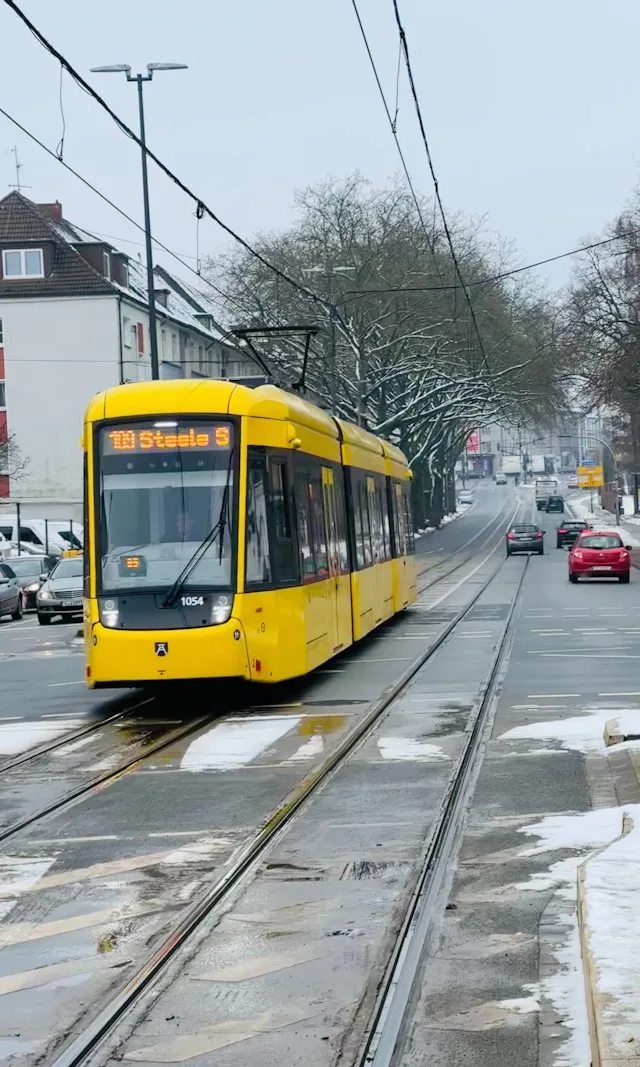
Düsseldorf's Trade Fair Boom Is Running Out of the People Who Build It
Messe Düsseldorf has pre booked 85% of its available hall capacity for 2026. The K Show, MEDICA, and a convergence of triennial and quadrennial cycles will create the most...
Düsseldorf, Germany Executive Search
KiTalent brings sector-specific intelligence and direct headhunting capability to senior leadership searches across Düsseldorf.
days to qualified shortlists in many searches
of relevant passive talent reached through direct headhunting
faster time-to-hire than traditional search benchmarks
one-year retention from KiTalent's broader methodology
These are KiTalent track-record figures referenced across our core about, services, and methodology pages.
Düsseldorf looks, on paper, like a city with abundant senior talent. A GDP approaching €68.5 billion, 523,000 socially insured employees, and a concentration of multinational headquarters along the Königsallee and in Medienhafen would suggest a deep bench of available leaders. The reality is the opposite. This is a market where the same executives are known to every major employer, where relationships between companies, advisors, and candidates are measured in decades, and where a poorly executed approach can close doors permanently.
Standard recruitment methods consistently underperform here. Job postings attract active candidates, but the leaders who can run European insurance analytics for ERGO, lead hydrogen strategy at Uniper, or manage cross-cultural operations for a Japanese multinational are not checking job boards. They are entrenched, well-compensated, and visible only through direct, well-informed outreach.
Düsseldorf has the highest density of corporate headquarters in Germany relative to its population. Henkel, Metro, Vodafone Germany, ERGO, and hundreds of Mittelstand subsidiaries all draw from the same professional community. A chief financial officer at one firm likely sat on a working group with the head of strategy at another. This interconnectedness means that search processes are observed. Candidates talk. A clumsy recruiter call or a withdrawn offer does not stay private. It circulates through the Königsallee banking community and the Medienhafen creative network within days. Employer brand protection is not an abstract concept here. It is a commercial necessity.
No other European city has Düsseldorf's concentration of Japanese corporate presence. Over 800 Japanese companies operate here, supported by the Japanese International School, the Consulate General, and deep institutional ties through organisations like JETRO. This creates a parallel executive market with its own norms around tenure, hierarchy, consensus-based decision-making, and cross-border reporting lines. Recruiting a European managing director for a Japanese subsidiary requires fluency in both Western executive expectations and Japanese corporate culture. General-purpose recruiters rarely have this dual capability.
The working-age population in Düsseldorf is projected to shrink by 8% by 2035. This is not a future problem. Its effects are already visible in the acute shortage of AI and data science talent, green engineering specialists, and healthcare professionals. University Hospital Düsseldorf, the city's single largest employer at roughly 7,800 staff, competes directly with the private sector for medical-IT professionals. Heinrich Heine University expanded its AI and Machine Learning master's programme to 400 seats, but graduates are absorbed before they finish. Meanwhile, median residential rents at €14.50 per square metre are pricing out junior tech talent relative to Berlin or Leipzig, compressing the pipeline further.
These dynamics make Düsseldorf a market where proactive, intelligence-led search is not a premium service. It is the baseline requirement. The Go-To Partner approach that KiTalent brings to this city is built precisely for markets where the hidden 80% of passive talent determines whether a search succeeds or merely fills a seat.
Düsseldorf is not one talent pool. It is a series of overlapping but distinct executive communities, each with its own compensation norms, career trajectories, and competitive dynamics. Effective search requires sector-native understanding of each.
European analytics centralisation, actuarial leadership, and digital underwriting for ERGO and the broader NRW insurance cluster.
5G/6G innovation, cybersecurity, edge computing, and industrial IoT leadership centred on the Vodafone campus and Digital Hub Düsseldorf.
R&D leadership, circular economy strategy, and hydrogen infrastructure management for Henkel, Covestro, Uniper, and the port ecosystem.
Corporate lending, trade finance, and private wealth leadership along the Königsallee and within NRW.BANK.
Brand strategy, digital marketing, and creative leadership for luxury showrooms, advertising agencies, and fashion-tech ventures in Medienhafen.
Supply chain transformation, AI-driven logistics, and commercial leadership for Metro and the food-service distribution network.
Düsseldorf's executive search market is strongest where its economic specialisation is deepest.
Düsseldorf's identity as a headquarters city generates continuous demand for C-suite and senior functional leaders. Henkel's completion of its €300 million Innovation Campus has consolidated adhesives and beauty tech R&D in the city, creating new leadership requirements at the intersection of consumer goods and deep technology. ERGO Group is centralising European insurance…
Vodafone Germany's 5,100-employee campus serves as the Group's European 5G and 6G innovation lab, anchoring Düsseldorf's position as Germany's telecom R&D capital. The deployment of standalone 5G mmWave networks in Medienhafen and Airport City has pulled in IoT specialists and network architects. Around this anchor, a cybersecurity cluster has formed.
Beyond Henkel, Düsseldorf's chemicals cluster includes Covestro's commercial functions and Uniper's hydrogen strategy headquarters. The Düsseldorf Rhine Port is transitioning from bulk goods to circular economy logistics, hosting recycling technology pilots for plastics and battery materials. This pivot is creating demand for sustainability directors, circular economy consultants, and supply…
Medienhafen's 300-plus firms in advertising, film production, and gaming occupy some of the city's most expensive office space at €38 per square metre. Grey Germany, Havas, and luxury brand showrooms for LVMH and Richemont drive demand for creative directors, brand strategists, and digital marketing leaders with luxury and retail fluency. Crytek's presence and the GameZone…
Düsseldorf Airport handled 22.4 million passengers in 2025, with cargo volumes up 12% year-on-year driven by pharmaceutical and e-commerce air freight. Lufthansa Technik's presence in Airport City, combined with the Rhine Port's expanding value-added logistics services, generates demand for operations directors, customs and regulatory affairs leaders, and supply chain executives with…
Companies rarely need only reach in Düsseldorf. They need interpretation, calibration, and a search architecture that reflects the real structure of the market.
Our team coordinates Düsseldorf mandates from our European headquarters in Turin, with direct access to the talent intelligence, compensation dynamics, and sector developments that drive search outcomes.
The strongest executives in Düsseldorf are passive. Our direct headhunting approach engages the hidden 80% of passive talent through discreet outreach rooted in real market knowledge.
Our parallel mapping methodology means we already hold live intelligence on restructuring, transition windows, compensation patterns, and candidate attraction opportunities when a brief arrives.
In Düsseldorf, the cost of a wrong executive hire extends far beyond the recruitment fee. Our interview-fee model lets clients see real market output and qualified candidates before the bulk of the investment is committed.
KiTalent's Düsseldorf mandates are coordinated from our European headquarters in Turin, which provides direct access to the firm's continental network, German-speaking consultants, and cross-border intelligence across the Rhine-Ruhr corridor and beyond. The methodology is built for exactly the conditions this market presents: a concentrated executive community, overlapping employer competition, and a candidate population that does not respond to generic outreach.
KiTalent continuously tracks career movements, compensation evolution, and organisational changes across Düsseldorf's key sectors. When a client defines a need, the firm does not start from zero. It activates pre-existing intelligence on who holds comparable roles at Henkel, ERGO, Vodafone, Metro, and the Japanese subsidiary network. This is the foundation of the 7-to-10-day shortlist methodology: the research has already been done. The brief sharpens it.
Every outreach is individually crafted. For a cybersecurity leadership search, the approach reflects the candidate's specific technical background and career trajectory. For a Japanese-European bridge role, it demonstrates cultural literacy and an understanding of the candidate's dual reporting reality. This is not database extraction or mass LinkedIn messaging. It is the only method that consistently reaches the senior professionals who determine whether a search produces a strong shortlist or merely an available one. KiTalent's C-level search capability is particularly relevant in a headquarters city where the target population has been approached by every recruiter in the market.
Every Düsseldorf mandate produces more than a candidate shortlist. Clients receive structured market intelligence: who holds what role, how compensation is structured across competing employers, where candidates are concentrated, and how the market responded to the opportunity. This documentation becomes a strategic asset for future hiring decisions, internal benchmarking, and succession planning. It is especially valuable in Düsseldorf's interconnected market, where understanding the full competitive picture is as important as identifying individual candidates.
Related city stories from the same regional talent cluster.
Aachen is where deep-tech production meets cross-border complexity. Europe's leading battery validation cluster, a production technology ecosystem generating €1.2 billion in…
Bonn is Germany's sovereign digital infrastructure capital, a city where cybersecurity clusters, UN-affiliated professional ecosystems, and pharmaceutical logistics converge…
Cologne's economy runs on an unusual combination: Germany's largest media and broadcast cluster, FMCG and retail headquarters like REWE Group, specialty chemicals production…
Dortmund is where Germany's logistics infrastructure meets its industrial future. The city's dual economy pairs Europe's largest inland canal port with a fast-growing cluster of…
These resources provide deeper market intelligence and explain how KiTalent turns insight into a faster, more transparent search process.
Messe Düsseldorf has pre booked 85% of its available hall capacity for 2026. The K Show, MEDICA, and a convergence of triennial and quadrennial cycles will create the most...
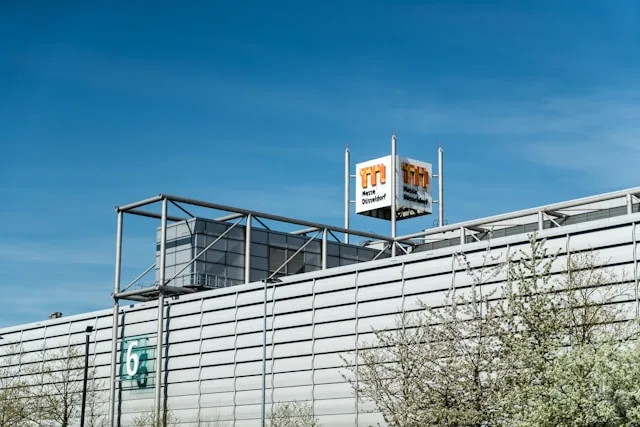
Düsseldorf entered 2026 with the highest concentration of Fortune 500 headquarters in Germany. Yet venture capital deployment into its ICT startups reached only €89 million in...

Düsseldorf's creative sector employs between 18,500 and 20,000 people across advertising, design, publishing, and event services. An additional 8,000 work in ancillary tech and...
Use these pages to navigate between parent markets, sector pages, and supporting articles.
These are the questions most closely tied to how executive search really works in Düsseldorf.
Düsseldorf's concentration of corporate headquarters means the strongest candidates for any senior role are already employed by a direct competitor or a closely related firm. They are not responding to job advertisements. Reaching them requires direct, discreet outreach from a search partner who understands the specific sector, the compensation norms, and the professional sensitivities of this interconnected market. The city's demographic trajectory, with the working-age population projected to shrink 8% by 2035, makes this challenge more acute each year.
Frankfurt is a capital markets city. Munich is an engineering and technology city. Düsseldorf is a headquarters city. The executive talent here spans an unusually wide range of sectors, from insurance and telecom to chemicals and luxury retail, but operates within a compact and interconnected professional community. The presence of over 800 Japanese companies adds a cross-cultural dimension that neither Frankfurt nor Munich replicates at scale. Compensation structures also differ: Düsseldorf's blend of corporate headquarters, Mittelstand subsidiaries, and Japanese multinationals creates three distinct pay architectures that a search firm must understand to prevent offer-stage failures.
KiTalent maintains continuous intelligence on Düsseldorf's key sectors through parallel mapping, tracking leadership movements, compensation shifts, and organisational changes before any client mandate begins. When a brief is activated, the firm deploys sector-native consultants who engage passive candidates through individually crafted outreach. Every search delivers both a qualified shortlist and structured market intelligence that clients use for benchmarking, succession planning, and future hiring decisions.
Interview-ready candidates are typically presented within 7 to 10 days of mandate activation. This speed is possible because the research has already been conducted through ongoing market mapping. The firm does not start sourcing when it receives a brief. It refines and activates pre-existing intelligence against the client's specific requirements.
The 800-plus Japanese companies in Düsseldorf create a parallel executive market with distinct hiring norms. Searches for European leaders within Japanese subsidiaries must account for consensus-based decision-making, longer approval timelines, and compensation packages that include housing and education allowances not standard in German firms. Equally, Japanese companies seeking local German talent need a search partner who can articulate to candidates how a Japanese corporate environment works and what career progression looks like. KiTalent's international search capability and multilingual team are built for exactly this kind of cross-cultural mandate.
Whether you are hiring a Chief Digital Officer for a Mittelstand headquarters, a Managing Director for a Japanese subsidiary, a cybersecurity lead for the telecom cluster, or a sustainability director for the energy transition, this is where the conversation begins.
What we bring to Düsseldorf executive mandates:
Executive search and direct headhunting · Talent mapping and market intelligence · Compensation benchmarking and mandate calibration · Connection to KiTalent's European headquarters in Turin and international executive search network.
Whether you are running a live mandate or want to pressure-test a brief before going to market, this is the right place to start the conversation.
Produced by KiTalent Research. Based on local market intelligence and executive-search data. Reviewed by Chiara Giacoletti.