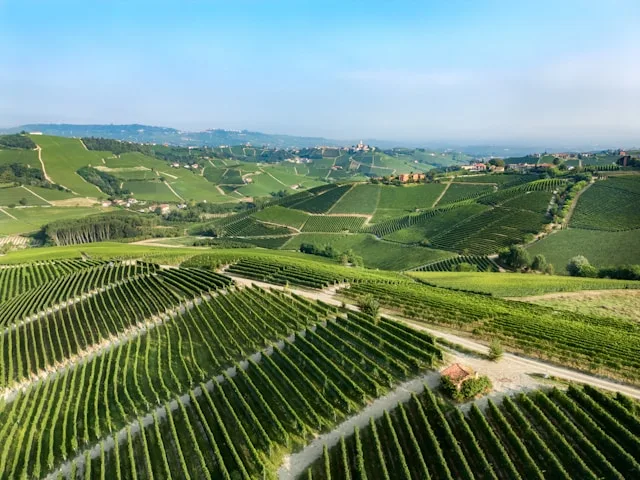
Asti, Italy Executive Search

Executive Search in Asti

KiTalent brings sector-specific intelligence and direct headhunting capability to senior leadership searches across Asti.

7-10

days to qualified shortlists in many searches

80%

of relevant passive talent reached through direct headhunting

42%

faster time-to-hire than traditional search benchmarks

96%

one-year retention from KiTalent's broader methodology

These are KiTalent track-record figures referenced across our core about, services, and methodology pages.

Why Asti is a deceptively difficult executive market

A city of 76,200 people with 1.4% GDP growth and unemployment at 6.2% sounds manageable. It is not. Asti's executive hiring challenge is not about volume. It is about the extreme specificity of what each sector demands and the near-invisibility of the candidates who can deliver it.

Standard recruitment methods fail here for reasons that go beyond the usual "tight market" narrative. The dynamics are particular to Asti's economic structure, its geography, and its demographic trajectory. Understanding them is the prerequisite for any search that ends in a successful hire rather than a costly misfire.

Asti's pharma cluster in the Valenzani industrial zone needs GMP-compliance officers and continuous-processing plant managers. The logistics corridor along Asti Sud needs supply chain directors with pharmaceutical cold-chain certification. The wine sector needs enology data scientists who understand both AI-driven vineyard monitoring and EU carbon accounting. These roles share almost nothing in common except geography. Yet they compete for the same limited pool of senior professionals willing to live and work in a mid-sized Piedmont city. A supply chain director at Abbott's immunoassay reagent plant has no transferable equivalent at Cantina Sociale di Asti. Recruiting as if Asti were a single market produces shortlists full of wrong-profile candidates.

Asti's working-age population contracted by 1.2% in 2025. The dependency ratio stands at 58:100, well above the national average of 51:100. Every month a senior role remains vacant, the available candidate pool shrinks. Companies here have begun using remote-work arbitrage to attract Turin-based consultants, but at the leadership level this tactic has limits. A plant manager at Menarini's oncological oral solids facility cannot work from a Turin apartment. The city's "Asti Attrattiva" campaign brought 400 new residents in 2025. That helps at the mid-career level. It does not solve the C-suite gap.

Asti's senior business community is interconnected in ways that larger cities are not. The heads of Abbott, Menarini, and SAFF.A. sit on the same Camera di Commercio committees. Consorzio Asti DOCG's leadership overlaps with the boards of local banks and the Università di Torino's Asti Campus. A poorly managed search process, an indiscreet approach, or a withdrawn offer becomes common knowledge within weeks. This is a market where the hidden 80% of passive talent can only be reached through discreet, individually crafted outreach. Mass messaging is not just ineffective here. It is actively damaging to the client's employer brand. These dynamics make Asti a market that rewards preparation, local intelligence, and long-term relationships. They are also precisely why the Go-To Partner model exists: to build cumulative knowledge of a market before a mandate arrives, not after.


What is driving executive demand in Asti

Several structural forces are converging to shape executive demand across Asti.

Life sciences and advanced chemistry

The Valenzani industrial zone is the physical centre of Asti's highest-value employment cluster. Abbott Diagnostics employs 1,200 directly and relies on 400 contract logistics staff at its Southern European immunoassay reagent plant. The €45 million automated packaging line expansion completed in 2025 shifted high-volume diagnostic test production from Ireland to Asti, creating immediate demand for plant managers and biochemical process engineers. Menarini Group's 650-person generic drug formulation hub adds further pressure, particularly for leaders in serialization and anti-counterfeiting compliance. The cluster of 18 contract manufacturing organisations serving the Milan-Turin pharma corridor compounds the demand. Biochemical process engineer and GMP-compliance officer supply trails demand by 22%. Our healthcare and life sciences practice covers this exact intersection of regulatory expertise and manufacturing leadership.

Wine, gastronomy, and AgriTech 4.0

Moscato d'Asti's 19 million bottles and €312 million in export value tell only half the story. The economic model has shifted upstream. Consorzio Asti DOCG now operates the Piedmont Wine Chain blockchain traceability platform, adopted by 78% of local cooperative wineries. Cantina Sociale di Asti's AI-driven vineyard monitoring covers 4,200 hectares. The Asti Wine Innovation Lab, opened in March 2025, hosts 14 startups in low-alcohol fermentation biotech and sustainable packaging. Services now generate 40% of the sector's value, up from a minority share just five years ago. This means the sector needs leaders who understand food and beverage brand strategy, data analytics, and EU regulatory compliance in equal measure. The Chief Winemaker role has become a Chief Winemaker/Enology Data Scientist role. Traditional wine-industry recruiters do not have the networks to fill it.

Logistics and distribution

The completion of the A33 Pedemontana highway and the upgrade of the Interporto di Asti have turned a hypothesis into reality: Asti is now Piedmont's secondary logistics hub. Amazon's 42,000 m fulfilment centre (FC-AT26) employs 800 at baseline and 1,400 at seasonal peaks. DHL Supply Chain operates a pharmaceutical cold-chain hub. Poste Italiane designated Asti as a regional parcel sorting centre in 2025. Logistics now accounts for 18% of private-sector employment, up from 11% in 2020. The Asti Est business district along the SP456 corridor is seeing speculative Class-A warehouse development at a 4.1% vacancy rate. What the sector lacks is senior operational leadership: supply chain directors with pharma cold-chain expertise who can also manage the regulatory permitting environment that slows new warehouse approvals to 14-18 months.

Renewable energy and circular economy

Enel Green Power's 34 MW Moscato Solar Park in Costigliole d'Asti, commissioned in Q1 2026, is a working model of agrivoltaic dual-use: solar panels above productive vineyards. Biogas Italy's three agricultural biomethane upgraders convert wine pomace into grid-injected biomethane. Abbott's €20 million green bond funds 100% renewable energy at the Valenzani plant. The convergence of energy transition with agriculture and manufacturing creates ESG and carbon accounting leadership roles that did not exist in Asti three years ago.

Cross-border complexity

With 34% of Asti DOCG exports directed at China and the United States, and Abbott's production serving Southern European markets from a single Italian site, executive roles in Asti frequently carry international reporting lines. A supply chain director at DHL's pharma cold-chain hub reports into German or UK-based regional structures. An ESG manager at a wine cooperative must interpret EU Deforestation Regulation requirements for Southeast Asian market entry via Genoa. International executive search capability is not optional in this market. It is a baseline requirement.

Sector strengths that define Asti executive search

Asti's executive search market is strongest where its economic specialisation is deepest.

Why companies partner with KiTalent for executive search in Asti

Companies rarely need only reach in Asti. They need interpretation, calibration, and a search architecture that reflects the real structure of the market.

We operate across Italy

Our team coordinates Asti mandates from our European headquarters in Turin, with direct access to the talent intelligence, compensation dynamics, and sector developments that drive search outcomes.

We reach the candidates that matter

The strongest executives in Asti are passive. Our direct headhunting approach engages the hidden 80% of passive talent through discreet outreach rooted in real market knowledge.

We do not start from scratch

Our parallel mapping methodology means we already hold live intelligence on restructuring, transition windows, compensation patterns, and candidate attraction opportunities when a brief arrives.

Our model de-risks the investment

In Asti, the cost of a wrong executive hire extends far beyond the recruitment fee. Our interview-fee model lets clients see real market output and qualified candidates before the bulk of the investment is committed.

How we run executive searches in Asti

Asti's executive market rewards firms that already know it. The candidate population for senior roles is concentrated in a small number of organisations. The competitive dynamics between Abbott, Menarini, the Consorzio, and the logistics operators are specific and well-defined. A firm that begins research on the day a mandate is signed is already behind. KiTalent's Asti searches are coordinated from our European headquarters in Turin, a 35-minute rail connection that allows face-to-face engagement with Asti-based clients and candidates on the same day.

1. Parallel mapping before the brief is live

KiTalent continuously tracks the career movements, compensation evolution, and organisational changes within Asti's pharma, logistics, and wine clusters. When a client defines a need for a supply chain director with pharma cold-chain expertise, the firm is not starting from an empty spreadsheet. The mapping has already identified who holds comparable roles at Abbott, DHL, and Menarini, who has recently moved, and who is reaching a career inflection point. This is the engine behind the 7-10 day shortlist.

2. Direct headhunting into the hidden 80%

The candidates who would transform a client's Asti operation are employed, performing well, and not responding to job postings. Reaching them requires direct, one-to-one outreach that is credible, confidential, and articulates a proposition they cannot find in their current role. In Asti, this means understanding precisely what each target company offers and where its limitations lie. A biochemical process engineer at SAFF.A. will not move for a marginal salary increase. They will move for a role that expands their scope and connects them to a larger R&D infrastructure. Knowing the difference is what separates effective headhunting from mass outreach.

3. Market intelligence as a search output

Every Asti mandate produces more than a shortlist. It produces a documented view of the local executive market: who was considered, who was approached, who declined and why, and what the compensation benchmarks look like across comparable roles. This intelligence becomes a strategic asset for the client. It informs future hiring decisions, retention strategies, and organisational design. For C-level searches in particular, this market map is often as valuable as the placement itself.

Essential reading for Asti hiring decisions

These resources provide deeper market intelligence and explain how KiTalent turns insight into a faster, more transparent search process.

Frequently asked questions about executive search in Asti

These are the questions most closely tied to how executive search really works in Asti.

Why do companies use executive recruiters in Asti?

Asti's senior talent market is small, specialised, and heavily employed. The city's three primary sectors each demand narrow expertise: GMP-compliance leadership for pharma, data-driven enology for wine, and cold-chain logistics management for distribution. These profiles rarely appear on the open market. The qualified candidate pool for any given role may number in the low dozens across all of southern Piedmont. An executive recruiter with pre-existing intelligence on this market can identify and engage the right individuals directly, rather than waiting for applications that may never come. In a city where the working-age population is shrinking by over 1% annually, speed and precision are not optional.

What makes Asti different from Turin or Milan for executive hiring?

Scale and specificity. Turin and Milan offer broad, deep talent markets where a well-placed job posting can generate meaningful inbound interest. Asti does not. The candidate universe is concentrated in a handful of anchor employers: Abbott, Menarini, Amazon, DHL, and the wine cooperatives. Moving a senior leader from one to another in a city of 76,000 is a visible act. It requires a confidential, carefully managed process. Compensation structures are also distinct: lower base salaries than Milan, but with quality-of-life advantages and cost-of-living differentials that must be articulated as part of the value proposition. A recruiter calibrated for Milan will misjudge this market.

How does KiTalent approach executive search in Asti?

From its European headquarters in Turin, KiTalent maintains continuous talent intelligence on Asti's pharma, logistics, and wine clusters. When a mandate is received, the firm activates pre-existing mapping rather than starting research from scratch. Candidates are approached through confidential, one-to-one outreach that respects the tight professional community. Every search produces a comprehensive market report alongside the shortlist, giving the client a documented view of who is available, what the compensation benchmarks are, and how the market responded to the opportunity.

How quickly can KiTalent present candidates in Asti?

Interview-ready shortlists are typically delivered within 7 to 10 days. This is possible because KiTalent's parallel mapping methodology means research on Asti's key sectors and organisations is ongoing, independent of any specific mandate. The firm has already identified and built preliminary relationships with potential candidates before the client defines the need. In a market where a vacant plant manager role at the Valenzani complex costs real production output every week, this speed has direct financial value.

How does the demographic challenge in Asti affect executive search?

Asti's dependency ratio of 58:100 and its contracting working-age population create a hiring environment where time works against the employer. Every quarter of delay narrows the available candidate pool. Companies are mitigating this through remote-work arbitrage with Turin and immigration integration at the operational level, but leadership roles require physical presence and deep local engagement. The practical implication is that proactive talent pipeline development is essential. Firms that build relationships with potential hires before a role opens are the ones that fill it. Firms that start searching after the vacancy appears are consistently too late.

Start a conversation about your Asti search

Whether you are building a leadership team or filling a succession gap in Asti, we can help you map the talent landscape, calibrate the brief, and reach the passive candidates who will not surface through any other method.

What we bring to Asti executive mandates:

Executive search and direct headhunting · Talent mapping and market intelligence · Compensation benchmarking and mandate calibration · Connection to KiTalent's European headquarters in Turin and our international executive search network.

Tell us about your Asti hiring challenge

Whether you are running a live mandate or want to pressure-test a brief before going to market, this is the right place to start the conversation.

Explore Our Executive Search Guides

Produced by KiTalent Research. Based on local market intelligence and executive-search data. Reviewed by Sonia Sarnataro.