Why Trieste is a small city with outsized hiring complexity
A metropolitan area of 234,000 people should not be this difficult to recruit in. But Trieste concentrates expertise that exists almost nowhere else in Italy: hydrogen systems engineering, supercomputing architecture, marine genomics commercialisation, and reinsurance analytics inherited from a century of Generali's presence. Standard recruitment methods produce weak results here because the people who hold these skills are few, visible to each other, and not looking.
The city produces more PhDs per capita than any other in Italy. Yet the supply of commercially oriented leaders remains thin. SISSA and the University of Trieste graduate exceptional physicists and biologists, but candidates who combine deep technical knowledge with the ability to lead a biotech scale-up or run a hydrogen infrastructure programme are rare. Area Science Park employs 2,800 people in private R&D across 85 corporate labs. That is a concentrated and finite population. When a CDMO establishing GMP-certified manufacturing at the new BioTech Hub needs a VP of Operations, the search overlaps with the same talent pool that illycaffè, Elettra Sincrotrone spin-offs, and Dompé Farmaceutici are already drawing from. The hidden 80% of executives not actively seeking new roles is not an abstract concept here. It is the practical reality of every senior hire.
Approximately 18,000 workers commute daily from Slovenia. The Trieste to Ljubljana rail corridor now runs in 75 minutes. This creates a talent market that does not respect national boundaries. A logistics director at the Interporto might live in Sežana. A customs compliance specialist could hold Slovenian qualifications. Compensation expectations, notice periods, and employment law differ across the border. Any search that treats Trieste as a purely Italian market will miss candidates and misjudge offer dynamics. This is where international executive search capability becomes essential rather than optional.
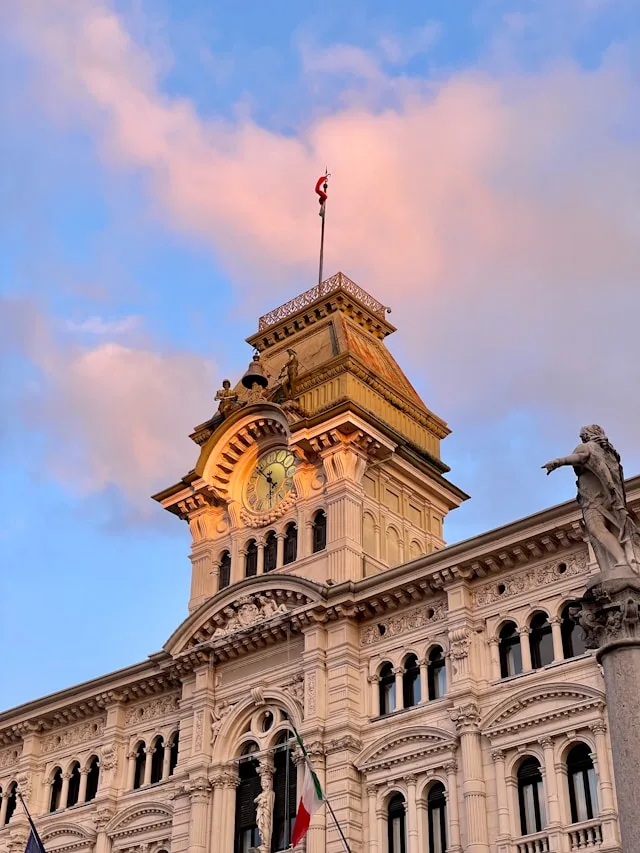
Trieste's business districts are compact. The insurance and shipping finance professionals clustered around Piazza Unità d'Italia and Borgo Teresiano know each other. The researchers at Padriciano share conference circuits and publication networks. A poorly managed search process, a withdrawn offer, or a clumsy approach to a passive candidate will be discussed within days. Employer brand protection is not a marketing concept in this city. It is an operational requirement. KiTalent's Go-To Partner approach was built for exactly this type of tightly networked professional community, where the quality of every candidate interaction shapes whether the next search succeeds or fails.