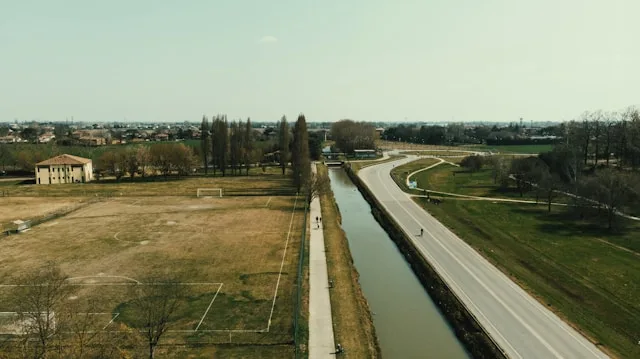
Why Faenza is one of Italy's most deceptive hiring markets
A city of 58,400 residents with 92 enterprises per 1,000 people generates an unusual paradox. The professional community is extraordinarily dense, deeply interconnected, and almost entirely opaque to outsiders. Standard recruitment methods fail here not because of scale, but because of specificity. The leaders who matter most in Faenza's economy are embedded in tightly knit sectoral networks where reputation, craft lineage, and technical credibility determine who gets approached and who gets ignored.
Faenza's most valuable executives sit at intersections that do not exist elsewhere. A Chief Technology Officer at a technical ceramics firm here needs fluency in material science, kiln engineering, 3D printing (LCM technology), and increasingly, hydrogen energy systems. A commercial director at a heritage majolica company needs the artistic sensibility to protect a centuries-old design language while managing export compliance under the EU's Carbon Border Adjustment Mechanism. These are not profiles you find on job boards. They are the product of decades of career development within a highly localised ecosystem. This is precisely where direct headhunting into the hidden 80% of passive talent becomes essential.
With 92 enterprises per 1,000 residents, Faenza's economy is overwhelmingly composed of small and medium-sized companies. When Apofruit Italia, Dolmen S.p.A., or a mid-sized ceramic studio needs a new operations director or sustainability lead, that single hire can alter the company's trajectory for years. The cost of a failed executive appointment is not an abstraction here. It is the difference between meeting the 2027 kiln emissions deadline and missing it entirely. The margin for error is zero, and the conventional recruiter's habit of presenting "available" candidates rather than "right" candidates is a risk these companies cannot afford.
The Accordo di Distretto signed in late 2025 mandates a 40% reduction in kiln emissions by 2027. The Snam partnership will deliver green hydrogen to Z.I. Faenza Sud by Q3 2026. These commitments have created immediate demand for Chief Sustainability Officers, Supply Chain Resilience Directors, and hydrogen-system engineers. None of these roles existed in the Faenza ceramic district before 2024. There is no established local talent pipeline for them. Filling these positions requires reaching into adjacent sectors and geographies, which demands the kind of continuous talent mapping and cross-sector intelligence that defines a Go-To Partner approach.