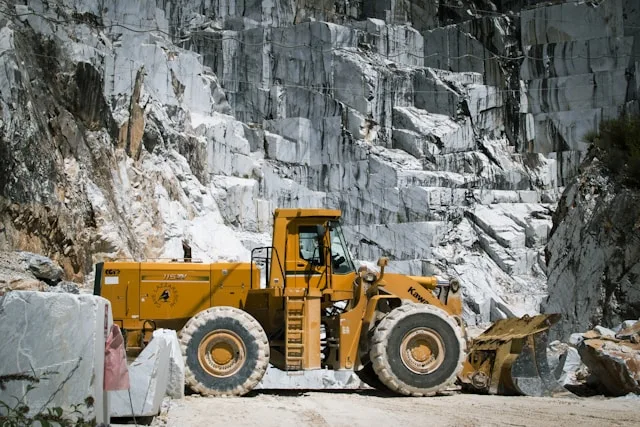
Carrara, Italy Executive Search

Executive Search in Carrara

KiTalent brings sector-specific intelligence and direct headhunting capability to senior leadership searches across Carrara.

7-10

days to qualified shortlists in many searches

80%

of relevant passive talent reached through direct headhunting

42%

faster time-to-hire than traditional search benchmarks

96%

one-year retention from KiTalent's broader methodology

These are KiTalent track-record figures referenced across our core about, services, and methodology pages.

Why Carrara is a deceptively difficult executive market

A city of 61,500 people does not appear, at first glance, to present a search challenge. The reality is the opposite. Carrara's economy concentrates deep technical expertise in narrow sectors, spread across a fragmented network of family-owned enterprises and port-district operators. Standard recruitment channels produce almost nothing here. Job postings go unanswered because the professionals who matter are embedded in businesses they often co-own, and the few who are employed by larger operators are shielded by tight professional networks where reputation is currency.

The province of Massa and Carrara has Italy's third-oldest population median at 51.2 years. In the stone sector specifically, 18% of master stonemasons are over 60, and only 120 new artisans entered training in 2025 against 400 retirements. This is not a future problem. It is a current one. The leaders who can bridge traditional craftsmanship with CNC programming and robotic fabrication are a population measured in dozens, not hundreds. Finding them requires pre-existing relationships and a precise understanding of where hybrid technical-managerial talent sits within the district's supply chain.

Carrara is functionally bifurcated. The Apuan Alps industrial basin, running through the Avenza-Carrara processing corridor, operates on stone-sector logic: long supplier relationships, multi-generational family governance, and an artisanal culture that resists corporate hiring norms. The Marina di Carrara port district, by contrast, runs on maritime-commercial logic: international customs frameworks, IMO regulatory compliance, and the service rhythms of super-yacht clients who expect immediate response. A search for a sustainability compliance officer in the marble district and a search for a marine logistics coordinator at the port require entirely different networks, compensation frameworks, and candidate engagement strategies. Treating them as one market is a common and expensive mistake.

In a district of 1,200 SMEs, word travels within hours. A clumsy approach to a candidate at Franchi Umberto Marmi reaches the managing director of a competing workshop by the following morning. A withdrawn offer at The Italian Sea Group becomes a cautionary tale across the port district within a week. This interconnectedness makes process quality and discretion non-negotiable. It also explains why the hidden 80% of passive talent in Carrara requires a search partner with an established, trusted presence rather than a firm arriving cold with a mandate and a database. This is the kind of market where the Go-To Partner approach delivers its clearest advantage. Cumulative knowledge of who holds which role, who is open to a conversation, and which compensation levels will actually move someone is not a luxury in Carrara. It is the difference between a successful placement and a six-month vacancy.

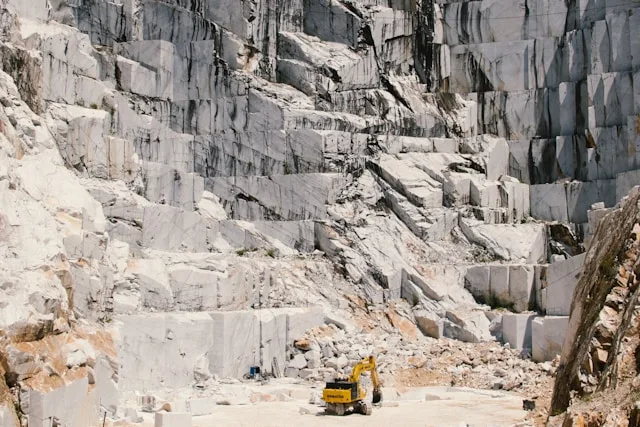
What is driving executive demand in Carrara

Several structural forces are converging to shape executive demand across Carrara.

Advanced stone engineering and circular materials

The shift from raw block export to finished architectural projects now accounts for 60% of district turnover. The Carrara Marble Tech applied research hub has accelerated adoption of AI-driven vein-matching and robotic carving, cutting high-end slab waste by 12–15%. The Pietra Viva consortium processes over 400,000 tons of quarry waste annually into calcium carbonate for pharmaceuticals and construction, creating a €45 million circular-economy sub-sector. These operations need leaders who understand both geological science and industrial manufacturing economics. They also need sustainability compliance officers capable of managing CSRD obligations across SME supply chains, a role that commands 25–30% salary premiums in this market.

Super-yacht servicing and blue economy

The Port of Carrara directly employs 2,800 workers and saw mega-yacht maintenance revenues grow 18% year-on-year in 2025. The Darsena Europa expansion added 220 berths for vessels over 60 metres, including dedicated lithium-battery retrofitting facilities aligned with IMO 2030 emissions targets. The Italian Sea Group invested €45 million in refit hangar expansion. This cluster demands leadership profiles that blend maritime and offshore expertise with luxury service standards, a combination that barely exists in conventional candidate databases.

Heritage restoration and creative industries

Carrara hosts Europe's densest concentration of marble restoration workshops, generating €90 million or more in annual contract value from projects including Notre-Dame de Paris and Abu Dhabi's Louvre. The digitisation of provenance tracking through photogrammetry and blockchain certification has created demand for heritage project managers who are bilingual in Italian-English or Italian-Arabic. The Carrara Academy of Fine Arts and the University of Pisa's engineering campus provide a research base, but management talent for these contract-driven enterprises requires international executive search capability.

Sustainability and energy transition

Completion of the Carrara Marble Solar Park, a 12 MW installation on former quarry waste sites, and green hydrogen trials for heavy transport are reshaping the energy profile of a sector that consumes 2.5–3.0 MWh per ton of finished slab. Leaders who can manage the intersection of energy transition and extractive-industry operations are in acute demand, particularly given exposure to Italian electricity price volatility that spiked above €130/MWh during summer 2025.

Cross-border investment and trade flows

Saudi PIF and Emirati Al Tariq Holdings took minority stakes in Carrara stone distributors in 2025 to secure supply chains for NEOM and Red Sea Project developments. A new direct ro-ro service to the Port of Savannah is driving a 15% increase in transatlantic slab shipments. These capital flows bring governance requirements and leadership mandates that extend well beyond the city's traditional talent pool. Coordinating these searches requires the kind of multi-hub capability that connects our European headquarters in Turin with networks in the Gulf and across the Americas.

Sector strengths that define Carrara executive search

Carrara's executive search market is strongest where its economic specialisation is deepest.

Why companies partner with KiTalent for executive search in Carrara

Companies rarely need only reach in Carrara. They need interpretation, calibration, and a search architecture that reflects the real structure of the market.

We operate across Italy

Our team coordinates Carrara mandates from our European headquarters in Turin, with direct access to the talent intelligence, compensation dynamics, and sector developments that drive search outcomes.

We reach the candidates that matter

The strongest executives in Carrara are passive. Our direct headhunting approach engages the hidden 80% of passive talent through discreet outreach rooted in real market knowledge.

We do not start from scratch

Our parallel mapping methodology means we already hold live intelligence on restructuring, transition windows, compensation patterns, and candidate attraction opportunities when a brief arrives.

Our model de-risks the investment

In Carrara, the cost of a wrong executive hire extends far beyond the recruitment fee. Our interview-fee model lets clients see real market output and qualified candidates before the bulk of the investment is committed.

How we run executive searches in Carrara

Every search in this market begins with a recognition that Carrara's talent dynamics do not conform to metropolitan norms. The candidate pool is finite, deeply networked, and resistant to transactional recruitment. Search methodology must be calibrated accordingly, drawing on continuous intelligence rather than reactive sourcing. Mandates here are coordinated from our European headquarters in Turin, less than three hours away, giving our consultants direct and regular access to the Carrara district.

1. Parallel mapping before the brief is live

KiTalent maintains ongoing talent intelligence across Carrara's stone-technology and maritime clusters independently of any active mandate. We track career movements within the Avenza-Carrara industrial zone, monitor senior appointments at port-district operators, and maintain relationships with technical leaders across the district's innovation infrastructure. This is the foundation of our methodology: when a client defines a need, we are not starting from zero. The 7–10 day shortlist delivery that clients experience is a product of this continuous preparation.

2. Direct headhunting into the hidden 80%

In a market where 1,200 SMEs are led by owner-operators, family successors, and long-tenured technical directors, the relevant executive population is almost entirely invisible to conventional channels. Our direct headhunting approach is built on individually crafted outreach, each contact informed by our existing knowledge of the candidate's role, their employer's competitive position, and the specific proposition most likely to generate a conversation. This is not database mining. It is a consultative process that respects the norms of a community where discretion determines whether doors open or close.

3. Market intelligence as a search output

Every Carrara mandate produces a comprehensive market map as a deliverable, not just a candidate shortlist. Clients receive intelligence on compensation benchmarks within the specific micro-sector, organisational structures of competing employers, and an assessment of talent availability that informs not only the current hire but future workforce planning. This intelligence layer is particularly valuable in a market where formal salary survey data barely exists and real compensation is often structured around profit-sharing, family-business equity arrangements, or project-based incentives.

Essential reading for Carrara hiring decisions

These resources provide deeper market intelligence and explain how KiTalent turns insight into a faster, more transparent search process.

Frequently asked questions about executive search in Carrara

These are the questions most closely tied to how executive search really works in Carrara.

Why do companies use executive recruiters in Carrara?

Carrara's economy is built on specialised sectors where the relevant executive population is small, passive, and deeply embedded in a tight professional community. Job postings produce almost no response for senior roles in stone technology, maritime operations, or heritage restoration. The professionals who can lead a CNC fabrication unit or direct a mega-yacht refit programme are not looking for new roles. They must be identified and approached directly, with the discretion and market knowledge that only a dedicated executive search firm can provide. The cost of a vacant leadership seat in a district where project deadlines are tied to international construction schedules or yacht refit windows makes speed essential.

What makes Carrara different from Florence or Milan for executive hiring?

Florence and Milan offer deep, diversified talent pools across multiple sectors. Carrara does not. Its economy concentrates on stone engineering, maritime services, and heritage restoration, creating micro-markets where a relevant search population might number in the low dozens rather than hundreds. Compensation structures differ fundamentally: profit-sharing, family-equity participation, and project-based incentives are common, making standard salary benchmarks unreliable. The professional community is small enough that every search interaction carries reputational consequences. These dynamics reward a search partner with pre-existing relationships and continuous market intelligence.

How does KiTalent approach executive search in Carrara?

Mandates are coordinated from our Turin headquarters, giving consultants regular direct access to the Carrara district. We maintain ongoing talent mapping across the stone-technology and port-district clusters, tracking senior movements, compensation patterns, and organisational changes independently of active mandates. When a brief is confirmed, this pre-existing intelligence allows us to deliver an interview-ready shortlist in 7–10 days. Every candidate undergoes technical competency assessment, a personal career-storytelling meeting for cultural fit evaluation, and optional psychometric testing for the most senior appointments.

How quickly can KiTalent present candidates in Carrara?

Our standard delivery is 7–10 days from brief confirmation to a qualified shortlist. In Carrara, this speed is possible because we do not begin research from zero. Parallel mapping means we have already identified the relevant population, built preliminary relationships, and understand which candidates are open to a conversation. In a market where the same finite group of senior professionals is courted by multiple employers, arriving first with a credible, well-calibrated proposition is often the decisive advantage.

How does Carrara's demographic challenge affect executive search?

The province has Italy's third-oldest population median at 51.2 years, and the artisan gap is acute: only 120 new stonemasons entered training in 2025 against 400 retirements. For executive search, this means two things. First, the leaders who can bridge traditional craftsmanship with digital manufacturing are extraordinarily scarce, making proactive talent pipeline development a strategic necessity rather than a convenience. Second, succession planning is urgent across the district's family-owned SMEs. Many businesses face simultaneous leadership transitions as founding-generation owners retire, creating a concentration of C-suite mandates that the local labour market cannot absorb without external search support.

Start a conversation about your Carrara search

Whether you are building a leadership team or filling a succession gap in Carrara, we can help you map the talent landscape, calibrate the brief, and reach the passive candidates who will not surface through any other method.

What we bring to Carrara executive mandates:

Executive search and direct headhunting · Talent mapping and market intelligence · Compensation benchmarking and mandate calibration · Connection to KiTalent's European headquarters in Turin and our international executive search network.

Tell us about your Carrara hiring challenge

Whether you are running a live mandate or want to pressure-test a brief before going to market, this is the right place to start the conversation.

Explore Our Executive Search Guides

Produced by KiTalent Research. Based on local market intelligence and executive-search data. Reviewed by Milena Vitale.