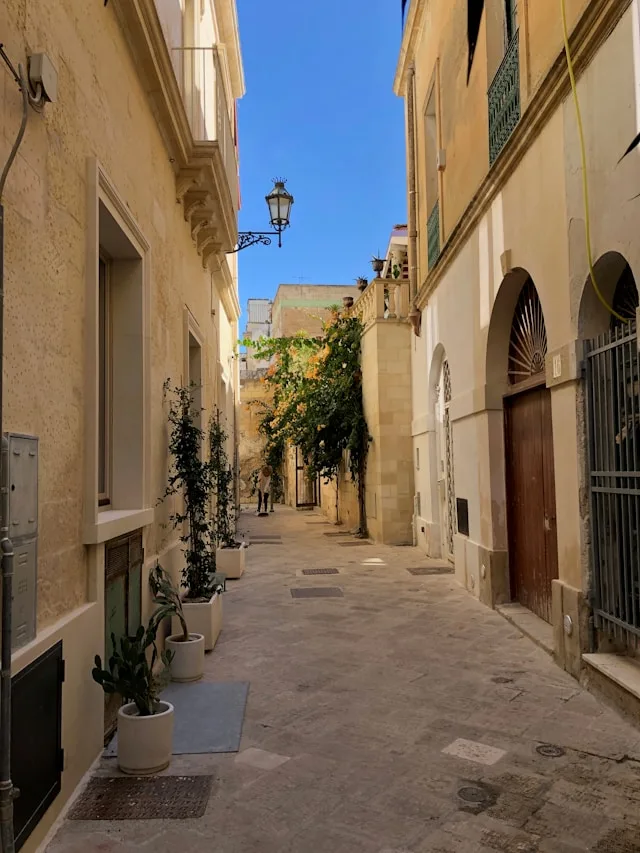
Why Lecce is a deceptively complex executive market
Post a senior role on a generalist platform in Lecce and the response will fall into two categories. You will receive applications from candidates who are available because they operate in the seasonal hospitality economy. And you will hear nothing from the aerospace engineers, heritage data scientists, and agri-biotech directors who are actually building the city's next decade. The visible candidate pool here is misleading. The talent that matters is embedded in research institutes, spin-offs, and niche manufacturing firms that do not advertise their people.
Lecce's GDP per capita reached an estimated €24,800 in 2026, narrowing the gap with Italy's national average of €32,100. That convergence is driven by two engines running in parallel: heritage-tech and cultural tourism on one side, aerospace R&D and precision bio-economy on the other. Each engine demands a fundamentally different kind of leader. A Chief Sustainability Officer for a luxury hotel group in the Baroque Quarter has almost nothing in common with an Aerospace Project Integration Manager coordinating between Lecce's photonics labs and Leonardo S.p.A.'s supply chain in Brindisi. Yet both roles draw from the same small city. Search firms that treat Lecce as a single market miss this duality entirely.
The University of Salento and CNR institutes (ISASI for photonics, IBAM for cultural heritage science) are the real talent incubators here. The SpinUni programme graduated eight startups in 2025, raising a combined €22 million. Companies like ArtVisio and OleaSense emerged from lab benches, not from corporate leadership programmes. This means the executive candidates in Lecce's growth sectors are often researcher-entrepreneurs. They respond to scientific credibility and strategic vision, not to generic recruiter outreach. Reaching them requires direct headhunting built on individual, informed engagement.
Lecce's working-age population with tertiary education sits at 31%. The senior professional community within aerospace, heritage-tech, and agri-biotech is even smaller. Confindustria Lecce, the Technological District of Apulia, and the university's spin-off network function as overlapping circles. A poorly managed search process, a withdrawn offer, or a candidate treated as an afterthought will be known across these networks within days. This is a market where employer brand protection is not a luxury. It is a prerequisite for being taken seriously on the next mandate.
These dynamics make Lecce a market where the Go-To Partner model outperforms transactional recruitment. Success depends on pre-existing intelligence, sector fluency, and a process that earns trust in a tight community.