
Imola's €42 Million Bet on Motorsport Has Not Solved Its Talent Problem
Imola's Autodromo Enzo e Dino Ferrari is operating at its highest utilisation in two decades. Through 2025, the circuit logged more than 320 days of booked activity, hosting...

Imola, Italy Executive Search
KiTalent brings sector-specific intelligence and direct headhunting capability to senior leadership searches across Imola.
days to qualified shortlists in many searches
of relevant passive talent reached through direct headhunting
faster time-to-hire than traditional search benchmarks
one-year retention from KiTalent's broader methodology
These are KiTalent track-record figures referenced across our core about, services, and methodology pages.
Standard recruitment methods fail in Imola for reasons that are invisible from the outside. The city's GDP of €3.1 billion is generated by a small number of high-value clusters, each with its own closed professional network. Post a senior role on a job board here and you will attract candidates from Bologna's generalist talent pool. You will not reach the automation engineer who has spent fifteen years inside Sacmi's kiln division or the motorsport data scientist embedded in the Autodromo's telemetry ecosystem. The talent that matters in Imola is not available. It is employed, specialised, and known by name within its cluster.
Imola's economy is not diversified in the way that larger cities are. It is concentrated around three to four clusters that require deeply technical leadership. Sacmi Group alone employs roughly 2,100 people locally and holds 35% global market share in ceramic-tile machinery. The motorsport component ecosystem accounts for 120-plus specialised firms and approximately 2,800 workers in precision machining, composite materials, and telemetry software. When a company in one of these clusters needs a plant director or an R&D head, the realistic candidate universe is measured in dozens, not hundreds. Every one of those candidates is known to every competitor.
Thirty-eight percent of Imola's manufacturing technicians are over fifty-five. Regional law now mandates knowledge-transfer programmes, but the deeper problem sits at leadership level. The directors and senior engineers who built Imola's industrial base are approaching retirement, and their replacements need a combination of legacy process knowledge and digital-first capability that almost no single candidate possesses. Firms that delay succession planning will find themselves competing for the same thin cohort of mid-career leaders who can bridge the analogue-digital divide. The hidden 80% of passive talent becomes the only viable candidate pool when the visible market has been picked clean.
Imola sits forty-five minutes from Bologna Centrale by rail. This is close enough for Bologna's larger employers to poach Imola's best people with offers of higher compensation, broader scope, and metropolitan amenities. It is also close enough for Imola-based professionals to commute rather than relocate, which compresses the effective talent pool further. A senior hire in Imola must be calibrated not just against local compensation norms but against what Bologna's financial services firms, logistics operators, and university spin-offs are willing to pay for the same skillset. These dynamics make Imola a market where search quality matters more than search volume. The logical response is a Go-To Partner that already knows who holds which role, at which firm, and what it would take to move them.
Imola is not one talent pool. It is four or five distinct professional communities, each with its own compensation logic, career progression patterns, and competitive dynamics. Treating them as interchangeable produces shortlists that look adequate on paper and fail in practice.
R&D directors, vehicle-dynamics leads, and integration executives for hydrogen-combustion and telemetry-driven consolidation plays.
Plant directors, digital transformation leads, and senior engineers for ceramics, packaging, and Industry 4.0 retrofitting across the Area Industriale di Imola.
Automation architects, PLC/Python integration leads, and machine-vision quality heads driving the AI adoption wave across Imola's SME base.
Startup CEOs, regulatory affairs directors, and commercial leaders for cardiovascular devices, biomaterials, and digital health platforms emerging from Tecnopolo Imola.
Operations directors and supply chain heads bridging precision agriculture, wine technology, and food-processing automation in the Romagna corridor.
Programme directors and technical leads for hydrogen infrastructure, agrivoltaic deployment, and the energy transition reshaping Imola's ceramics cost structure.
Imola's executive search market is strongest where its economic specialisation is deepest.
The Autodromo Enzo e Dino Ferrari generates €85 million in annual indirect economic impact, but the real executive demand comes from the vehicle-dynamics cluster surrounding it. Since late 2025, the circuit has operated a hydrogen-combustion testing lane attracting R&D contracts from Ducati, MV Agusta, and Dallara. This green-hydrogen pivot requires leaders who understand both legacy…
Sacmi Group is evolving from traditional ceramic-tile machinery toward AI-driven digital kiln technology, packaging and beverage automation, and solid-oxide electrolyzer ceramic components tied to Emilia-Romagna's Hydrogen Valley strategy. This evolution requires a leadership profile that did not exist five years ago: executives who combine deep ceramics process knowledge with digital…
Robotics & Industrial Automation · AI and Technology for Innovation Leaders
Tecnopolo Imola expanded to 8,500 square metres in late 2025 and now hosts thirty-five-plus startups alongside wet labs and shared CNC workshops. CardioNext, a remote heart-failure monitoring platform, raised €12 million in January 2026 led by Innogest SGR. Spin-offs from Ospedale di Imola's cardiac surgery unit are developing minimally invasive valves, and CeramicaBio is commercialising…
Imola sits at the Romagna wine frontier, where Sangiovese DOC production is becoming increasingly tech-enabled through IoT sensor deployment and precision agriculture funded by PSR 2023-2027 EU rural development programmes. Sacmi's Food and Beverage division and smaller automation firms serve over forty local wineries and tomato-processing cooperatives. The leadership demand here is for…
AI and Technology for Innovation Leaders · FMCG for Food, Beverage and Consumer Goods
Sacmi exports to over 120 countries. The motorsport supply chain is inherently international. Health-tech startups seeking Series B funding pitch to pan-European investors.
Companies rarely need only reach in Imola. They need interpretation, calibration, and a search architecture that reflects the real structure of the market.
Our team coordinates Imola mandates from our European headquarters in Turin, with direct access to the talent intelligence, compensation dynamics, and sector developments that drive search outcomes.
The strongest executives in Imola are passive. Our direct headhunting approach engages the hidden 80% of passive talent through discreet outreach rooted in real market knowledge.
Our parallel mapping methodology means we already hold live intelligence on restructuring, transition windows, compensation patterns, and candidate attraction opportunities when a brief arrives.
In Imola, the cost of a wrong executive hire extends far beyond the recruitment fee. Our interview-fee model lets clients see real market output and qualified candidates before the bulk of the investment is committed.
Imola's market conditions demand a methodology that is built for concentration, discretion, and speed. The city's professional communities are small enough that a poorly executed search creates visible damage. They are specialised enough that generic research produces irrelevant shortlists. And they are tight enough that the difference between winning and losing a candidate often comes down to days, not weeks. KiTalent operates Imola mandates from our European headquarters in Turin, with consultants who understand Emilia-Romagna's industrial culture and the specific dynamics of Motor Valley's southeastern corridor.
KiTalent does not begin research when a client signs a mandate. Our methodology is built on continuous, pre-mandate talent intelligence across our key sectors. In Imola, this means we track career movements within Sacmi's leadership structure, monitor the consolidation of motorsport SMEs, follow the growth trajectory of Tecnopolo startups, and maintain a live view of who is approaching retirement in the city's industrial base. When a client defines a need, we are not starting from zero. We are activating a network of relationships and data points that already exist.
In a city where 120-plus motorsport firms and one dominant industrial employer account for the majority of senior technical talent, the visible candidate market is almost empty. Direct headhunting built on individually crafted outreach is the only method that reaches the executives who matter. Every approach is calibrated to the candidate's specific situation: their role, their employer's competitive position, their likely motivations, and the sensitivity of being contacted in a market where anonymity is difficult. This is not mass outreach. It is precision engagement in a community where reputation is everything.
Every Imola mandate produces more than a shortlist. Clients receive comprehensive documentation of the talent market they are hiring into: who holds comparable roles, what compensation looks like at each seniority level, how candidates responded to the opportunity, and where the competitive pressure points lie. This intelligence, delivered through our market benchmarking process, becomes a strategic asset that outlasts the individual hire. In a market as concentrated as Imola, understanding the full picture is as valuable as filling the single role.
Related city stories from the same regional talent cluster.
Bologna's executive market sits at the intersection of advanced manufacturing, agri-food innovation, and logistics infrastructure. From Ducati's Borgo Panigale production complex…
Carpi is one of Italy's most concentrated manufacturing economies: 71,600 residents, a €1.9 billion furniture and upholstery district, and a network of 400+ SMEs collectively…
Cesena sits at the intersection of Emilia-Romagna's packaging machinery corridor, a fast-maturing agri-tech cluster, and a health-tech ecosystem anchored by the Bufalini Hospital…
Faenza is where centuries of ceramic mastery meet advanced materials science, precision agri-food processing, and a dense SME manufacturing network that punches far above the…
These resources provide deeper market intelligence and explain how KiTalent turns insight into a faster, more transparent search process.
Imola's Autodromo Enzo e Dino Ferrari is operating at its highest utilisation in two decades. Through 2025, the circuit logged more than 320 days of booked activity, hosting...
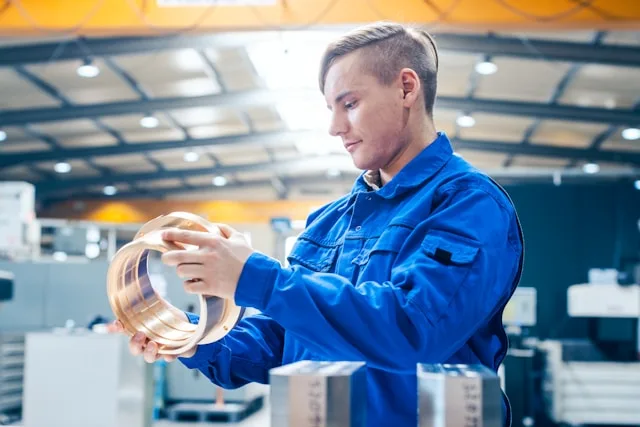
Imola's industrial zones along Via Selice, Via Piratello, and Ponticelli house between 420 and 450 precision metalworking and machinery firms. They average 18 employees each....

Imola sits at the eastern edge of Italy's ceramic corridor, anchored by two cooperatives that together employ more than 3,000 people and generate billions in global revenue....
Use these pages to navigate between parent markets, sector pages, and supporting articles.
These are the questions most closely tied to how executive search really works in Imola.
Imola's executive market is defined by hyper-specialisation and concentration. Sacmi Group, the motorsport supply chain, and the emerging health-tech cluster each employ a finite number of senior leaders who are not actively seeking new roles. With unemployment at 4.2% and documented shortages of over 400 mechatronics technicians, the visible candidate market produces weak results for leadership roles. Companies use executive recruiters to access the passive talent pool through direct, discreet outreach that a job posting or an internal HR team simply cannot replicate. In a community this small, the quality of the approach also matters. A poorly handled search damages the employer's reputation across the entire cluster.
Bologna is a diversified metropolitan economy with deep bench strength across multiple sectors. Imola is a specialist manufacturing and R&D hub where four or five clusters account for the majority of senior talent. The practical difference is that a Bologna search can rely on volume. An Imola search cannot. The candidate universe for a plant director in ceramics machinery or an R&D lead in hydrogen combustion is measured in dozens. Compensation dynamics also differ. Imola salaries are under upward pressure from Bologna's gravitational pull, meaning offers must be calibrated against a larger city's benchmarks even though the role is based in a city of 68,400 people.
KiTalent runs Imola mandates from its European headquarters in Turin, drawing on pre-existing intelligence across Emilia-Romagna's industrial sectors. The approach begins with parallel mapping: continuous tracking of career movements, compensation evolution, and organisational changes within the city's key clusters. When a mandate is live, this intelligence allows us to produce a qualified shortlist in seven to ten days rather than the eight to twelve weeks typical of firms that start research from scratch. Every candidate undergoes a three-tier assessment covering technical competency, cultural fit, and genuine motivation before being presented.
Interview-ready candidates are typically delivered within seven to ten days of mandate confirmation. This speed comes from parallel mapping, not from cutting corners. Because KiTalent continuously tracks the senior talent pool in Imola's automotive, industrial manufacturing, and health-tech clusters, the research foundation exists before the brief arrives. In practice, this means the client sees a shortlist of pre-qualified, pre-assessed candidates while a conventional search firm is still writing the job specification.
The May 2024 Santerno floods and the subsequent €140 million resilience infrastructure programme have reshaped Imola's commercial geography. Industrial vacancy spiked to 18% before compressing as medical-device firms backfilled refurbished warehouse space. Insurance premiums for Zone A properties rose 40%, which affects employer investment decisions and therefore talent demand patterns. For executive search, this means two things. First, candidates evaluating an Imola opportunity now factor climate resilience and infrastructure quality into their decision. Second, the resilience and energy-transition programmes themselves are creating new leadership roles in project management, regulatory compliance, and green infrastructure that did not exist two years ago.
Whether you are building a leadership team or filling a succession gap in Imola, we can help you map the talent landscape, calibrate the brief, and reach the passive candidates who will not surface through any other method.
What we bring to Imola executive mandates:
Executive search and direct headhunting · Talent mapping and market intelligence · Compensation benchmarking and mandate calibration · Connection to KiTalent's European headquarters in Turin and our international executive search network.
Whether you are running a live mandate or want to pressure-test a brief before going to market, this is the right place to start the conversation.
Produced by KiTalent Research. Based on local market intelligence and executive-search data. Reviewed by Milena Vitale.