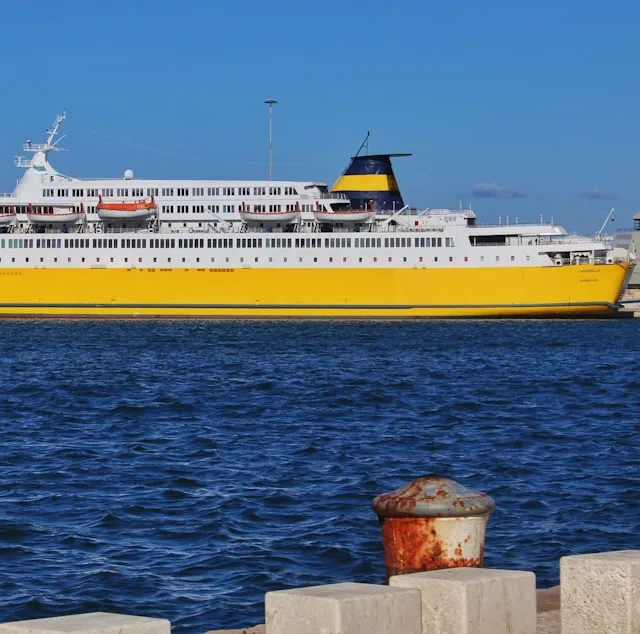
Brindisi, Italy Executive Search

Executive Search in Brindisi

KiTalent brings sector-specific intelligence and direct headhunting capability to senior leadership searches across Brindisi.

7-10

days to qualified shortlists in many searches

80%

of relevant passive talent reached through direct headhunting

42%

faster time-to-hire than traditional search benchmarks

96%

one-year retention from KiTalent's broader methodology

These are KiTalent track-record figures referenced across our core about, services, and methodology pages.

Why Brindisi is one of Italy's most complex executive hiring markets

Standard recruitment in Brindisi fails for reasons that have nothing to do with the usual Mezzogiorno narrative. This is not simply a market with limited talent supply. It is a market undergoing simultaneous industrial transition, infrastructure expansion, and innovation ecosystem creation. Each of these forces generates executive demand. None of them can be met by conventional candidate sourcing.

When ENI's Versalis chemical complex was a refining operation, the leadership profile was well understood: process engineers, plant managers, HSE directors drawn from Italy's established petrochemical talent pool. Now the same site hosts HyNet Apulia, an industrial-scale hydrogen valley run as a joint venture between ENI, Snam, and CDP. The roles required are hydrogen systems directors, electrolyzer programme leads, ESG and carbon accounting managers. These profiles barely existed in Southern Italy before 2023. They cannot be found through job postings or regional databases because the people qualified to fill them are currently employed at energy transition operations in Rotterdam, Hamburg, or Aberdeen. Reaching them requires direct headhunting built on individually crafted outreach, not mass messaging into a non-existent local candidate pool.

Brindisi's metropolitan area is home to roughly 400,000 people. The senior professional community serving its core sectors is far smaller. In aerospace composites, the Tier-2 supply chain within the Brindisi Industrial Zone involves perhaps fifteen firms. In port automation, the relevant decision-makers number in the dozens. Everyone knows who is hiring, who has been approached, and who declined. A visible search process in this environment does not just fail to attract the best candidates. It actively damages the hiring organisation's reputation. The hidden 80% of passive talent in Brindisi's market is not just harder to reach. It is the only talent worth pursuing, because the visible 20% has already been contacted by every local firm and every Milan-based generalist running a Puglia mandate from a distance.

Research from local executive recruiters confirms that 40% of C-suite hires in Brindisi come from outside Puglia. For energy transition roles and international logistics positions, that figure is almost certainly higher. This means every senior search in Brindisi is also a relocation negotiation. Compensation alone does not close these candidates. They need clarity on hybrid work policies, spousal career prospects, international schooling options, and a credible narrative about the city's trajectory. This is why organisations here need a Go-To Partner for talent acquisition that understands both the local operating environment and the expectations of executives relocating from Milan, Rome, or Northern Europe. Search firms that lack cross-border fluency will consistently lose candidates at offer stage.


What is driving executive demand in Brindisi

Several structural forces are converging to shape executive demand across Brindisi.

Green hydrogen and industrial decarbonisation

HyNet Apulia's 100 MW electrolyzer, operated by the ENI-Snam-CDP joint venture, now supplies green hydrogen to the local chemical cluster and exports via the SoutH2 corridor to Austria and Germany. Edison is repowering its Brindisi plant. Syndial operates circular water treatment. The Med Wind floating offshore wind farm, at 2.8 GW, has designated Brindisi as its operations and maintenance base, creating 400 direct marine engineering positions. This cluster needs plant directors, grid integration specialists, offshore wind service leaders, and compliance executives fluent in the EU Industrial Emissions Directive. Our oil, energy and renewables practice tracks these profiles continuously across European energy transition markets.

Port logistics and the Adriatic corridor

The Port System Authority of the Southern Adriatic, headquartered in Brindisi, manages the only natural deep-water harbour in the Adriatic capable of handling Post-Panamax vessels without dredging. The new Ro-Ro terminal drove an 18% year-on-year increase in container volume. DFDS Logistics and Grimaldi Group have expanded warehousing operations in the Brindisi Cargo City intermodal hub. The Terminal Passeggeri Nord, inaugurated in 2025, doubled passenger capacity. This port ecosystem demands supply chain directors, digital port operations managers, and bilingual logistics executives capable of managing Greek, Albanian, and Turkish route networks. The maritime, shipbuilding and offshore sector page outlines how we approach these mandates.

Aerospace supply chain manufacturing

Leonardo's final assembly sits in nearby Grottaglie, but Brindisi has captured the Tier-2 supply chain. The Aerospace District of Puglia has relocated 15 suppliers to the Brindisi Industrial Zone, specialising in composite materials and precision machining for Boeing 787 and Airbus A350 programmes. These firms need lean manufacturing directors, quality assurance leaders, and programme managers who understand both aerospace certification requirements and the operational realities of Southern Italian SMEs. Our aerospace, defense and space consultants work across this exact supply chain tier.

Agri-food, wine, and the bio-economy

The Salento hinterland produces high-value DOP olive oil and wine now transitioning toward regenerative agriculture and precision farming. Olio Dante operates a major bottling facility. Cantine Due Palme employs significant numbers across processing and logistics. The Agri-Food Lab Brindisi, a partnership with the University of Salento, is developing blockchain traceability for supply chain provenance. This sector increasingly requires commercial directors who combine traditional food industry expertise with digital supply chain fluency. The food, beverage and FMCG sector is one where KiTalent maintains deep vertical networks.

Cross-border complexity as a default condition

Brindisi's economy is fundamentally international. Hydrogen exports flow to Germany and Austria. Port operations connect to Greece, Albania, and Turkey. Aerospace components supply Boeing and Airbus global programmes. Nearly every senior hire involves reporting lines that cross national borders, compensation benchmarking against Northern European markets, or regulatory compliance spanning multiple jurisdictions. This is why international executive search capability is not optional for firms operating here. It is the baseline requirement.

Brindisi's leadership markets by sector

Brindisi is not one talent pool. It is at least five distinct professional communities, each with its own competitive dynamics, compensation norms, and sourcing geography. A search in hydrogen infrastructure bears no resemblance to a search in agri-food processing, and treating them with the same methodology produces mediocre results in both.

Sector strengths that define Brindisi executive search

Brindisi's executive search market is strongest where its economic specialisation is deepest.

Why companies partner with KiTalent for executive search in Brindisi

Companies rarely need only reach in Brindisi. They need interpretation, calibration, and a search architecture that reflects the real structure of the market.

We operate across Italy

Our team coordinates Brindisi mandates from our European headquarters in Turin, with direct access to the talent intelligence, compensation dynamics, and sector developments that drive search outcomes.

We reach the candidates that matter

The strongest executives in Brindisi are passive. Our direct headhunting approach engages the hidden 80% of passive talent through discreet outreach rooted in real market knowledge.

We do not start from scratch

Our parallel mapping methodology means we already hold live intelligence on restructuring, transition windows, compensation patterns, and candidate attraction opportunities when a brief arrives.

Our model de-risks the investment

In Brindisi, the cost of a wrong executive hire extends far beyond the recruitment fee. Our interview-fee model lets clients see real market output and qualified candidates before the bulk of the investment is committed.

How we run executive searches in Brindisi

Every Brindisi mandate is coordinated from KiTalent's European headquarters in Turin, drawing on consultants who operate in Italian and English, understand Southern Italian business culture, and maintain active networks across the energy transition, logistics, and manufacturing sectors that define this market. Turin's proximity to Brindisi's key sectors, and its position as KiTalent's hub for all European search activity, means that Brindisi clients receive the same consultant depth and process rigour as mandates in Milan or Frankfurt.

1. Parallel mapping before the brief is live

KiTalent continuously tracks career movements, compensation shifts, and organisational changes across its key sectors. This is not research that begins when a client signs an engagement letter. It is intelligence that already exists. For Brindisi, this means we have already identified the hydrogen programme directors at competing European energy hubs, the port automation specialists at Northern European terminals, and the aerospace quality leaders moving between Tier-2 suppliers across the EU. When a Brindisi client defines a need, we activate a pre-existing map rather than starting cold. This is the mechanism behind the 7 to 10 day shortlist timeline that distinguishes our process from conventional search.

2. Direct headhunting into the hidden 80%

The executives who can lead Brindisi's energy transition or Adriatic logistics expansion are not applying for jobs. They are running operations in Aberdeen, Rotterdam, Toulouse, or Hamburg. Reaching them requires discreet, individually crafted approaches that articulate a compelling case for Brindisi: the scale of HyNet Apulia, the strategic position of the port, the PNRR investment momentum, and the quality-of-life proposition of the Salento coast. Our headhunting methodology is built specifically for this population. We do not send bulk messages. We build individual arguments for why a specific role in a specific city deserves a conversation.

3. Market intelligence as a search output

Every Brindisi mandate produces a comprehensive intelligence deliverable alongside the candidate shortlist. This includes compensation benchmarking against Milan, Rome, and comparable European markets. It includes a map of who holds what role at which competitor. It includes candidate feedback on the client's employer brand and proposition. This intelligence is not a byproduct of the search. It is a strategic output that clients use to refine their hiring approach, adjust their compensation framework, and build a credible talent acquisition strategy for future mandates. In a market where 40% of C-suite hires are external to the region, this data is the difference between a systematic approach and repeated guesswork.

Essential reading for Brindisi hiring decisions

These resources provide deeper market intelligence and explain how KiTalent turns insight into a faster, more transparent search process.

Frequently asked questions about executive search in Brindisi

These are the questions most closely tied to how executive search really works in Brindisi.

Why do companies use executive recruiters in Brindisi?

Brindisi's economy is undergoing a generational transition. The leadership roles created by HyNet Apulia, the Med Wind offshore farm, and the expanded port system did not exist five years ago. The candidates qualified to fill them are working in Aberdeen, Rotterdam, Hamburg, or Toulouse. They are not on Italian job boards and they are not in regional databases. Executive search firms with direct headhunting capability and cross-border networks are the only reliable route to this talent. The alternative is a months-long process that produces a shortlist of available candidates rather than the right ones.

What makes Brindisi different from Bari or Taranto?

Bari is Puglia's administrative and service economy capital with a larger professional base. Taranto is defined by the ILVA steelworks transition and heavy industrial remediation. Brindisi occupies a distinct position: it combines green hydrogen production at industrial scale, the Adriatic's only natural deep-water port, and a growing aerospace supply chain, all within a metropolitan area of 400,000 people. The talent pool is smaller and more specialised than Bari's. The cross-border sourcing requirement is more pronounced than Taranto's. And the PNRR investment concentration, at €340 million in 2025 alone, creates urgency that neither neighbour matches.

How does KiTalent approach executive search in Brindisi?

Every Brindisi mandate begins with pre-existing intelligence. Through parallel mapping, we continuously track the energy transition, maritime logistics, and aerospace leadership markets across Europe. When a client defines a Brindisi role, we activate a network that already includes identified candidates and preliminary relationships. The search is coordinated from our Turin headquarters by consultants fluent in Italian and English who understand both Southern Italian business culture and the expectations of executives relocating from Northern Europe. Clients receive weekly pipeline reports and full market intelligence alongside every shortlist.

How quickly can KiTalent present candidates in Brindisi?

Interview-ready candidates are typically delivered within 7 to 10 days. This speed comes from parallel mapping, not from reduced assessment rigour. Every candidate undergoes technical competency evaluation, a career-storytelling meeting to assess cultural fit and motivation, and optional psychometric assessment for senior roles. This is why the firm achieves a 96% one-year retention rate. For Brindisi mandates requiring cross-border sourcing, the same timeline applies because the mapping work predates the mandate.

How does Brindisi's relocation challenge affect executive search?

Forty percent of C-suite hires in Brindisi come from outside Puglia. For energy transition and international logistics roles, the proportion is likely higher. This means every senior search is simultaneously a relocation negotiation. Candidates evaluate not just compensation but hybrid work policies, spousal career opportunities, quality of life, and the credibility of Brindisi's economic trajectory. Our market benchmarking service provides the compensation and contextual intelligence that enables clients to construct relocation propositions calibrated to what actually moves senior executives. Without this data, offer-stage failures become the default outcome.

Start a conversation about your Brindisi search

Whether you are building a leadership team or filling a succession gap in Brindisi, we can help you map the talent landscape, calibrate the brief, and reach the passive candidates who will not surface through any other method.

What we bring to Brindisi executive mandates:

Executive search and direct headhunting · Talent mapping and market intelligence · Compensation benchmarking and mandate calibration · Connection to KiTalent's European headquarters in Turin and our international executive search network.

Tell us about your Brindisi hiring challenge

Whether you are running a live mandate or want to pressure-test a brief before going to market, this is the right place to start the conversation.

Explore Our Executive Search Guides

Produced by KiTalent Research. Based on local market intelligence and executive-search data. Reviewed by Sonia Sarnataro.