Rome, Italy Executive Search

Executive Search in Rome

KiTalent brings sector-specific intelligence and direct headhunting capability to senior leadership searches across Rome.

7-10

days to qualified shortlists in many searches

80%

of relevant passive talent reached through direct headhunting

42%

faster time-to-hire than traditional search benchmarks

96%

one-year retention from KiTalent's broader methodology

These are KiTalent track-record figures referenced across our core about, services, and methodology pages.

Why Rome is a deceptively difficult executive market

Rome produces more CVs than almost any city in Italy. Sapienza alone enrols over 100,000 students. The city hosts dozens of national corporate headquarters, thousands of professional services firms, and a public sector that employs a material share of the working population. None of this translates into easy executive hiring.

The difficulty is not volume. It is the specific character of Rome's senior talent pool: fragmented across sectors that rarely overlap, anchored by employers who offer stability that the private sector struggles to match, and concentrated in professional communities small enough that a poorly handled approach travels fast.

Milan has finance. Turin has automotive and manufacturing. Rome has everything and nothing in particular. Energy headquarters sit in EUR. Aerospace R&D clusters around Tiburtina. Film production concentrates at Cinecittà. Hospitality and luxury retail dominate the Centro Storico. Digital startups are gathering in Ostiense. Each cluster operates with its own compensation logic, its own career expectations, and its own definition of what a compelling offer looks like. A search strategy designed for one of these markets will fail in another.

Rome's largest employers are public or quasi-public: Poste Italiane, ENEL, ENI, RAI, ACEA. These organisations offer job security, pension structures, and seniority-based progression that private firms cannot replicate. Senior professionals embedded in these environments are not browsing job boards. They are not responding to LinkedIn InMails. Reaching them requires a different kind of conversation, one grounded in understanding what would actually make them move. This is the hidden 80% of executive talent that conventional recruitment methods never touch.

Rome's senior business community is interconnected in ways that Milan's more transactional market is not. Government relations, public procurement, and corporate affairs create overlapping networks where the same people appear across boardrooms, industry associations, and advisory panels. A clumsy or indiscreet search process does not just fail to attract the right candidate. It damages the client's standing in a community that has a long memory. This is why working with a firm that treats every candidate interaction as an extension of the client's brand is not a preference. It is a requirement. The Go-To Partner approach exists precisely for markets where process quality determines outcome quality.

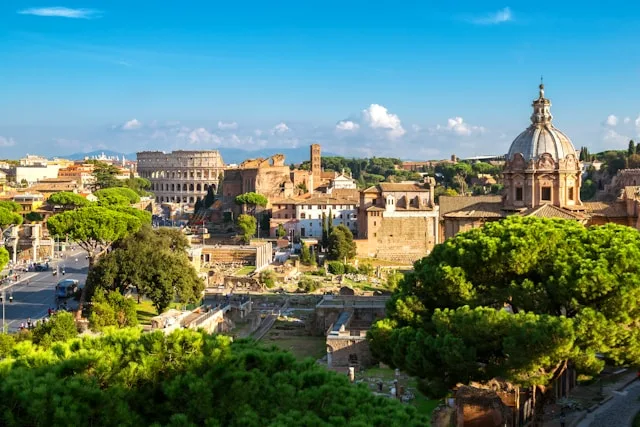
What is driving executive demand in Rome

Several structural forces are converging to shape executive demand across Rome.

Energy, utilities, and infrastructure

ENI's headquarters in EUR's Palazzo ENI, ENEL's major Rome offices, ACEA, Terna, and GSE collectively make Rome Italy's command centre for energy policy and energy-transition investment. These groups are recruiting heads of sustainability, renewable energy project directors, and digital transformation leaders as they execute multi-year capital programmes. The concentration of procurement, legal, and engineering demand around these headquarters feeds a secondary market for senior professional services hires. KiTalent's energy and renewables practice works closely with organisations managing exactly this kind of transition-driven leadership demand.

Aerospace, defence, and space

Leonardo's Rome headquarters and its broader Lazio operations, alongside Telespazio and a network of advanced electronics suppliers, create a specialised talent pool of systems engineers, cybersecurity directors, and programme managers. These are roles where security clearances, multi-year programme experience, and domain expertise intersect. The pool of qualified candidates is finite, and most are deeply embedded in long-cycle projects. Aerospace and defence executive search in Rome requires pre-existing relationships with this community, not cold outreach.

Tourism, hospitality, and cultural services

The Jubilee 2025 pushed Fiumicino past 50 million passengers for the first time, and international visitor volumes are expected to remain elevated into 2026. Hotel groups, cultural operators, event management firms, and luxury retail brands are competing for operations directors, general managers, and multi-lingual hospitality leaders. The challenge is that Rome's hospitality management talent is highly seasonal in its availability and disproportionately loyal to established operators. Our travel and hospitality and luxury and retail search teams understand the compensation structures and career motivations that determine whether an approach succeeds or stalls.

Media, film, and creative industries

Cinecittà and the surrounding production cluster make Rome Italy's historical centre for audiovisual production. International production spend, streaming-platform investment, and post-production demand have raised the stakes for senior creative and operational leadership. RAI's national headquarters add a major public-media employer to the mix. These searches require consultants who understand creative-sector career paths, not generalist recruiters applying standard corporate frameworks.

Finance, insurance, and professional services

Rome is not Milan. But it hosts Poste Italiane's financial services division, BNL/BNP Paribas Italy, significant insurance operations, and a dense network of legal, consulting, and public-affairs firms that service both government and large corporates. Banking and wealth management searches in Rome often involve candidates who straddle the public-private boundary, requiring a nuanced approach to motivation and confidentiality. Insurance mandates here frequently involve professionals whose networks extend across both regulated entities and government advisory bodies.

Sector strengths that define Rome executive search

Rome's executive search market is strongest where its economic specialisation is deepest.

Why companies partner with KiTalent for executive search in Rome

Companies rarely need only reach in Rome. They need interpretation, calibration, and a search architecture that reflects the real structure of the market.

We operate across Italy

Our team coordinates Rome mandates from our European headquarters in Turin, with direct access to the talent intelligence, compensation dynamics, and sector developments that drive search outcomes.

We reach the candidates that matter

The strongest executives in Rome are passive. Our direct headhunting approach engages the hidden 80% of passive talent through discreet outreach rooted in real market knowledge.

We do not start from scratch

Our parallel mapping methodology means we already hold live intelligence on restructuring, transition windows, compensation patterns, and candidate attraction opportunities when a brief arrives.

Our model de-risks the investment

In Rome, the cost of a wrong executive hire extends far beyond the recruitment fee. Our interview-fee model lets clients see real market output and qualified candidates before the bulk of the investment is committed.

How we run executive searches in Rome

Rome's market conditions require a search firm that has already done its homework before the brief arrives. KiTalent's approach is built for exactly this kind of environment: one where speed depends on pre-existing intelligence, not on scrambling to build a candidate list from scratch.

1. Parallel mapping before the brief is live

KiTalent continuously tracks career movements, organisational changes, and compensation trends across Rome's key sectors. When ENI restructures its sustainability division or Leonardo launches a new systems integration programme, we know before the resulting vacancy is published. This parallel mapping methodology is what allows us to deliver interview-ready candidates in 7 to 10 days. The research phase that takes traditional firms weeks has already been completed.

2. Direct headhunting into the hidden 80%

Rome's most capable executives are embedded in stable, well-compensated positions at national headquarters and major institutions. They will not surface through job postings or database searches. Our consultants engage them through direct, discreet, individually crafted approaches that demonstrate genuine understanding of their sector, their career trajectory, and the specific opportunity being presented. This is the only reliable method for reaching the passive talent that determines whether a shortlist is strong or merely available.

3. Market intelligence as a search output

Every Rome mandate produces more than a candidate shortlist. Clients receive a detailed picture of the competitive environment: who holds comparable roles at which organisations, how compensation is structured across the relevant cluster, and how candidates are responding to the proposition. This market intelligence becomes a strategic asset that informs not just the current hire but future talent planning. For C-level searches and retained mandates, this intelligence layer is particularly valuable in Rome's interconnected corporate community.

Essential reading for Rome hiring decisions

These resources provide deeper market intelligence and explain how KiTalent turns insight into a faster, more transparent search process.

Frequently asked questions about executive search in Rome

These are the questions most closely tied to how executive search really works in Rome.

Why do companies use executive recruiters in Rome?

Rome's senior talent pool is dominated by professionals in stable, well-compensated positions at national headquarters and public institutions. These executives do not respond to job postings or inbound recruitment approaches. Reaching them requires direct, discreet outreach from consultants who understand their sector and can present a proposition calibrated to their actual motivations. Companies use executive recruiters in Rome because the visible candidate market represents a fraction of the available leadership talent, and the cost of a vacant senior role or a failed hire in this interconnected professional community is considerable.

What makes Rome different from Milan for executive hiring?

Milan is Italy's financial and corporate capital with a more transactional, internationally oriented talent market. Rome concentrates national energy headquarters, aerospace and defence operations, public-sector institutions, and a hospitality economy driven by global cultural tourism. Compensation structures differ: Rome's public-sector anchor creates retention dynamics that Milan's private-sector-dominant market does not share. Professional networks in Rome are more interconnected and less sector-siloed than in Milan. Search strategies that work in Milan's competitive, fast-moving market often underperform in Rome's more relationship-driven environment.

How does KiTalent approach executive search in Rome?

KiTalent maintains continuous talent mapping across Rome's key sectors, tracking career movements, compensation trends, and organisational changes at firms like ENI, Leonardo, ENEL, and Poste Italiane before any mandate is received. When a brief lands, this pre-existing intelligence allows us to move directly to candidate engagement rather than spending weeks on research. Our Turin-based European team brings native Italian language capability, proximity to the market, and deep familiarity with the institutional dynamics that shape Rome's leadership community.

How quickly can KiTalent present candidates in Rome?

Seven to ten days from brief confirmation to a qualified, interview-ready shortlist. This timeline is possible because of parallel mapping: the research that traditional firms begin after receiving a mandate has already been completed. In Rome, where PNRR project deadlines and infrastructure programme timelines create genuine urgency, this speed advantage is the difference between securing a first-choice candidate and watching them accept a competing offer.

How does Rome's Jubilee and PNRR investment cycle affect executive hiring?

The Jubilee 2025 and PNRR funding created a step-change in Rome's demand for project directors, infrastructure leaders, and hospitality operations executives. As these programmes move from mobilisation into execution and legacy phases through 2026, the demand is shifting from generalist programme managers to specialists in delivery, operational handover, and long-term asset management. The Metro C extension alone represents approximately €2 billion in construction and engineering work. Firms hiring into these programmes face compressed timelines and competition for a finite pool of leaders with large-scale public-infrastructure experience.

Start a conversation about your Rome search

Whether you are building a leadership team or filling a succession gap in Rome, we can help you map the talent landscape, calibrate the brief, and reach the passive candidates who will not surface through any other method.

What we bring to Rome executive mandates:

Executive search and direct headhunting · Talent mapping and market intelligence · Compensation benchmarking and mandate calibration · Connection to KiTalent's European headquarters in Turin and our international executive search network.

Tell us about your Rome hiring challenge

Whether you are running a live mandate or want to pressure-test a brief before going to market, this is the right place to start the conversation.

Explore Our Executive Search Guides

Produced by KiTalent Research. Based on local market intelligence and executive-search data. Reviewed by Milena Vitale.