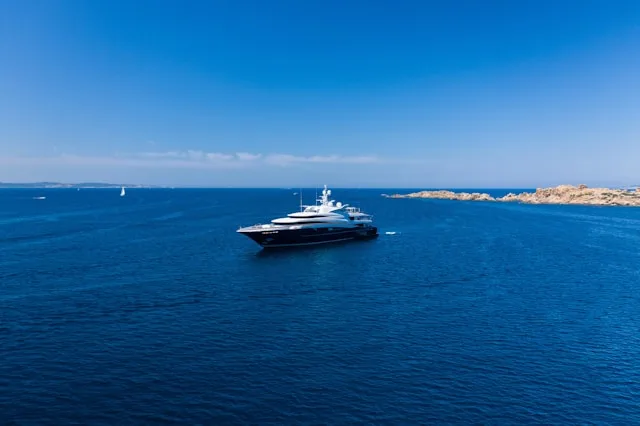
Olbia's Yacht Refit Boom Has a Workforce Problem No Job Board Can Solve
Sardinia's province of Sassari recorded a youth unemployment rate of 28.4% in late 2024. In the same geography, marine trade vacancies sat at 14.2%, more than double the...

Olbia, Italy Executive Search
KiTalent brings sector-specific intelligence and direct headhunting capability to senior leadership searches across Olbia.
days to qualified shortlists in many searches
of relevant passive talent reached through direct headhunting
faster time-to-hire than traditional search benchmarks
one-year retention from KiTalent's broader methodology
These are KiTalent track-record figures referenced across our core about, services, and methodology pages.
From the outside, Olbia looks straightforward. A compact city of well-defined industries. A manageable professional community. A clear set of employers. The reality is that Olbia's executive market is shaped by forces that make standard recruitment approaches reliably ineffective: extreme seasonality that fractures the talent base, a professional community so interconnected that a poorly handled approach damages the client's reputation within days, and a cost-of-living dynamic that prices out the very workers the economy depends on.
Unemployment in Olbia swings from 6-7% in August to 14-16% in January. That is not a labour market fluctuation. It is a systemic cycle that drives skilled technicians and mid-career managers to Tuscany and Lombardy every off-season. The professionals who remain year-round are a finite and well-known group. They are not browsing job boards. They are embedded in the organisations that have found ways to operate twelve months a year, and they know their scarcity value. Reaching them requires direct headhunting built on relationships, not postings.
Olbia's executive population is small and tightly networked. The general manager of a five-star resort knows the marina director. The airport operator's leadership team overlaps socially with the shipyard owners. In this environment, every candidate interaction is visible. A clumsy recruiter approach, a leaked shortlist, or a withdrawn offer does not just affect one hire. It affects the client's ability to attract talent for years. The quality of the search process itself becomes a competitive advantage or a lasting liability.
Average rent for a three-bedroom apartment in Olbia reached €1,350 per month in 2025. Industrial electricity costs run 15-20% above mainland Italy due to Sardinia's grid isolation. These are not abstract figures. They are the reason offer-stage negotiations collapse. A compensation package benchmarked against Milan or Rome fails in Olbia because it does not account for the real cost of island life or the scarcity premiums that marine engineers and EASA-certified aviation technicians command here. Without precise market benchmarking, clients lose candidates at the final stage.
These dynamics are why Olbia requires a search partner with pre-existing market intelligence, not one that starts researching after the mandate begins. KiTalent's Go-To Partner approach is built for exactly this kind of market: small, interconnected, structurally constrained, and fiercely competitive for the hidden 80% of passive talent that determines whether a search succeeds or merely fills a seat.
Olbia is not one talent pool. It is a collection of highly specialised professional communities, each with its own competitive dynamics, compensation norms, and candidate motivations. A search strategy that works for luxury hospitality will fail in marine engineering. Sector-specific expertise is the entry requirement.
Year-round resort leadership, revenue management, and guest experience design for the Costa Smeralda ecosystem and its hinterland diversification.
Refit operations leadership, hybrid propulsion engineering, and sustainable maritime technology for Italy's third-largest superyacht hub.
Airport operations, business aviation management, cargo logistics, and passenger flow optimisation for one of the Mediterranean's fastest-growing airports.
Vermentino export management, precision viticulture technology, and agri-food supply chain leadership for Gallura's growing international wine brand.
Green hydrogen operations, shore-power engineering, and port digitalisation for Olbia's emerging role as a sustainable Mediterranean logistics node.
Asset management, development leadership, and regulatory navigation for luxury and mixed-use projects under Sardinia's strict coastal planning regime.
Olbia's executive search market is strongest where its economic specialisation is deepest.
Olbia is the operational headquarters for the Costa Smeralda Consortium and the corporate base for properties including Hotel Cala di Volpe and Romazzino. Direct tourism employment reaches approximately 12,400 workers, but the executive demand is evolving. With 34% of luxury hotels now operating full-service through November (up from 22% in 2022), hotel groups need year-round leadership:…
Olbia is Italy's third-largest superyacht service hub, behind only Viareggio and La Spezia. Sardinia Yacht Services, Pinmar, and a cluster of rigging contractors in the Zona Industriale Olbia handle refit, paint, and provisioning for the Mediterranean fleet. The 2025 opening of the Blue Tech Lab, a joint venture between Confindustria Sassari-Olbia and the University of Cagliari, has added 120…
Olbia Costa Smeralda Airport handled an estimated 3.8-4.0 million passengers in 2025, surpassing pre-pandemic peaks. The completed Terminal 2 expansion accommodates dedicated FBO terminals processing approximately 18,000 business aviation movements annually. Geasar S.p.A., the airport operator, anchors an ecosystem that now includes the Sardinia Aviation Academy and a growing Cargo Village…
Olbia is the commercial capital for Vermentino di Gallura DOCG, Sardinia's most valuable white wine appellation. The city hosts the Consorzio Tutela Vini Gallura and primary bottling and export facilities for labels including Surrau, Capichera, and Siddura. Wine-related employment reaches approximately 2,800 across viticulture, logistics, and tourism.
The Hydrogen Valley Sardinia project has allocated €45 million in EU PNRR funding for a green hydrogen production facility at the ZIO industrial zone, targeting port logistics vehicles and ferries with an operational pilot in 2026. The Poltu Quatu Marina expansion, a €30 million private investment, adds 120 berths for 30-metre-plus vessels with integrated cold ironing to meet IMO 2030…
Energy | Oil, Gas, Power and Renewables · Industrial & Manufacturing
Swiss and UAE capital dominates Olbia's luxury real estate and marina management. Nordic funds, including PensionDanmark, are acquiring positions in airport-adjacent logistics facilities targeting e-commerce distribution to Southern France and Northern Italy. These ownership structures create executive roles that report across borders: a marina general manager answering to Abu Dhabi, a…
Luxury Retail · Industrial & Manufacturing · Building Skylines: Construction and Real Estate
Companies rarely need only reach in Olbia. They need interpretation, calibration, and a search architecture that reflects the real structure of the market.
Our team coordinates Olbia mandates from our European headquarters in Turin, with direct access to the talent intelligence, compensation dynamics, and sector developments that drive search outcomes.
The strongest executives in Olbia are passive. Our direct headhunting approach engages the hidden 80% of passive talent through discreet outreach rooted in real market knowledge.
Our parallel mapping methodology means we already hold live intelligence on restructuring, transition windows, compensation patterns, and candidate attraction opportunities when a brief arrives.
In Olbia, the cost of a wrong executive hire extends far beyond the recruitment fee. Our interview-fee model lets clients see real market output and qualified candidates before the bulk of the investment is committed.
Olbia's market conditions demand a methodology built for scarcity, not abundance. The talent pool for any senior role here is narrow. The professional community is tightly connected. The margin for error in candidate engagement is slim. KiTalent's search methodology, coordinated from our European headquarters in Turin, is designed for precisely these conditions.
KiTalent does not begin research when a client signs a mandate. Through parallel mapping, the firm continuously tracks career movements, compensation shifts, and organisational changes across key sectors in the Mediterranean. For Olbia, this means maintaining live intelligence on who leads which refit operation, which hospitality director is approaching the end of a contract cycle, and which marine engineers have recently completed hybrid propulsion certifications. When a client defines a need, the firm activates a pre-existing knowledge base rather than starting from zero. This is the engine behind the 7-10 day shortlist timeline.
In a market of thirty or forty qualified candidates for a given senior role, job postings are not a strategy. They are a signal to the market that the client is hiring, without any guarantee of reaching the right people. KiTalent's direct headhunting methodology identifies each relevant individual and engages them through personalised, discreet outreach. In Olbia's interconnected professional community, the quality of this first contact matters enormously. A generic LinkedIn InMail from an unknown recruiter will be ignored or, worse, discussed. A credible approach from a consultant with genuine sector knowledge opens a conversation.
Every Olbia search produces more than a candidate shortlist. Clients receive a comprehensive view of the relevant talent market: who holds which roles, what compensation levels prevail, how candidates are responding to the opportunity, and what competitive pressures exist. This intelligence has strategic value beyond the immediate hire. It informs succession planning, compensation policy, and competitive positioning in a market where the same finite group of senior professionals is being pursued by multiple employers simultaneously.
Related city stories from the same regional talent cluster.
Sardinia's capital is building a new economic identity around green hydrogen, high-performance computing, maritime logistics, and life sciences. Cagliari's executive market…
Oristano is where Sardinia's agrifood heritage meets its climate-tech future. With provincial GDP per capita at €24,800 and private employment growing at 2.1% year-on-year, the…
Porto Torres is rewriting its industrial identity. A city of 21,000 on Sardinia's northwest coast, it is the operational centre of the Sardinian Hydrogen Valley, a deepening…
Sassari is Sardinia's administrative capital, its second-largest university city, and the emerging control centre for one of southern Europe's most ambitious green hydrogen…
These resources provide deeper market intelligence and explain how KiTalent turns insight into a faster, more transparent search process.
Sardinia's province of Sassari recorded a youth unemployment rate of 28.4% in late 2024. In the same geography, marine trade vacancies sat at 14.2%, more than double the...
The Costa Smeralda corridor posted average daily rates above €1,100 at peak season in 2024. Occupancy hit 94%. The ultra luxury properties lining the coast from Porto Cervo to...
Olbia's Port Isola Bianca processed 1.42 million linear metres of ro ro freight in the first nine months of 2025 alone. Ferry operators ran at 94% capacity on the Genoa and...
Use these pages to navigate between parent markets, sector pages, and supporting articles.
These are the questions most closely tied to how executive search really works in Olbia.
Olbia's executive talent pool is small, specialised, and largely invisible to conventional recruitment methods. The professionals who lead superyacht refit operations, manage luxury hotel groups, or direct airport expansion programmes are not responding to job advertisements. They are embedded in roles they find rewarding, in a market where their scarcity gives them significant leverage. An executive recruiter with pre-existing relationships and continuous market intelligence can reach these individuals. A job posting cannot. The seasonal cycle compounds the challenge: timing a search incorrectly means approaching candidates during their most demanding operational period, when they will not engage.
Cagliari is Sardinia's administrative and academic capital, with a larger and more diversified professional population across public sector, financial services, and technology. Olbia's economy is narrower and more intense: luxury hospitality, superyacht services, aviation, and wine commercialisation. The executive talent pools barely overlap. A hotel general manager search in Olbia requires Mediterranean luxury experience and multilingual capability that a Cagliari-focused search would not surface. The compensation dynamics also differ sharply, with Olbia's housing costs inflated by international second-home demand rather than by local economic fundamentals. These are functionally different markets that require different search strategies.
KiTalent maintains continuous intelligence on Olbia's key sectors through parallel mapping, tracking career movements and compensation trends across luxury hospitality, marine services, and aviation in the Mediterranean. When a mandate begins, the firm activates this pre-existing knowledge rather than starting research from scratch. Every candidate is engaged through individually crafted, discreet outreach by a sector-native consultant. In a community as interconnected as Olbia's, generic mass outreach is counterproductive. The firm's three-tier assessment process evaluates technical competency, cultural alignment, and genuine motivation before any candidate reaches the client.
KiTalent delivers interview-ready shortlists in 7-10 days for most Olbia mandates. This speed comes from parallel mapping, not from reduced assessment rigour. Because the firm continuously tracks senior professionals across Olbia's key sectors, the research phase that typically consumes the first six to eight weeks of a traditional search is largely complete before the mandate begins. For highly specialised roles, such as hybrid marine propulsion engineers or Mandarin-speaking hospitality directors, the timeline may extend slightly to ensure the international candidate pool is fully covered.
Seasonality is the single most important variable in Olbia search design. The optimal window for engaging passive candidates is October through February, when year-round professionals have completed peak-season operations and have bandwidth for career conversations. A search launched in June or July will find every target candidate absorbed by their busiest quarter, unwilling or unable to engage. The seasonal cycle also affects relocation conversations: candidates considering a move to Olbia need to understand the off-season reality, not just the summer appeal. A credible search partner addresses this directly, presenting Olbia's year-round trajectory and the city's investment in winterisation and economic diversification as part of the candidate proposition.
Whether you are building a leadership team or filling a succession gap in Olbia, we can help you map the talent landscape, calibrate the brief, and reach the passive candidates who will not surface through any other method.
What we bring to Olbia executive mandates:
Executive search and direct headhunting · Talent mapping and market intelligence · Compensation benchmarking and mandate calibration · Connection to KiTalent's European headquarters in Turin and our international executive search network.
Whether you are running a live mandate or want to pressure-test a brief before going to market, this is the right place to start the conversation.
Produced by KiTalent Research. Based on local market intelligence and executive-search data. Reviewed by Sonia Sarnataro.