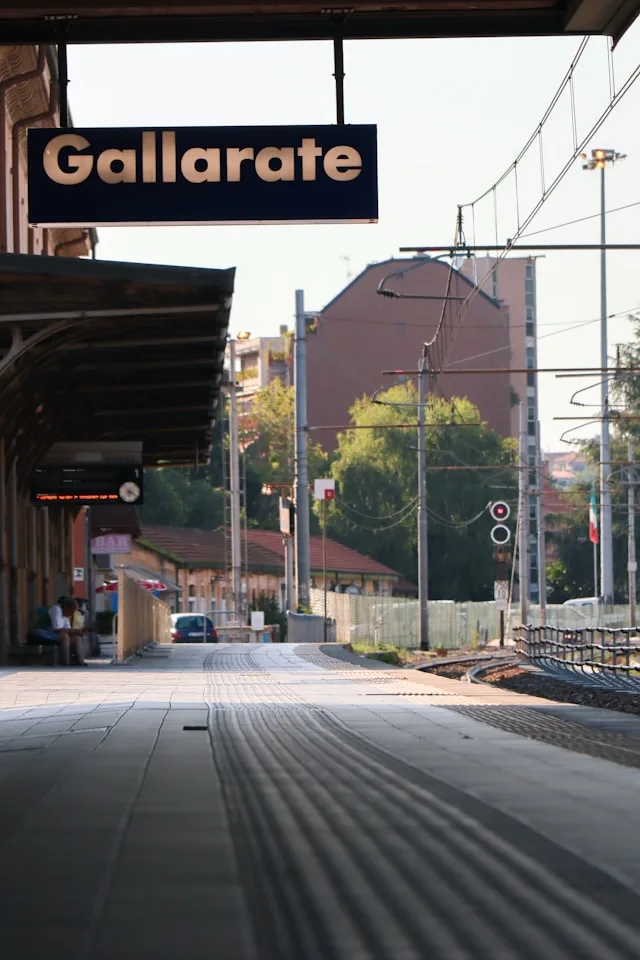
Why Gallarate is a deceptively difficult market
Standard recruitment fails here for reasons that are not immediately obvious. Gallarate is not Milan. It does not have a deep, liquid talent market where a well-placed job posting generates a viable shortlist. It is a city of 53,200 people with hyper-specialised industrial clusters, a commuter-dependent workforce, and professional communities small enough that a poorly handled approach travels through the Confindustria Varese network within days.
The Province of Varese hosts Italy's densest concentration of UNI EN 9100-certified aerospace subcontractors. The professionals qualified to lead these firms hold certifications and audit experience that take years to accumulate. A quality manager with NADCAP credentials and five years of actuator-production oversight is not browsing job boards. They are embedded in a firm where they are known to Leonardo's procurement team by name. The visible candidate market here is a fraction of the actual talent pool. Reaching the hidden 80% of passive executives is not a nice-to-have. It is the only viable strategy.
Gallarate's aerospace firms, logistics operators, and digitisation-stage manufacturers all draw from the same limited population of IT/OT integration specialists, supply chain directors, and operations leaders. DHL Supply Chain, Fiege Italia, and World Courier compete directly for cold-chain expertise. Ferrario Meccanica and the German-acquired precision shops compete for CAM programmers fluent in Siemens NX. When one firm hires, another loses. This zero-sum dynamic means that search speed and candidate intelligence are not conveniences. They are competitive advantages that determine whether a firm fills a role or watches its shortlist disappear to a rival.
With 29% of the manufacturing workforce aged 55 or older, Gallarate faces a generational transition that no training programme alone can resolve. The leaders running CNC machining operations and managing aerospace surface-treatment lines are approaching retirement. Their replacements need to combine legacy mechanical expertise with fluency in cloud MES platforms and digital twins. These hybrid profiles are scarce across all of northern Italy, not just in Gallarate. Firms that wait for succession needs to become urgent will find themselves competing for the same small pool of candidates at the same moment.
These dynamics explain why a Go-To Partner approach built on continuous market intelligence and proactive relationship-building outperforms transactional search in this market. By the time a mandate is formalised, the relevant professionals should already be mapped, assessed, and engaged in preliminary conversation.